.svg)
Category: Kahanu
Biocultural Conservation at NTBG
Weaving hala leaves for a pāpale (hat). Photo by Shandelle Nakanelua
Defining our approach to restoring relationships between plants, people, and places.
At its heart, biocultural conservation recognizes the inseparable bonds between humanity and nature. Many Indigenous cultures share concepts of kinship across species, elements, and places. In Hawaiʻi, the idea of ʻohana (family) transcends humans. For example, kalo (taro) is the older brother of kānaka (Hawaiians). Native Hawaiian scientist Keolu Fox says, “when I say that the land is my ancestor, that is a scientific statement.”
Anishinaabe writer Patty Krawec shares the phrase “nii’kinaaganaa,” encapsulating the belief that “the world is alive with beings that are other than human, and we are all related with responsibilities to each other.”
Biocultural conservation accounts for these relationships, honoring the familial bonds that Indigenous communities maintain with biodiversity, integrating the life-sustaining, ecological knowledge cultivated over generations as they care for the land.
Left: Limahuli Garden Visitor Program Manager Lahela Chandler Correa. Right: Hale Hoʻonaʻauao (House-of-teaching) in McBryde Garden. Photos by Erica Taniguchi.
Secretary Deb Haaland, the first Native American U.S. secretary of interior, said, “Indigenous knowledge must be at the center of our conservation efforts, as we restore a cultural balance to the lands and waters that sustain us.” This call to action is echoed by the United Nations, the International Union for Conservation of Nature, and other partners.
Biocultural conservation integrates communities in collective stewardship and decision-making. It aims to protect not only plants and physical landscapes, but also cultural heritage, languages, practices, and social systems that are connected to the health of our shared environment. In biocultural conservation, our relationship with plants and places deeply matters. Perceiving the reciprocity of this relationship can lead to lasting, transformative change.
At NTBG our mission to perpetuate plants, tropical ecosystems, and cultural heritage is rooted in biocultural conservation. Below are six examples of what this concept means to our staff. Each has their own way of expressing biocultural conservation. As you read, we hope you’ll consider what plants mean to you and, conversely, what you mean to them.
—David Bryant, Director of Communications
Left: Science and Conservation Director Nina Rønsted. Photo by Jon Letman. Right: Hala (Pandanus) at Kahanu Garden. Photo by Seana Walsh.
On the global stage, biocultural conservation can be seen in international agreements such as the Kunming-Montreal Global Biodiversity Framework, signed by 188 countries in 2023. The framework’s vision is “living in harmony with nature where, by 2050, biodiversity is valued, conserved, restored and wisely used, maintaining ecosystem services, sustaining a healthy planet and delivering benefits essential for all people.”
This vision puts the relationships between people and nature at the center of solutions to ensure the best possible data, knowledge, and practices contribute to effective biocultural conservation.
To cite one example, in Colombia, dry forests are categorized as critically endangered ecosystems due to extensive clearing for cattle ranching and agriculture. To address this, a series of forest plots have been established in collaboration with local communities, that not only measure scientific biodiversity indicators, but also use community input to identify issues related to deforestation, biodiversity use, and valuation of ecosystem services. The hope is to find conservation solutions that satisfy both ecosystem protection and local societal needs.
In Canada and Aotearoa (New Zealand), negotiated settlements of Indigenous rights in fisheries management are creating sustainable marine biocultural conservation models based on Indigenous knowledge and long-term commitments to sustain resources and ecosystems. These offer an alternative to the polarizing all-or-nothing models of commercial fisheries vs. marine reserves.
There are countless other examples around the world that illustrate how, through a combination of local, national, and international legislation and initiatives, biocultural conservation honors the intrinsic relationships between nature and humanity.
Similarly, at NTBG, we are harnessing our experience and expertise to build conservation programs that align with cultural values and community priorities while enriching life through the perpetuation of tropical plants, ecosystems, and cultural heritage.
—Dr. Nina Rønsted, Director of Science and Conservation
Lei Wann, Director of Limahuli Garden and Preserve. Photo by Erica Taniguchi.
I see biocultural conservation as a way of expressing the intrinsic and scientific relationship between people, places, culture, and science. It’s a way of acknowledging that we practice science in its Western form, but there’s so much more to our work than that. At its core, these are deep connections and relationships with plants that have existed for generations.
Often what we find is that the ʻike (knowledge) we have of plants from our ancestors aligns with scientific research and findings. Biocultural conservation is the way we’ve come to express that science has such deep meaning here in Hawaiʻi because of the ʻike from our kupuna (elders) and the deep relationships we share with plants.
—Lei Wann, Director of Limahuli Garden and Preserve
Left: Brian Sidoti, Director of The Kampong. Photo by Alejandra Libertad. Right: Entryway at The Kampong.
NTBG’s only garden outside of Hawaiʻi, The Kampong, is in Miami, Florida. Our name, Kampong, can be translated as “village.” In this spirit, we use this space to honor the Indigenous communities that once lived here while celebrating the significance of our living collections to the rich tapestry of immigrant communities that make up Miami today.
At The Kampong, biocultural conservation is influenced by those who resided here before us. This includes Dr. Eleanor Galt Simmons, one of Dade County’s first licensed female physicians whose office and stable are on the grounds of The Kampong. From the 1890s, Dr. Simmons treated patients, making house calls by horse, buggy, and boat. Today we are planning a guided visitor experience that will interpret medicinal plants used by Dr. Simmons as well as by Native Miccosukee and Seminole peoples.
We also tell the story of plants collected by famed botanist Dr. David Fairchild who introduced thousands of edible and ornamental plants to the United States. David Fairchild named this site The Kampong in 1916.
Another key figure at The Kampong was Catherine “Kay” Hauberg Sweeney, an intrepid and impassioned plant collector who, with her husband, purchased this property in 1963. Mrs. Sweeney devoted her life to ensuring The Kampong remained a refuge for tropical plants and plant enthusiasts. The commitment of these early inhabitants laid the foundation for The Kampong today.
Looking ahead, we continue to add native plants to our collections. In collaboration with faculty of the International Center for Tropical Botany at The Kampong, our pursuit of plant research, public outreach, and education, is rooted in biocultural conservation. We remain focused on three themes: preserving tropical plant diversity; conservation and management of threatened tropical species and habitats; and fostering an understanding of tropical plant-based goods and services such as food, fuel, fiber, and medicine.
—Dr. Brian Sidoti, Director of The Kampong
Uma Nagendra, Limahuli Preserve Conservation Operations Manager. Photo by Erica Taniguchi
Central to biocultural conservation is human culture and our relationship to the natural world. This connection inherently expands our conservation practices, values, and priorities. Biocultural conservation provides us with more sources of knowledge and expands the range of people who are enthusiastic and invested in our work.
Biocultural conservation guides nearly all we do at Limahuli Garden and Preserve. But often overlooked are defining personal experiences. This is what it feels like to me: the shade of young kukui (Aleurites moluccana) saplings serving as nurse trees in newly cleared restoration areas. It feels like the stickiness of hau (Hibiscus tiliaceus) branches being stripped for cordage. I hear it in voices raised in oli (chants) at the beginning of each workday, and in the bird cries of uaʻu (Pterodroma sandwichensis) and aʻo (Puffinus newelli) barking in the Upper Limahuli Preserve.
Biocultural conservation tastes like refreshing ʻōhiʻa ʻai (Syzygium malaccense) fruits plucked from the tree and Tahitian prawns fished from the stream. It is the weight of kōpiko (Psychotria mariniana) branches and ʻalaheʻe (Psydrax odorata) collected for carving. Biocultural conservation maintains the ungulate fence, but also knows the names of the neighborhood hunters to call when you find a sign of pigs in the valley.
Biocultural conservation is not only theory; it is practice. It is action. It is listening, learning, striving, making mistakes, and trying again. Biocultural conservation is a lei formed from the interwoven strands of people, plants, and places which we are communally, perpetually weaving.
—Dr. Uma Nagendra, Conservation Operations Manager, Limahuli Preserve
Left: Mike Opgenorth, Kahanu Garden and Preserve Director. Photo by Shandelle Nakanelua. Right: Kahanu Garden.
At Kahanu Garden and Preserve, biocultural conservation teaches us the critical role humans play in the survival of native ecosystems. On the coast of East Maui, tradewinds deliver sheets of Hāna’s famous ua kea (white rain). Inside Kahanu Preserve’s hala (Pandanus tectorius) forest, the trees provide shelter beneath its canopy. There we can marvel at the tree’s fruit which resembles pineapples arching from the end of branches. The space evokes memories of the people who once used material from these trees to create thatched mats, hats, sails, and lei. Even the tree’s hīnano (male flower) was considered an aphrodisiac. Hala’s stilt-like roots also prevent erosion along the rocky cliffs where they grow.
Coastal hala forests, like those found in the Kahanu Preserve, have been dwindling across Hawaiʻi as a result of invasive species and habitat lost to agriculture and development. An introduced scale insect attacks hala, as is evident by the powdery shells sucking life from its leaves. Highly invasive African tulip trees emerge and spread over the hala canopy where they disperse thousands of seeds.
The future of hala forests like those found at Kahanu Preserve is uncertain, but cultural practitioners seeking fresh plant material have the opportunity to remove invasive plants, perpetuating their own practices while helping save young hala trees and contributing to the long-term health of the forest.
This is the interdependence of biocultural conservation at Kahanu Garden and Preserve. Without hala trees, cultural practices would almost certainly cease to exist. And without human stewards of the forest, the trees would also likely be lost. Through clearing invasive plants and supporting the growth of hala seedlings, we can perpetuate culture, preserve an ecosystem, and provide resources for future generations while protecting the island that protects us.
—Mike Opgenorth, Director of Kahanu Garden and Preserve
Mike DeMotta, Curator of Living Collections. Photo by Erica Taniguchi.
For me, an effective and meaningful biocultural conservation program at NTBG requires a full understanding of Hawaiian values, a Hawaiian world view, and my place in it. Kuleana (responsibility) and aloha ʻāina (love of the land) are values that guide my decision-making process.
The first Hawaiians understood that their actions needed to be sustainable so their relationship with the natural world could enhance biodiversity and ecosystem function. Prior to contact with the west, Hawaiians saw the importance of native ecosystem function as kinolau (physical manifestation) of the kini akua (pantheon of gods). All elements of nature — water, earth, the ocean — were kinolau of major deities.
Living with these sacred elements demanded thoughtful actions and deification required Hawaiians to respect and care for nature in a way that benefited people and ecosystems. This enabled Hawaiians to successfully settle in these islands and support a large population without the negative impacts so common today.
We can be guided by these principles, integrating them into the management of our gardens and preserves in a way that mitigates the harm caused by our modern lifestyle. By embracing biocultural conservation, we can acknowledge what we need to change and identify traditional practices that, if revived, can help maintain ecosystem function. A full understanding of how we fit into nature is essential in rebuilding natural systems that are abundant and resilient.
—Mike DeMotta, Curator of Living Collections
People need plants. Plants need you.
Plants nourish our ecosystems and communities in countless ways. When we care for plants, they continue caring for us. Help us grow a brighter tomorrow for tropical plants.
Five Ways to Give on Giving Tuesday
Everyone can have an impact on #GivingTuesday! Join NTBG on November 29 by pledging your time, skills, voice, or dollars to grow a brighter tomorrow for the tropical plants that sustain and nourish us all. Add Giving Tuesday to your calendar and be sure to follow us on social media!
Five Ways to Give on GivingTuesday
Give money
Donate to NTBG, purchase, renew or gift a membership.
Interested in making a difference year-round? For as little as $10 a month, your monthly pledge helps provide NTBG a steady stream of support no matter how uncertain the times may be. Thank you for considering this helpful option.
Give Your Voice
Speak up! Talk to your friends and family about saving plants.
Need some tidbits to share with the people in your life? If you don’t already, follow us on social to keep up with the latest! Check out our news page for updates on our work and subscribe to our newsletter to stay in the know.
Give Your Time
Volunteer or donate your skills to NTBG.
Interested in becoming a volunteer? Click the button below to explore opportunities.
Give Goods
Buy an item from the NTBG wishlist.
Purchase an item from our wish list and your donation will go directly to meet immediate program needs.
Inspire Others
Organize a fundraiser or share your story online.
Share why you support NTBG with the world! Need a place to start? Download this #unselfie template and tell your story on November 29, 2022.
Even More Ways to Give
Global biodiversity is in crisis. Today we are at risk of losing plants faster than we can discover them. Your partnership and steadfast support help us continue our science, conservation, and research efforts in Hawaii, Florida, and around the world.
How NTBG gardens fight invasive species in Hawaii
February is Invasive Species Awareness Month in Hawaii, a time to consider the threat posed to Hawaii’s unique and irreplaceable flora and fauna. The Hawaiian Islands are famous around the world for the high level of endemism—plants and animals found only in a specific location and nowhere else. Of Hawaii’s roughly 1,300 native plants, 90% of them are endemic to the Hawaiian Islands. Many are single-island endemics, for example, found only on Kauai or only on Maui. Others are restricted to a single valley, ridge, or other small geographic area.
Throughout the last century or two, the number of humans and introduced plants and animals have rapidly and dramatically altered ecosystems and affected species to the point that 85% of Hawaii’s land has lost its native flora.
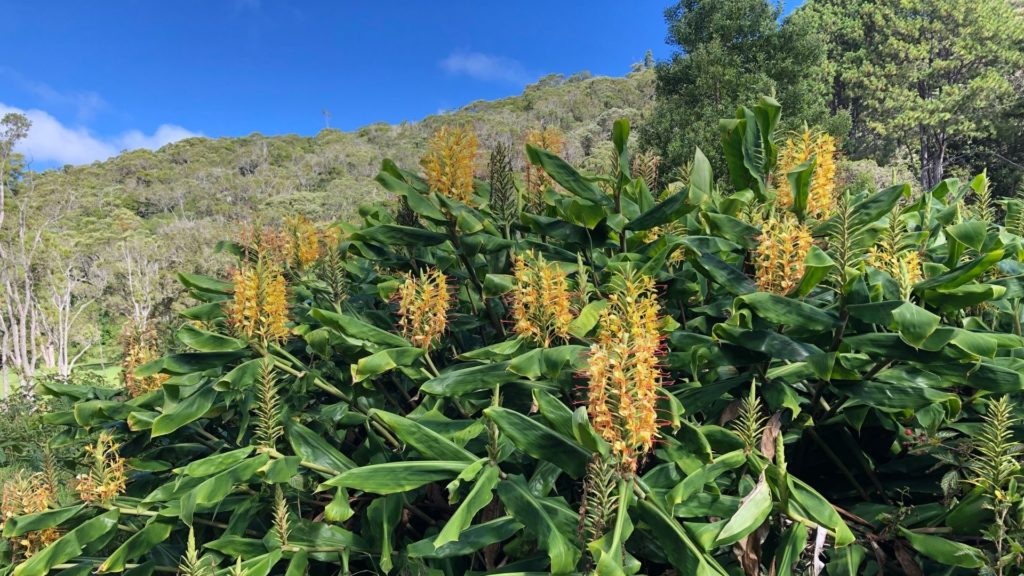
Invasive species continue to take an enormous toll on Hawaii’s natural world. Everything from Himalayan ginger and guinea grass to Coqui frogs, little fire ants, feral ungulates, rats, slugs, and domesticated animals are over-running Hawaii’s vulnerable native flora and fauna.
NTBG is a not-for-profit organization dedicated to plant discovery, scientific research, conservation, and education. Our network of five botanical gardens and four preserves serve as living laboratories and our team of staff and scientists perform an important role in the fight against the damaging effects of invasive species in our communities and native ecosystems. Our efforts to slow and stop the spread of invasive species begin at home in our gardens and preserves throughout Hawaii and Florida, and make a global impact.
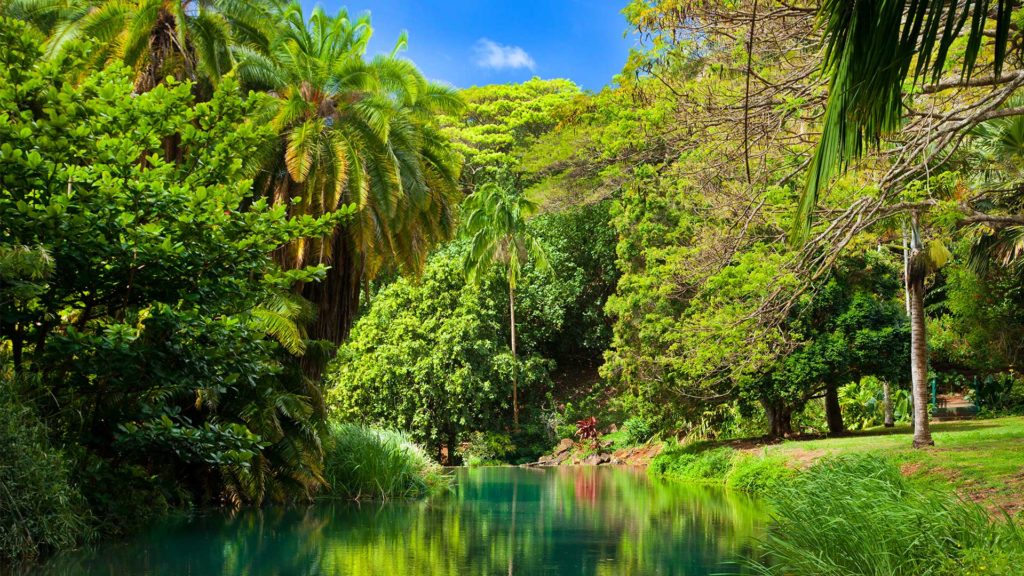
Kauai Island (McBryde, Allerton & Limahuli Gardens)
Our extensive collections of palms, Rubiaceae, Heliconias, orchids, and many others have been wild-collected by botanists and biologists from throughout tropical regions around the world and transported to our gardens to research, cultivate and thrive. Living collections staff and volunteers monitor our collections regularly to identify species for invasive tendencies to ensure these introduced plants do not become harmful to the surrounding environment. Once identified as invasive, species are deaccessioned and removed.
Threats from outside NTBG’s Living Collections also exist. Invasive species often make their own way into our gardens and it can often be hard to recognize their invasive tendencies among the veritable botanical ark of tropical flora. The Kauai Invasive Species Committee (KISC) assists with monitoring the gardens and have so far helped to identify and remove two taxa that were invasive to Lawai Valley. These taxa have been added to their database for further monitoring.
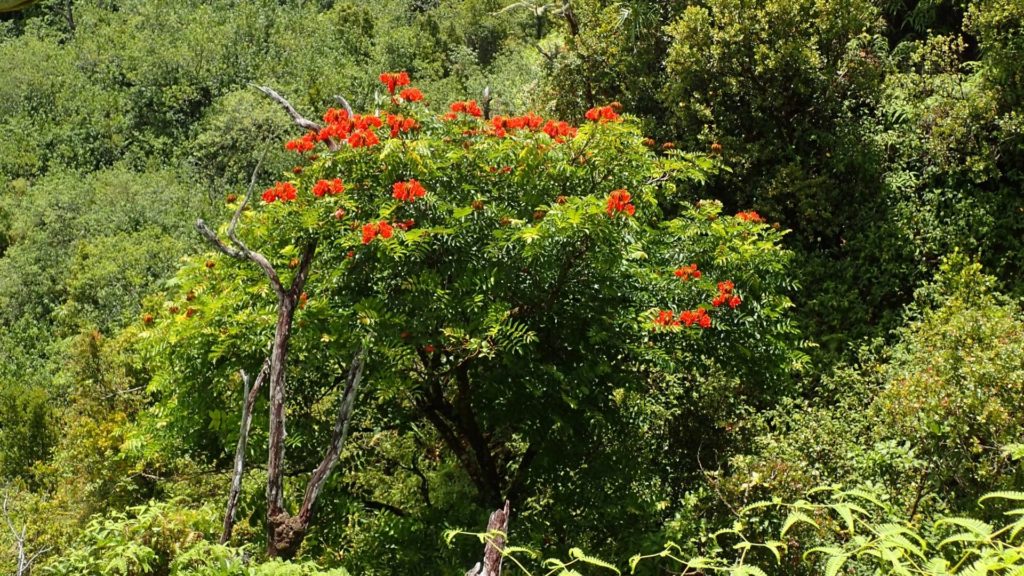
Maui Island (Kahanu Garden)
Invasive species like nutsedge, inkberry, turkeyberry, honohono, and African tulip trees present an ever-growing threat to Kahanu Garden’s collection of Hawaiian and Pacific heritage and agricultural plants as well as the Piilanihale Heiau cultural site. Each year Kahanu Garden staff remove thousands of young plants that arrive as airborne seeds and quickly set deep roots, leave seed banks in the soil, and require months or years of active management. This requires an ever increasing commitment by staff and volunteers to keep the aggressive invasive plants in check.
In the Field
In addition to KISC, NTBG scientists work with agencies like Hawaii Department of Agriculture and the Department of Land and Natural Resources to provide field observations and reference collections that can be used for specimen identification as well providing population and occurrence information on invasive species.
When our botanists are in the field and observe an invasive plant they’ve never seen on the island before, they document the observation and notify the KISC Early Detection Program. These early detections can mean the prevention of a new invasive species on the island from becoming established.
Conservation of threatened and endangered flora is our highest priority, but stemming the spread of invasive species and the threats they pose to native ecosystems is a big job we can’t do alone. In addition to our team, we rely on dedicated volunteers and curious visitors to help save plants and people. You can help by planning a visit to an NTBG garden, volunteering your time, or making a donation.
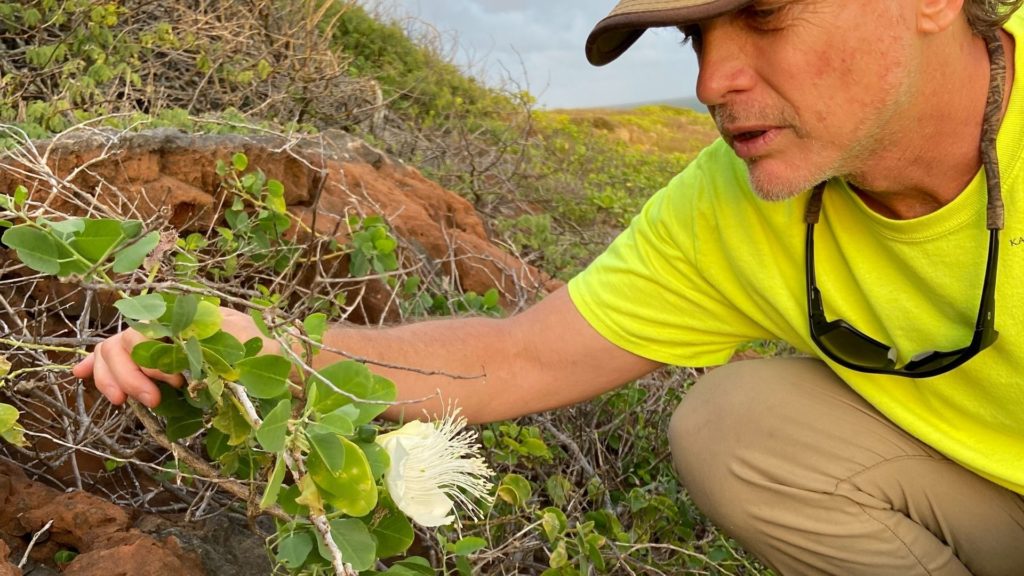
Want to make a difference in your own community? Learn more about your native ecosystem and the plants that keep it healthy and thriving. Don’t miss our upcoming webinar spotlighting the fight against invasive species and efforts to propagate native plants for horticulture trade. Register today.
Uala – Hawaiian Sweet Potato
By Mike DeMotta, Curator of Living Collections
“He ‘uala ka ‘ai ho’ola koke i ka wi” – Sweet potato is the food that quickly restores health after famine
The first Hawaiian voyagers arrived in the Hawaiian Islands with approximately two dozen plants that were important enough to earn space on the crowded outrigger canoes used to cross the ocean. These ‘canoe plants,’ as they are known, were vital for providing food, fiber, medicine, and more. Many of these plants had multiple uses. Three were essential staple food crops — kalo (taro), ulu (breadfruit), and uala (Hawaiian sweet potato).
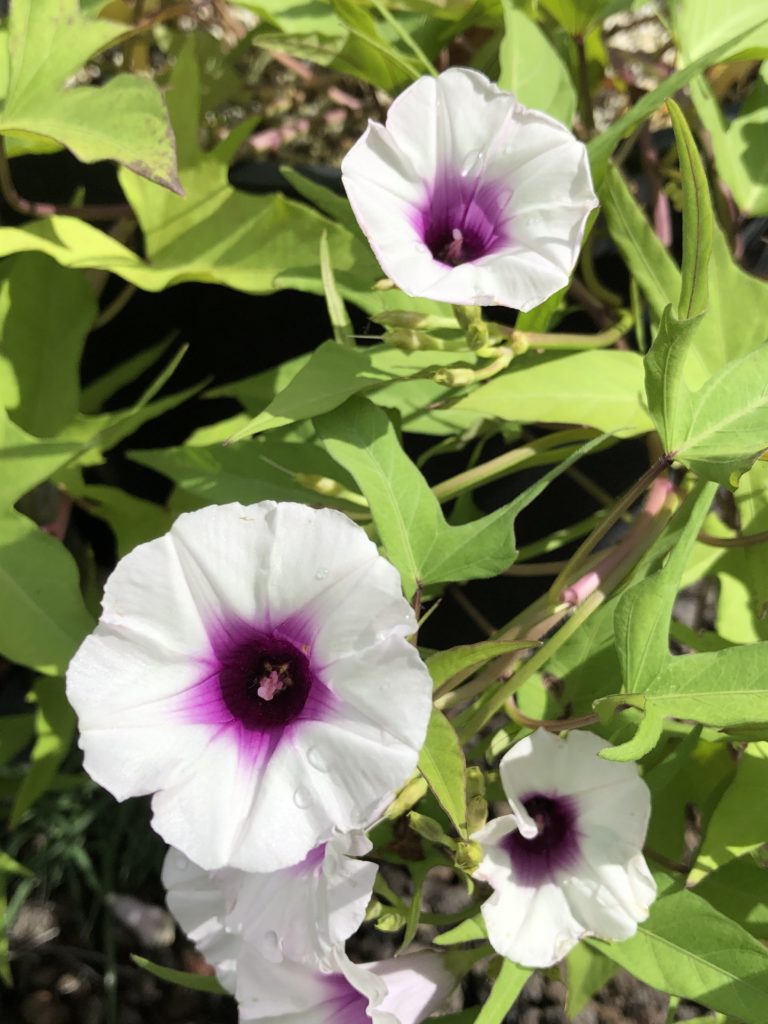
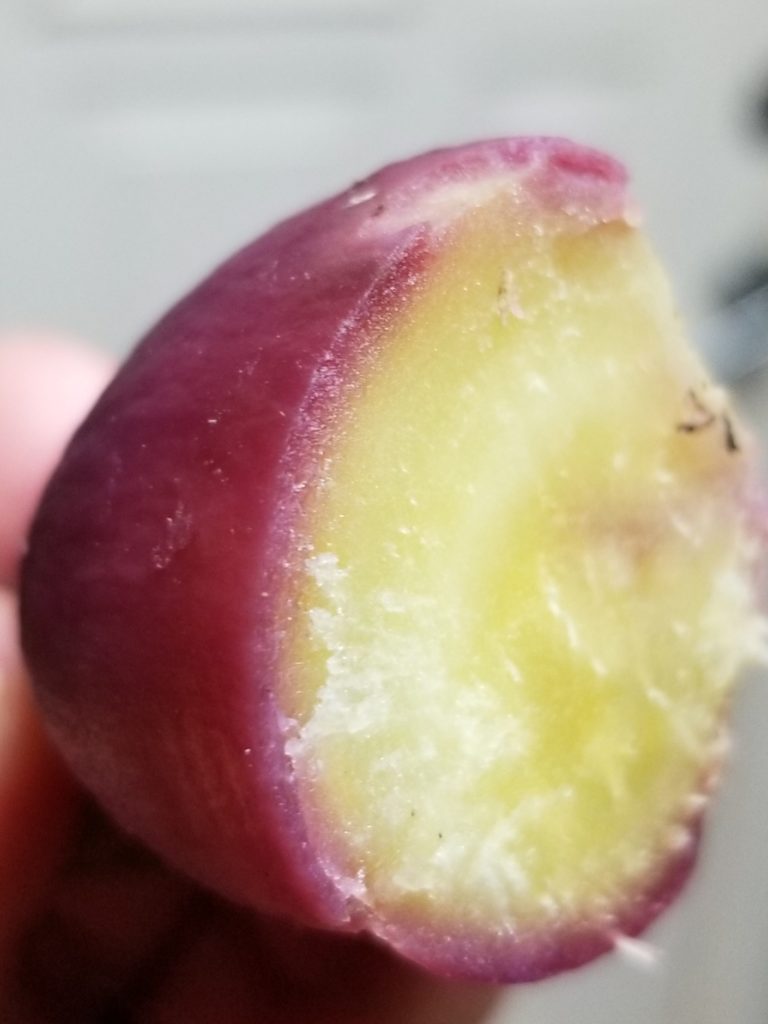
Easily propagated and grown from live cuttings or slips, uala (Ipomoea batatas) was widely cultivated on all the islands. Many communities in Hawaii’s driest areas placed great value on uala and were able to produce enough of the starchy vegetable to sustain large populations by strategically planting it during the rainy winter months and keeping it stored underground for some time after the rains had ended.
Over many generations, mahiai (Hawaiian farmers), who understood the importance of crop diversity, developed many different varieties. They cultivated these hearty, tuberous roots, protecting against total loss of any given variety and building resilience in the event of changing weather patterns or other environmental instability.
As a staple food, uala is an excellent source of vitamin C, beta carotene, potassium, protein, and minerals. The unevenly-shaped Hawaiian sweet potato is valued as a life-preserving crop, but the shoots and young leaves (called palula in Hawaiian), are also cooked and eaten. Offering great flexibility in its preparation, uala can be cooked in the same ways as other potatoes. My favorite way to enjoy uala is steamed in an imu (traditional Hawaiian underground oven). Like kalo, uala can also be mashed into a soft poi which has the consistency of thick pudding and is eaten with fish. Uala poi ferments quickly and so it must be consumed within a day or two. Grated uala cooked with coconut milk is called palau and enjoyed as a special treat.
Today there are about 24 different varieties of Hawaiian uala. Each has a distinctive leaf shape and colors of skin and flesh that range from orange and red to white. The variety Eleele literally means ‘black’ and is named for its very dark stems. Huamoa (‘chicken egg’) is a smallish, egg-shaped tuber. Inside, its darker yellow center is reminiscent of an egg yolk. Palaai (literally: ‘fat’) refers to the size of the large tubers. Piko (‘navel’) is recognized by its deeply-lobed leaves.
Mike DeMotta Inspects uala variety papaa kowahi growing outside the nursery.
Like other multi-use edible canoe plants, many uala have medicinal value. One example of uala’s medicinal use was in the concoction apu, a drink with many ingredients, but primarily made with uala. Apu has been traditionally prepared for women to be taken soon after childbirth to facilitate healing.
NTBG currently has about 20 uala varieties in our collections growing at our south shore Conservation and Horticulture Center and at Limahuli Garden on Kauai’s north shore and Kahanu Garden on Maui. We maintain all varieties within our nursery because of the challenges of growing uala in the field, namely the tenacious feral pigs who always seem to know when uala is ready to harvest. If we don’t get to them first, the pigs will complete their own harvest and never fail to eat everything, destroying all stems and leaves as they go. Growing a backup collection safely inside our nursery, helps us ensure we preserve these irreplaceable varieties.
At NTBG, we have a strategic objective to maintain collections of important Hawaiian canoe plants within our gardens. Heirloom or heritage varieties of canoe plants that are not grown commercially tend to become less common. Each named variety of canoe plant holds great importance in Hawaiian culture, whether identified in ancient legends or for its value as food and medicine. Preserving these varieties, cultivated over many generations, and the names ascribed to each, is equally important. As a key component of Hawaiian language and culture, we must remember these names which provide connections to Hawaii’s ancestors. The same uala we grow today can be traced back many generations to Hawaiian farmers of long ago, providing us with essential sources of food, medicine, and beauty, and living links to an ancient past.
The UN General Assembly has designated 2021 as the International Year of Fruits and Vegetables. The campaign provides an opportunity to increase awareness of the importance of fruits and vegetables to health, nutrition, food security, and UN Sustainable Development Goals.
Plant Hunters Secure Biodiversity Hotspots
Looking to the Past to Protect Flora of the Future
To protect the food of the future, humans must learn from the past. A secluded garden in Florida preserves a 19th-century culinary curator’s tall tales and botanical introductions, while modern-day NTBG plant hunters in Hawaii use advanced technology to document and save species in biodiversity hotspots. With your help, NTBG is stemming the tide of plant loss and food insecurity. When you donate to the National Tropical Botanical Garden, you’re a part of this critical work that keeps our plants and our planet healthy.
It’s hard to imagine in today’s social media-induced foodie frenzy that the American diet has been anything other than a cultural melting pot of culinary curiosities. However, as Author Daniel Stone writes in his 2018 novel, The Food Explorer: The True Adventures of the Globe Trotting Botanist Who Transformed What America Eats, the same way immigrants came to our shores, so too did our food.
Before the 20th century, much of what America ate was meat, seafood, leafy greens, beans, grains, and squash – nutritious and hearty, but hardly the colorful, flavorful fruits and vegetables easily acquired from grocery store shelves and farmers markets today. Surprisingly, we have one adventurous, botanizing plant hunter to thank for most of the introduced tropical fruit, nuts, and grains that have become prominent parts of the American diet, and he is closely connected to NTBG.
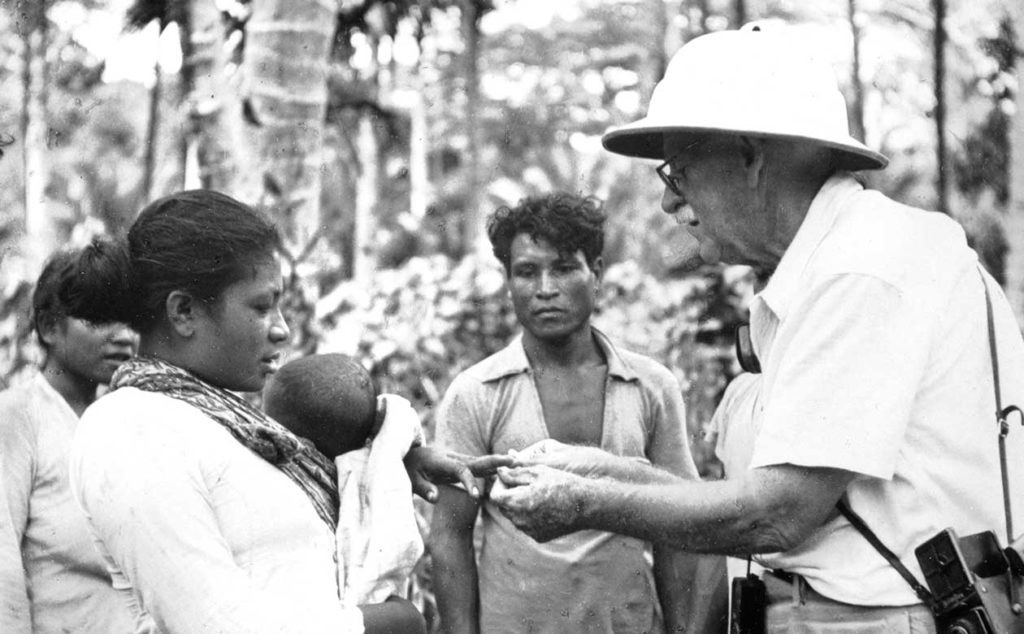
David Fairchild was one of the world’s leading plant collectors in the early 20th century. His private residence in Coconut Grove, Florida, is the present-day location of NTBG’s Kampong Garden. With heritage collections of numerous Southeast Asian, Central, and South American fruits, palms, and flowering trees, The Kampong protects Fairchild’s horticultural legacy and many of his original introductions to the US. It also provides a window into the past that inspires today’s plant hunters and food protectors working toward a more resilient future for our plants and planet.
“The greatest service which can be rendered any country is to add a useful plant to its culture.”
Thomas Jefferson
Fairchild, David Fairchild – International Plant Spy and Man of Botanical Intrigue
David Fairchild was born in the late 19th century and grew up in reconstruction-era America. At that time farmers made up most of the country’s workforce and economic opportunity outside of agriculture was sparse. With a fragile post-war economy largely dependent on farming, The United States Department of Agriculture (USDA) feared that an invasive species or natural disaster could easily disrupt the nation’s food supply and created a plant pathology division aimed at diversifying the nation’s agricultural offerings.
Fairchild joined the division after receiving his education in horticulture and botany from Kansas College, and traveled the world as part government food spy, part horticulturalist, part adventurer seeking new food and crops for the expanding American economy and diet. After several years of botanical escapades across Europe, Southeast Asia, Central and South America, he became the chief plant collector for the USDA and led the Department of Seed and Plant Introductions vastly increasing the biodiversity of the nation’s food crops.
Fairchild’s Legacy Today
Chances are, at least one of the beverages or meals you consumed today would not have been possible without Fairchild’s introductions. Avocado, mango, kale, quinoa, dates, hops, pistachios, nectarines, pomegranates, myriad citrus, Egyptian cotton, soybeans, and bamboo are just a few of the thousands, if not hundreds of thousands of plants Fairchild introduced to the United States.
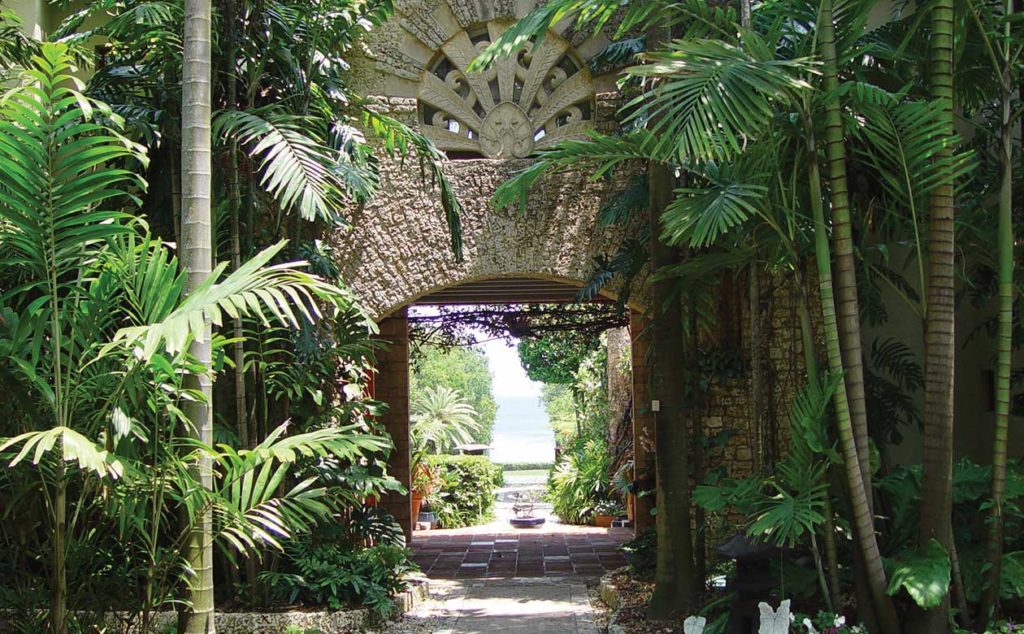
“Fairchild was key to the development of agricultural research and introduction stations around the US and in Puerto Rico. Many of those stations are still current and viable, acting as gene banks for plants he brought into the country,” said Craig Morell, Director of The Kampong. “The Kampong houses some of his early introductions, but these were mostly plants he liked to have in his personal garden. We maintain them today in the same fashion that museums curate and preserve antiquities,” Morell continued.
“Fairchild was key to the development of agricultural research and introduction stations around the US and in Puerto Rico.”
Craig Morell, Director of The Kampong
Fairchild’s work fundamentally changed the American diet and agricultural economy, and his career as a plant hunter, gene banker, and horticulturalist continues to inspire those following in his footsteps today.
Modern-Day Plant Hunters Protect Biodiversity Hotspots
Hawaii was selected for NTBG’s headquarters because of its status as a biodiversity hotspot. This means that while rich in biodiversity, Hawaii’s flora and fauna are deeply threatened by climate change, invasive species, and human activity. While the rate of species loss continues to accelerate worldwide, 2020 was a banner year for NTBG’s modern-day plant hunters. Our team of scientists discovered previously unknown populations of nine rare and endangered species including, Hibiscadelphus distans; Melicope stonei; Schiedea viscosa; Lysimachia scopulensis; Lepidium orbiculare; and Isodendrion laurifolium. Bolstering biodiversity hotspots not only strengthens our food supply, it also builds resilience and ensures ecosystems continue to sustain life, supply oxygen, clean air and water.
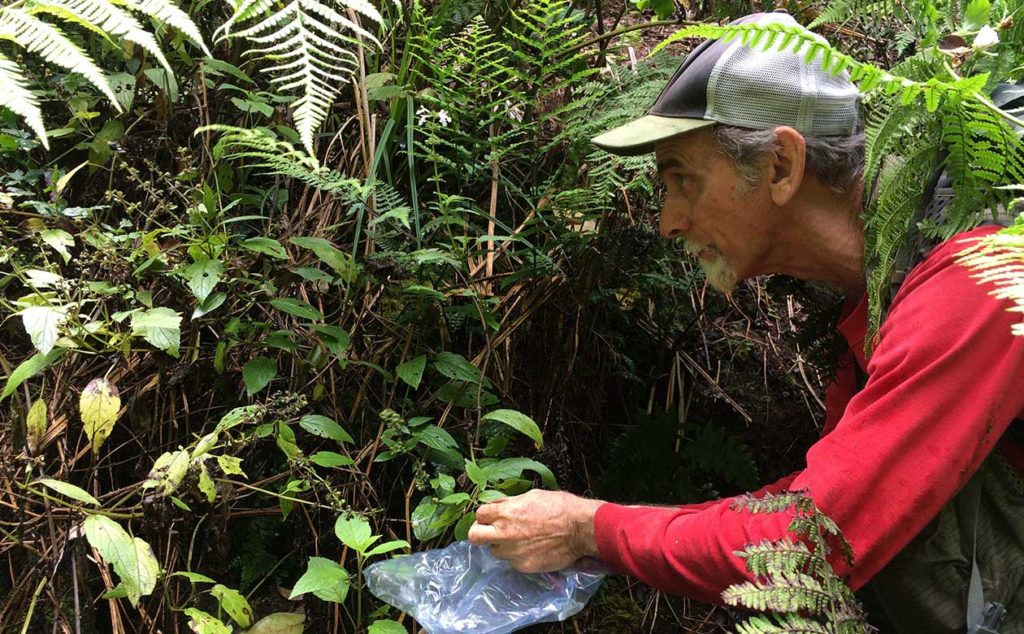
“These discoveries offer new hope for conservation of Hawaii’s endangered rare plants and native forests,” said Nina Rønsted, NTBG Director of Science and Conservation. “These findings also illustrate the importance of investing in science as a vital tool to better understand and protect the natural world,” she continued.
Like Fairchild, today’s plant hunters are no strangers to thrill and adventure. NTBG botanists have long been known for repelling down sheer cliffs and into steep valleys searching for rare plant life. Today, with the help of drone and mapping technology, NTBG remains at the forefront of tropical plant discovery and conservation.
“Hawaii has been referred to as the extinction capital of the United States,” said Ben Nyberg, NTBG GIS specialist and drone pilot. “It’s home to 45% of the country’s endangered plant population, and we don’t know how climate change and new threats like Rapid Ohia Death will affect these rare plants’ habitats. We are trying to document and collect material as quickly as possible,” he finished.
“These discoveries offer new hope for conservation of Hawaii’s endangered rare plants and native forests.”
Nina Rønsted, NTBG Director of Science and Conservation
Keeping Watch
NTBG sets itself apart in the race to save rare and endangered tropical plants. In addition to collecting, categorizing, and seed banking rare plant material, NTBG outplants thousands of rare and endemic species into our gardens and preserves located across the Hawaiian Islands.
From now through 2022, NTBG will engage in a conservation project called, Securing the Survival of the Endangered Endemic Trees of Kauai supported by Fondation Franklinia. This project will focus on eleven species that either previously grew in the Limahuli Valley or have a remnant population of fewer than ten individuals. Throughout the three-year project, NTBG will collect and propagate seeds and use previous collections from our seed bank to balance the need for substantial seed collection. When the new treelets are strong enough, most will be outplanted in the Limahuli Preserve to monitor and protect them. Alongside the Fondation Franklinia project and with the help of our supporters and collaborators, NTBG remains dedicated to saving as many endangered plant species as possible as we work to protect and restore native ecosystems on Kaua‘i and beyond.
From the outlandish adventures and introductions of a 20th-century plant hunter to modern-day scientists using drones to seek out rare plant life on the steep cliffs and rocky ridges of Kauai, NTBG is learning from the past and leading the way in the fight to protect the future of food, plants, animals, and ecosystems. Learn more and support plant-saving science today.
Healthy Plants. Healthy Planet.
NTBG is a nonprofit organization dedicated to saving and studying tropical plants. With five gardens, preserves and research centers based in biodiversity hotspots in Hawaii and Florida, NTBG cares for and protects the largest assemblage of Hawaiian plants. Join the fight to save endangered plant species and preserve plant diversity today by supporting the Healthy Plants, Healthy Planet campaign.
Simple Banana Recipes
We are sharing a few simple banana recipes you can make and share this holiday season. These dishes were adapted from Hawaiian Cookbook by Roana and Gene Schindler. Buy ingredients from your local farms and farmer’s markets when possible to make these dishes even better!
Share your completed dishes with us on social media! Be sure to tag @ntbg on Instagram.
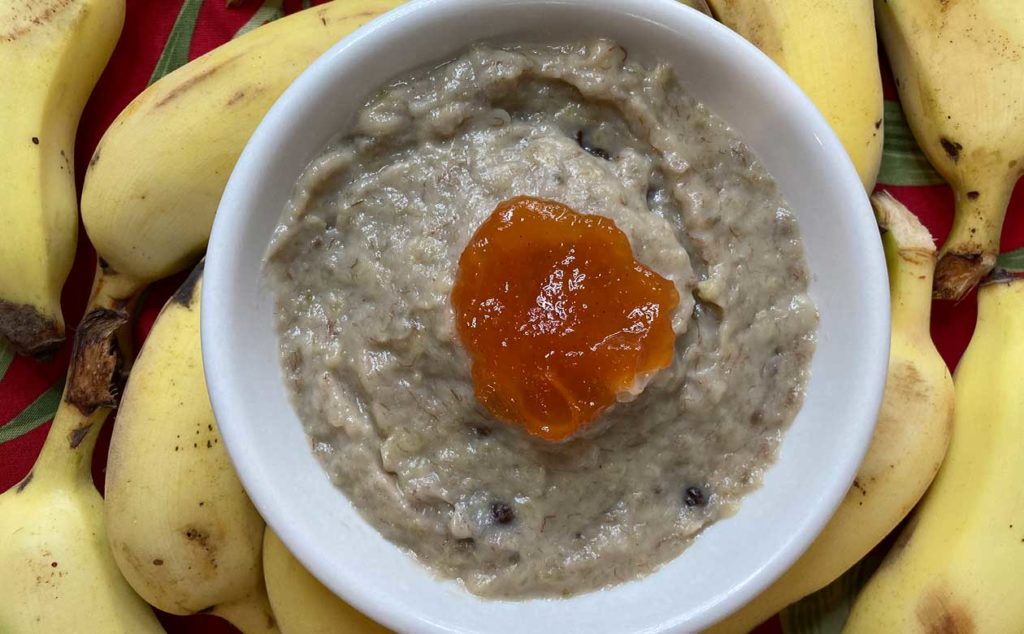
Banana (Maia) Pudding Recipe
Ingredients
- 2 cups coconut milk (or cow’s milk)
- 2 tablespoons sugar
- 1/4 cup raisins (optional)
- 1 tablespoon chopped macadamia nuts
- 3 medium-size ripe bananas, mashed
Cooking Instructions
- Step 1: Scald milk in the top of a double boiler or thick-bottomed saucepan.
- Step 2: Once the milk is scalding, add sugar, raisins, nuts, and bananas. Cook for 10 minutes, stirring constantly until mixture thickens. Remove from heat.
- Step 3: Divide into individual serving dishes, distributing fruit evenly. Cool and refrigerate. Serve with a dollop of red jam, jelly, or whipped cream. We topped with Papaya Vanilla Jam from Monkeypod Jam, a small preservery and bakery located on Kauai.
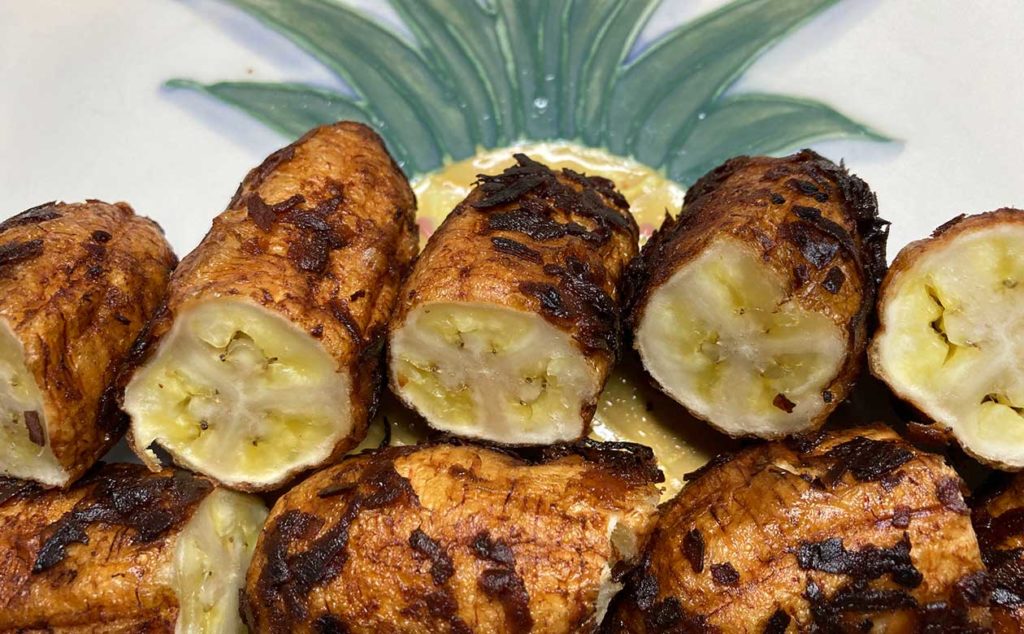
Drunken Bananas (Maia Ona) Recipe
Ingredients
- 6 small, firm bananas
- 1/2 cup rum mixed with 2 teaspoons lemon juice. We used Kōloa Kauaʻi Spice Rum
- 1 egg, beaten
- 3/4 cup flaked coconut or chopped nuts (almonds, macadamia, walnuts)
- Neutral oil for frying like vegetable oil
Cooking Instructions
- Step 1: Soak whole bananas in rum and lemon juice for about 1 hour. Turn frequently.
- Step 2: Dip bananas in egg and roll in coconut or chopped nuts.
- Step 3: Heat 1/2 inch of oil in a skillet on low and fry bananas slowly until brown on all sides and tender. Drain on paper toweling and serve hot.
Share your completed dishes with us on social media! Be sure to tag @ntbg on Instagram and use the hashtag #ntbgrecipechallenge for a chance to win a prize.
Banana History
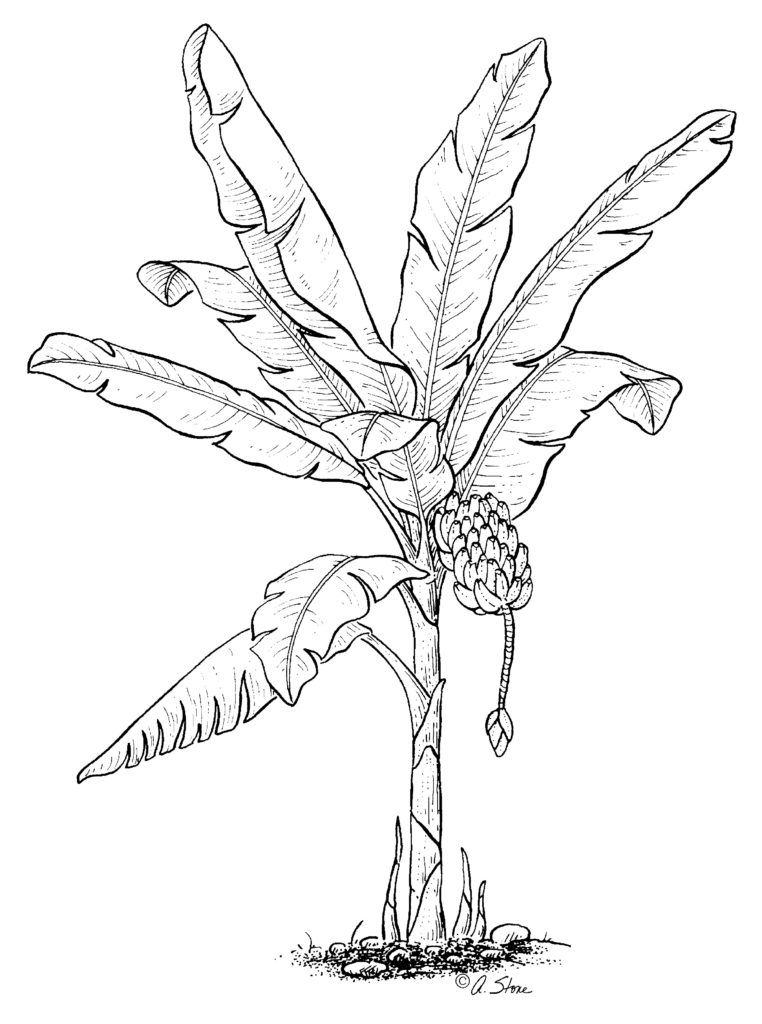
Banana or maiʻa in Hawaiian are canoe plants introduced and planted in some of the most idyllic and enchanting places throughout the islands. One ancient story described a banana patch so large you could get lost trying to find your way around it growing deep in Maui’s Waihoi Valley. The story caught the attention of naturalist Dr. Angela Kay Kepler in 2004, and a botanical adventure ensued. Determined to find the legendary banana field, Dr. Kepler hired a helicopter to survey the valley. Sure enough, growing along the Waiohonu River banks, was the largest wild-growing traditional Hawaiian Banana Patch.
After making this discovery, Dr. Kepler phoned Kamaui Aiona, former director of NTBG’s Kahanu Garden and Preserve, managing a small collection of banana varieties. The two returned to the wild patch, collected a pair of young specimens, and returned them to the garden collection where they are still growing. Today, Kahanu’s maia collection exceeds 30 varieties and is one of the most diverse in the State of Hawaii. This collection is essential to the safeguarding the world’s most popular tropical fruit.
Strength in Numbers
A rare collection of bananas at Kahanu Garden safeguards species diversity and the world’s favorite tropical fruit
The world’s most popular tropical fruit is one of the most susceptible to disease. NTBG’s Kahanu Garden maintains a collection of rare bananas that is a safeguard preserving plant diversity of this important tropical food crop and your breakfast. With your help, NTBG is stemming the tide of plant loss and food insecurity. When you donate to the National Tropical Botanical Garden, you’re a part of this critical work that keeps our plants and our planet healthy.
It is a story that is all too common in 2020. A mysterious disease quietly spreads far and wide before its life-threatening symptoms appear. By the time the disease is identified, it’s impossible to stop and takes a heavy toll. While familiar, this story is not about the present COVID-19 pandemic but rather a fungus wreaking havoc on banana crops worldwide and threatening the existence of the most widely consumed Cavendish variety.
If you ate a banana today, chances are you were able to easily acquire it from a local supermarket or cafe. It probably looks and tastes just like every other banana you have ever purchased, and you could find one just like it from nearly any grocer or roadside fruit stand on the planet. This is because monoculture crops of Cavendish bananas account for 47% of global banana production and 99% of bananas cultivated for commercial export.
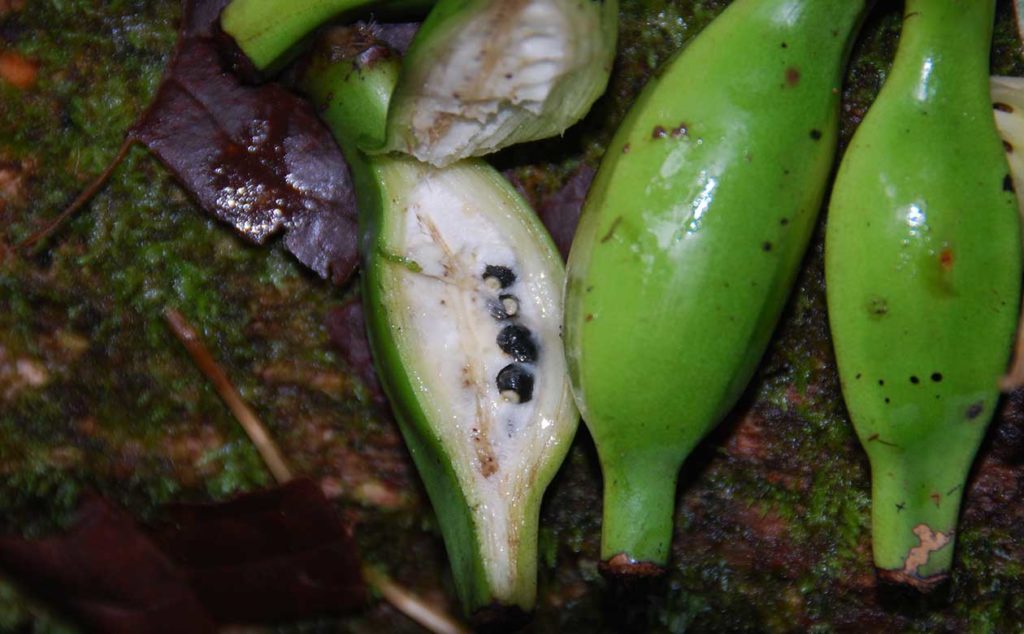
Monoculture is a form of agriculture focused on growing one type of crop at a time. In the case of Cavendish bananas, not only are they the primary variety cultivated for commercial consumption and trade, the crops are genetically identical. This means that every Cavendish banana you have eaten is a clone of one that came before it. While monoculture does offer the benefit of efficiency and scale, it also increases the risk of disease and crop vulnerability. In other words, if a disease affects one plant, it can affect them all. Banana farmers and barons of the early 20th century are no stranger to the vulnerabilities of banana monoculture. Until the mid 20th century, the Gros Michel variety of banana was the most popular, commercially available variety. Still, fungus all but wiped it out in the 1950s, replaced by today’s heartier, or so thought, Cavendish variety.
A race with no end in sight
Tropical Race 4 (TR4), also known as Fusarium Wilt or Panama Disease, is a soil-borne fungus that enters banana plants from the root, blocks water flow throughout the plant, and causes it to wilt. At present, TR4 cannot be controlled with fungicide or fumigation and has been found in banana-growing regions across Asia, Africa, Australia and was discovered in South America, where most commercial bananas are produced in 2019.
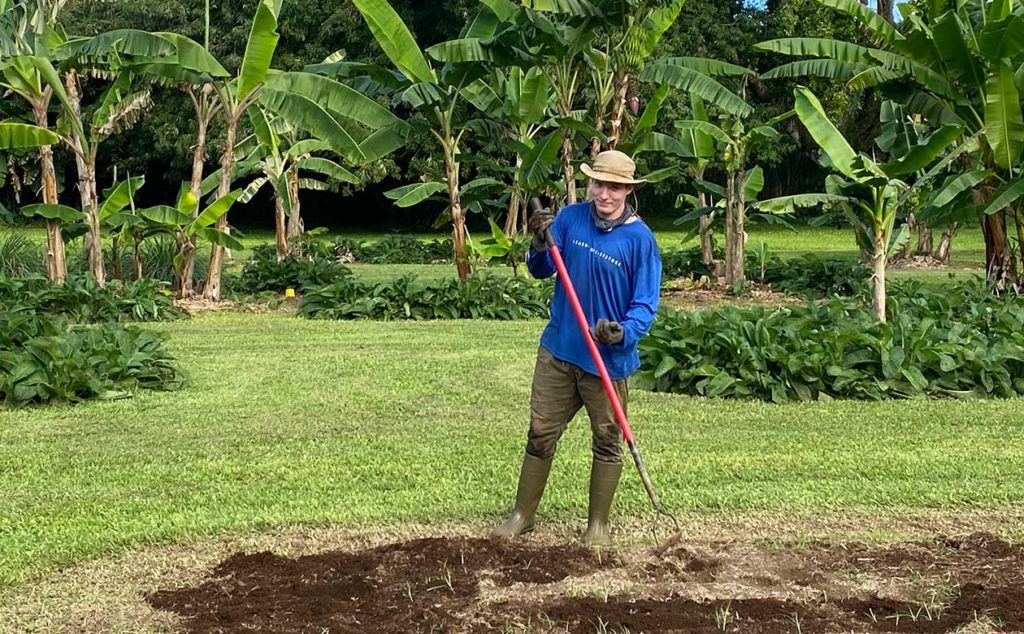
Bananas are the world’s most popular tropical fruit. In fact, the average American consumes more than 26 pounds of banana every year. While not exactly a staple of the American diet, bananas are one of the most economically important food crops worldwide and responsible for an annual trade industry of more than $4 billion, only 15% of which is exported to the United States, Europe, and Japan. What is particularly devastating about the fungus’ potential to overrun our most popular variety is that most bananas are consumed by people in developing countries where affordable food sources and nutrient-rich calories can be hard to come by. With a great demand for bananas and monoculture crops highly susceptible to TR4 and other fungi, scientists are racing the clock to develop new disease-resistant bananas, but looking to history is likely where the answer lies.
Bananas with a legendary past and promising future
Long before westerners arrived in Hawaii, ancient Polynesians voyaged to the islands in double-hulled sailing canoes. To sustain life throughout their journey, and once they reached their destination, they brought a selection of at least two dozen species of plants for food, clothing, structure, medicinal and cultural purposes. These plants are commonly referred to as “canoe plants,” and even though they were introduced to the island, they are an essential part of Hawaii’s cultural history.

Banana or maiʻa in Hawaiian are canoe plants introduced and planted in some of the most idyllic and enchanting places throughout the islands. One ancient story described a banana patch so large you could get lost trying to find your way around it growing deep in Maui’s Waihoi Valley. The story caught the attention of naturalist Dr. Angela Kay Kepler in 2004, and a botanical adventure ensued. Determined to find the legendary banana field, Dr. Kepler hired a helicopter to survey the valley. Sure enough, growing along the Waiohonu River banks, was the largest wild-growing traditional Hawaiian Banana Patch.
“The number of early varieties is a fraction of what it once was, and research to verify each is ongoing. Kahanu Garden serves as a haven where they can be preserved and shared for future generations.”
Mike Opgenorth, Kahanu Garden Director
After making this discovery, Dr. Kepler phoned Kamaui Aiona, former director of NTBG’s Kahanu Garden and Preserve, managing a small collection of banana varieties. The two returned to the wild patch, collected a pair of young specimens, and returned them to the garden collection where they are still growing. Today, Kahanu’s maia collection exceeds 30 varieties and is one of the most diverse in the State of Hawaii.
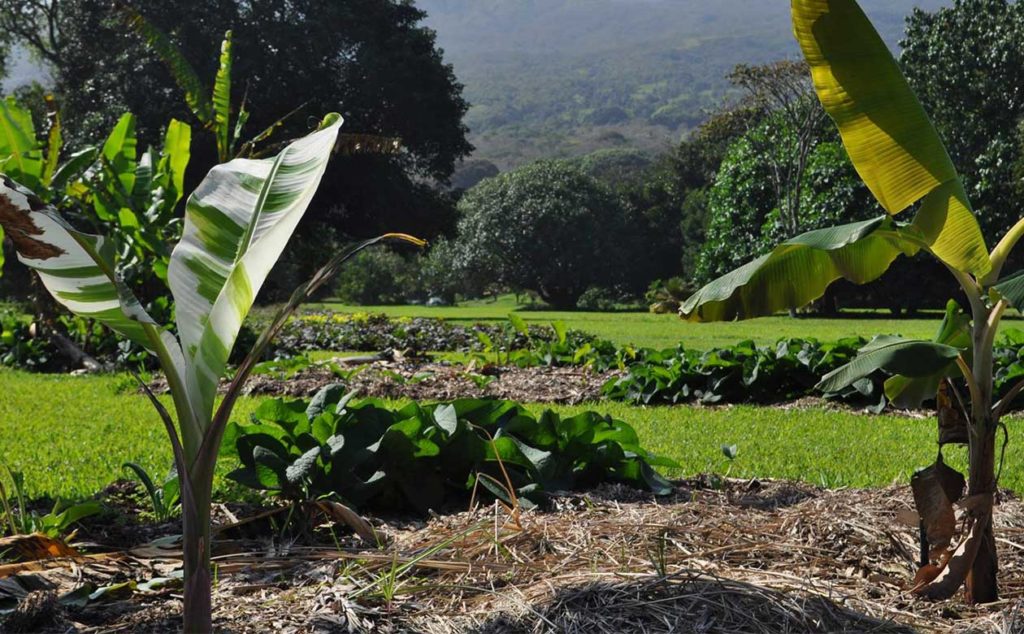
“In recognition of the threat of losing indigenous crop diversity, NTBG recently adopted a strategic goal to collect and curate all extant cultivars of Hawaiian canoe plants,” said Mike Opgenorth, current Director at Kahanu Garden. “The number of early varieties is a fraction of what it once was, and research to verify each is ongoing. Kahanu Garden serves as a haven where they can be preserved and shared for future generations.” he continued.
Feeding the world starts at home
Today, Kahanu Garden is carrying on the critical work of protecting banana diversity and Hawaii’s botanical heritage and re-introducing these important varieties to local food systems. “Existing commercial varieties do not exhibit the resiliency to combat these new diseases,” said Opgenorth. “It is so important that other banana varieties remain available so that we can defend irreplaceable genetic diversity that will help feed the world,” he finished.
Feeding the world starts at home for NTBG and Kahanu Garden. Together with partners at Mahele Farm, the organizations are working together to provide for the isolated Hana Maui community and share the traditional plant knowledge of Hawaii’s kupuna (elders).
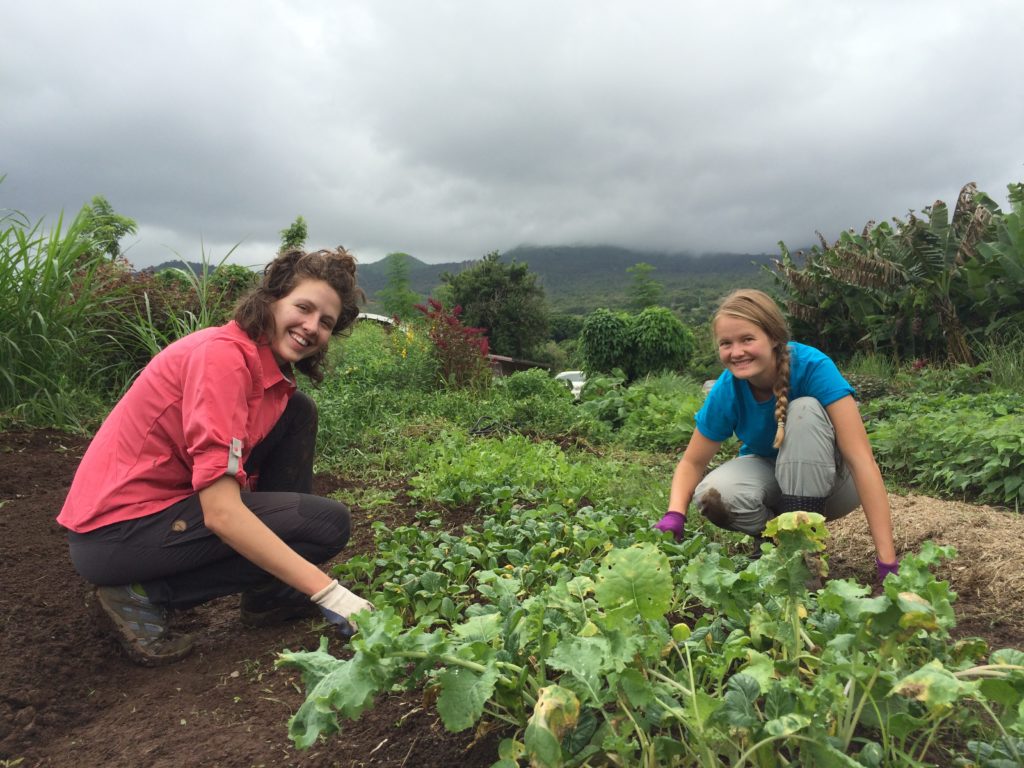
“Over the past ten years, weʻve launched ourselves into the Hawaiian-style study of maia,” said Mikala Minn, Volunteer Coordinator at Mahele Farm. “As small farmers dedicated to feeding our community, the crop variety was a perfect fit for our weekly food distributions. As we shared the fruit and learned the best ways to prepare each type, stories from our kupuna came to light. This personʻs papa would put them in the imu, half-ripe. Another kupuna grew up eating them boiled and mashed. Others made poʻe, a kind of maiʻa poi.,” he continued. Mahele Farm distributes approximately 50 pounds of fresh produce to kupuna at the Hana Farmers market every week and helps maintain a small collection of Hawaiian bananas at the Hana Elementary school.
“This personʻs papa would put them in the imu, half-ripe. Another Kupuna grew up eating them boiled and mashed. Others made poʻe, a kind of maiʻa poi.”
Mikala Minn, Volunteer Coordinator at Mahele Farm
Today’s agricultural and botanical problems are complex, but looking to the past, protecting plant diversity, and encouraging local farmers, schools, and even home gardeners to diversify is an excellent and effective step in the right direction.
Healthy Plants. Healthy Planet.
NTBG is a nonprofit organization dedicated to saving and studying tropical plants. With five gardens, preserves and research centers based in Hawaii and Florida, NTBG cares for and protects the largest assemblage of Hawaiian plants. Join the fight to save endangered plant species and preserve plant diversity today by supporting the Healthy plants, healthy planet campaign.
NTBG’s Breadfruit Institute demonstrates potential with new collaborations
For centuries, breadfruit has been a vital food crop throughout Oceania. Voyagers carried planting material from the nutrient-rich fruit-bearing tree across the Pacific. Countless generations of farmers have cultivated breadfruit for its versatile, starchy fruits from Southeast Asia and the Pacific, to the Caribbean, Africa, and beyond. Since 2003, when the National Tropical Botanical Garden (NTBG) established the Breadfruit Institute, interest and awareness for the attractive, long-lived, high-yield tree crop has spread around the world.
The Breadfruit Institute, based at NTBG headquarters in Hawaii, has assembled the world’s largest and most diverse collection of breadfruit varieties (more than 200 trees representing around 150 varieties) on Maui and Kauai. In 2017, with funding from the Hawaii Department of Agriculture and Patagonia Provisions, the Breadfruit Institute began a bold initiative to transform the existing breadfruit research orchard in the McBryde Garden on Kauai into a regenerative organic breadfruit agroforest (ROBA).
Based on the traditions of agroforestry (food forests) practiced throughout the Pacific and elsewhere, the Breadfruit Institute developed the ROBA, a sustainable living model of how a long-lived tree crop like breadfruit can be integrated with a multitude of other edible and ornamental plants to increase productivity while integrating existing resources to enrich the soil and sequester carbon.
Plants such as bananas, taro, sugar cane, ginger, citrus, understory row crops, and others are being grown alongside mature breadfruit trees, producing an abundance of food that can feed people year-round while at the same time, creating more favorable conditions for the surrounding breadfruit trees which produce seasonally.
Through its many partnerships and collaborations, NTBG and the Breadfruit Institute have changed the trajectory of this centuries-old tree crop, infusing new enthusiasm and an interest shared by farmers, chefs, nutritionists, educators, non-governmental organizations, and communities around the world seeking to improve food security, soil health, and environmental conditions.
For five years, Patagonia Provisions has supported the work of the Breadfruit Institute in demonstrating how breadfruit agroforestry can help nourish people and the planet. Now, in collaboration with a breadfruit growers’ cooperative in Costa Rica assisted by the Breadfruit Institute, Patagonia Provisions has produced an exciting new breadfruit cracker that will allow this tropical crop to be easily shipped, shared, and enjoyed no matter where you live.
This delicious, healthful cracker is the latest example of how an ancient, traditional tropical food crop is adapting to meet the needs of the global community. The cracker also illustrates the incredible potential of breadfruit and the important role agroforestry and regenerative organic agriculture can have in creating a healthier, hunger-free planet.
To learn more about breadfruit and agroforestry, and how you can experience and connect with the Breadfruit Institute and National Tropical Botanical Garden, visit https://ntbg.org/breadfruit/.
Tropical Crops Key in the Fight for Food Security
Thanks to a chance encounter in graduate school, Diane Ragone, Ph.D., director of the Breadfruit Institute at NTBG, dedicated her life to documenting and preserving a nutritious, starchy, and storied fruit of the Pacific. Breadfruit, or ulu as it is known in Hawaii, may be the key to preventing the loss of traditional and culturally significant food crops and stabilizing food and economic security in the tropics. NTBG and the Breadfruit Institute are stemming the tide of plant loss and food insecurity with your help. When you donate to the National Tropical Botanical Garden, you’re a part of this critical work that is keeping our plants and our planet healthy.
A Chance Encounter
In 1981, Diane Ragone, a horticulturist interested in tropical fruit, moved to the Hawaiian Island of Oahu for graduate studies at the University of Hawaii in the Horticulture Department. After a chance encounter and single taste of the nutritious, starchy, and storied fruit, commonly known as breadfruit or ulu in Hawaii, Diane decided to make it the subject of a term paper. “The history of breadfruit was so interesting to me because of how widely it was grown throughout the Pacific Islands and how important it was culturally and as a food staple for so many Pacific Islanders for centuries,” she said.
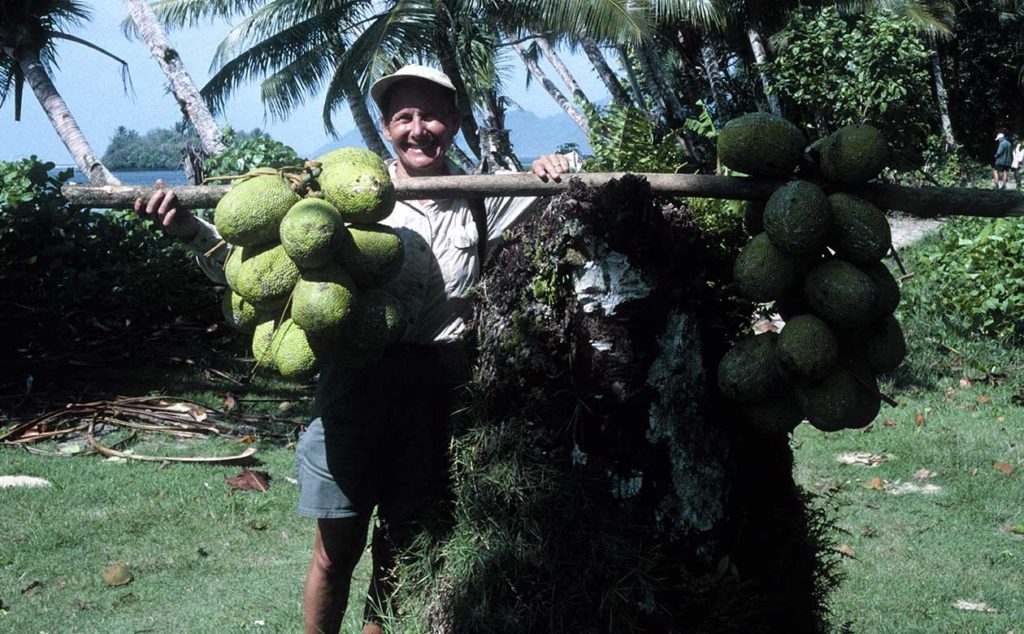
“The history of breadfruit was so interesting to me because of how widely it was grown throughout the Pacific Islands and how important it was culturally and as a food staple for so many Pacific Islanders for centuries.”
Dr. Diane Ragone, Director, the Breadfruit Institute
History and Botanical Interests
Breadfruit originated in New Guinea and the Indo-Malay region and was spread throughout the vast Pacific by voyaging islanders. Europeans discovered breadfruit in the late 1500s and were delighted by a tree that produced prolific, starchy fruits that resembled freshly baked bread in texture and aroma when roasted in a fire.
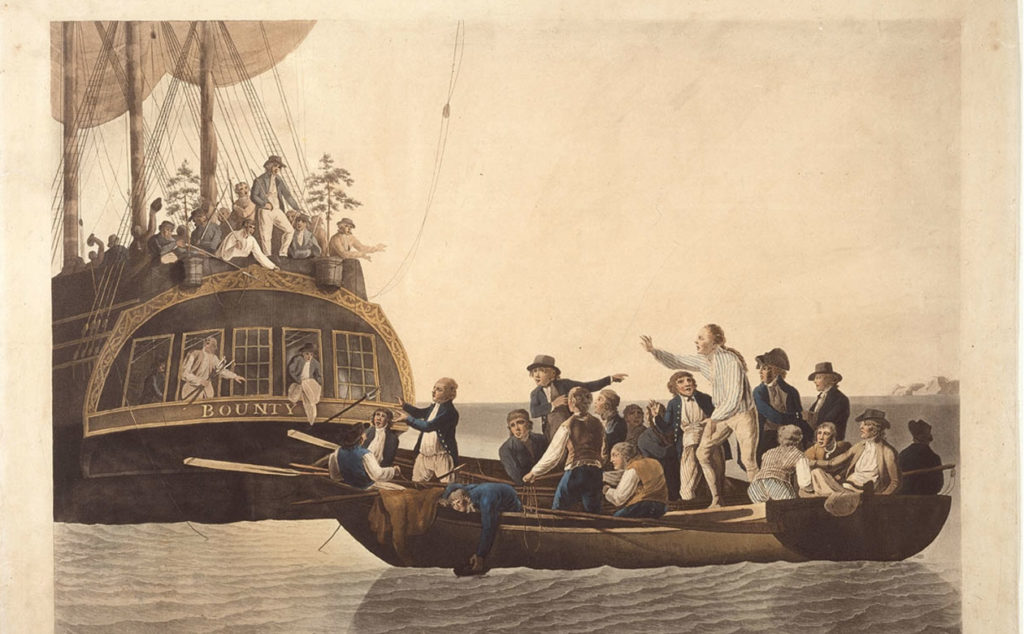
Sir Joseph Banks, who sailed on HMS Endeavour with Captain Cook to Tahiti in 1769, recognized the potential of breadfruit as a food crop for other tropical areas. He proposed to King George III that a special expedition be commissioned to transport breadfruit plants from Tahiti to the Caribbean. This set the stage for one of the grandest sailing adventures of all time – The ill-fated voyage of HMS Bounty under the command of Captain William Bligh.
What is little known is that Captain Bligh returned to Tahiti on the aptly named HMS Providence to continue the breadfruit voyage. Several Tahitian varieties, and an unknown variety from Timor, were successfully introduced to the Caribbean in 1793. While many accounts dismiss this epic plant introduction as a failure because the islands’ population did not initially accept this new crop as a food, subsequent centuries have proved the value of breadfruit to the Caribbean and other tropical areas.
A renewed interest in breadfruit emerged in the 1920s and 1940s after World War II when botanists and scientists realized that many traditional food crops and cultivation practices were at risk of disappearing from the Pacific Islands. “Plant introductions were of particular interest to me, so I approached my research from the angle of collection, conservation, and documentation of breadfruit diversity,” said Dr. Ragone. “It was fascinating for me to learn that there were places in the Pacific that had documented 50, 60, even a hundred varieties of breadfruit,” she continued.
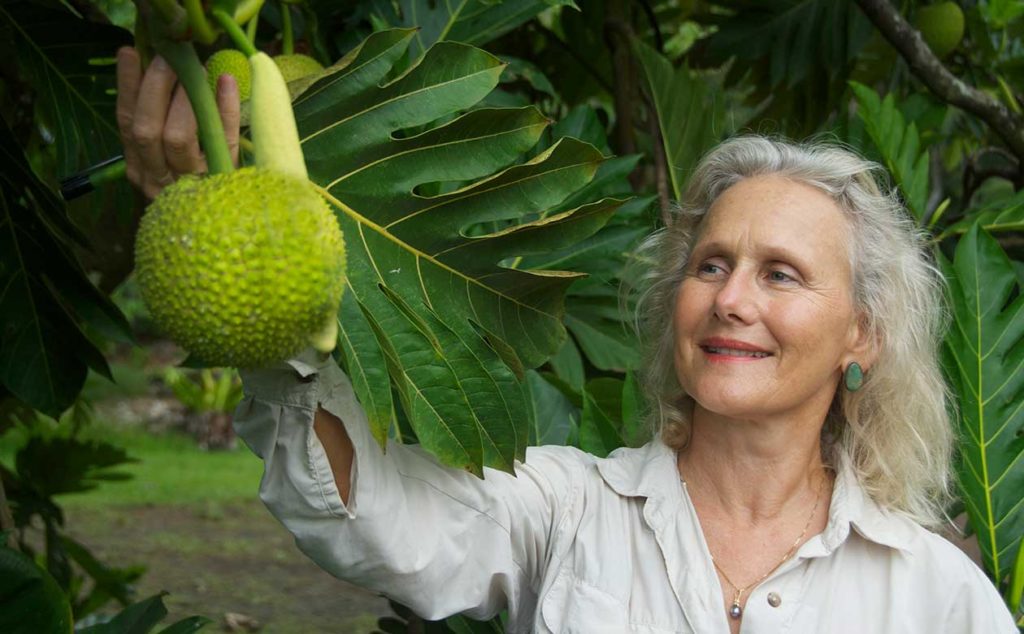
In 2003 Diane established the Breadfruit Institute to promote the conservation, study, and use of breadfruit for food and reforestation and is a global leader in efforts to conserve and use breadfruit diversity to support regenerative agriculture, food security, and economic development in the tropics.
Food Security and Economic Opportunity
Compared to an annual field crop, breadfruit trees are easy to plant and can produce anywhere from 300 to 1,200 pounds of starchy, nutritious food every year for decades. Breadfruit grows in tropical regions worldwide, which have some of the highest instances of food insecurity and poverty anywhere. 85% of the places around the world where hunger and poverty are most acute, breadfruit can grow. This makes breadfruit an incredible resource for bolstering food security and creating economic opportunity for the farmers and families where it is needed most.
“Even in Hawaii, it’s hard to be a farmer and make enough money to pay your bills.”
Noel Dickinson, NTBG Research Technician
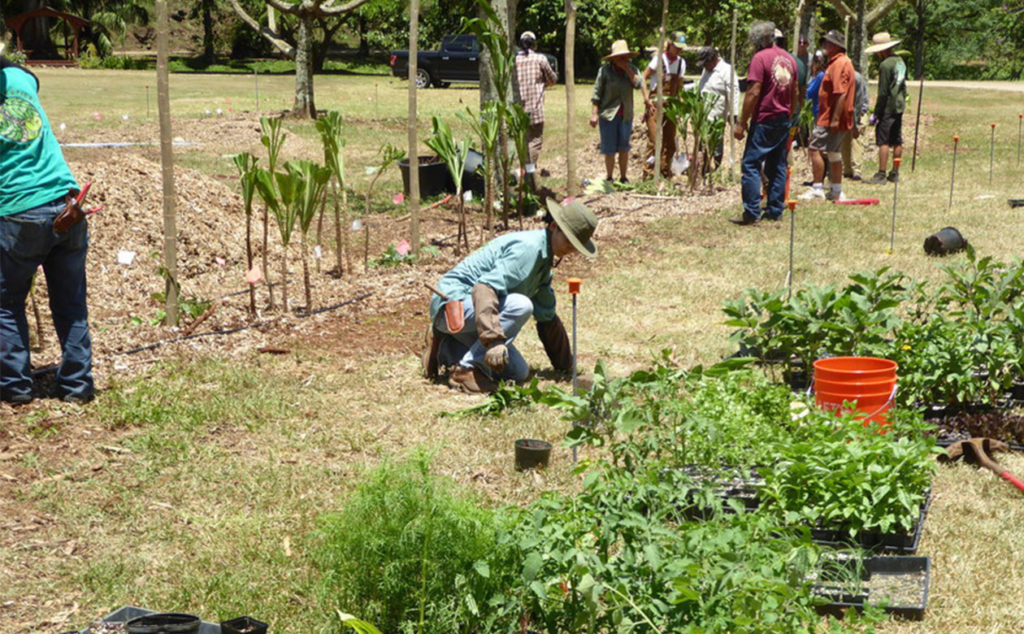
“Even in Hawaii, it’s hard to be a farmer and make enough money to pay your bills,” said Noel Dickinson, Research Technician at National Tropical Botanical Garden. “What we are trying to demonstrate with the Regenerative Organic Breadfruit Agroforest in McBryde Garden is a way for farmers and individuals in Hawaii and tropical regions around the world to diversify and utilize all of their land with ulu as the backbone of their system,” she continued.
Regenerative Organic Breadfruit Agroforestry (ROBA)
Agroforestry is a farming method that integrates trees, shrubs, and other plants with crops or animals in ways that provide economic, environmental, and social benefits. In 2017, NTBG’s Breadfruit Institute established a two-acre Regenerative Organic Breadfruit Agroforestry demonstration in McBryde Garden with funding from the Hawaii Department of Agriculture and Patagonia Provisions. The demonstration garden contains more than 100 plant species and varieties, which are monitored weekly for production. In 2020, the ROBA demonstration has produced more than 6,000 pounds of fresh food, approximately 20,000 meals, which has been donated to staff, volunteers, and organizations mitigating food insecurity on Kauai during the pandemic.
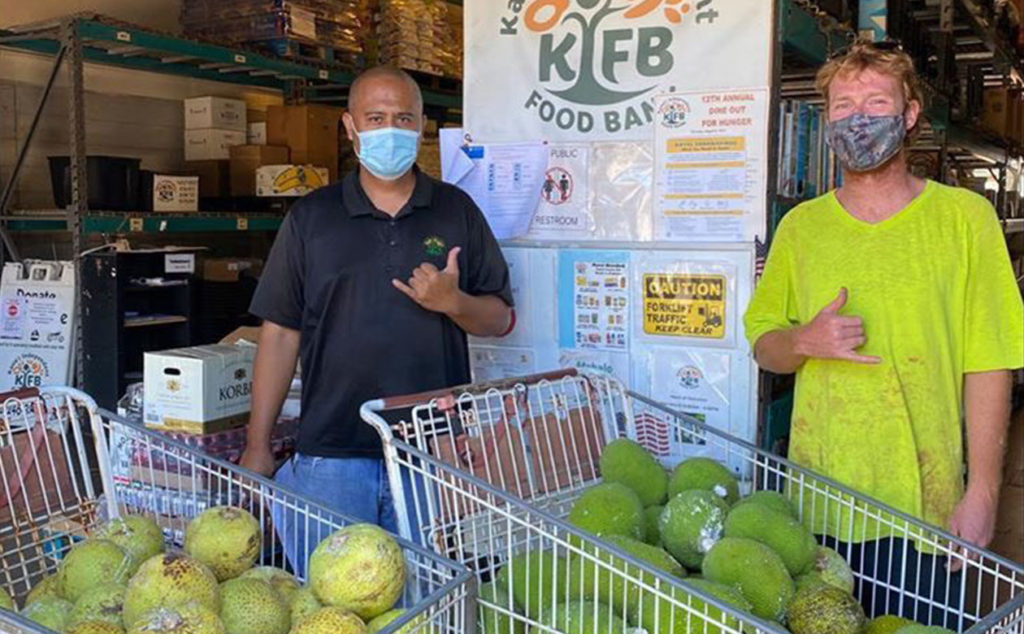
“One pound of breadfruit feeds 2-4 people,” said Kelvin Moniz, Executive Director of the Kauai Independent Food Bank. “We calculate it by assuming people are putting 2-4 oz. of starch on their plate during a meal. With the breadfruit from NTBG and some other local sources, we handed out one ulu per car and were able to give away more than 200 during one Friday afternoon distribution,” he concluded.
“At first, people were really surprised that we had ulu at the Food Bank, and gradually they have started to ask for it more and more. It is great to see the desire for ulu increase and all of the different ways people are preparing and sharing it with their families.”
Kelvin Moniz, Kauai Independent Food Bank
Nutritionally breadfruit compares favorably with other starchy staple crops commonly eaten in the tropics, such as taro, plantain, cassava, sweet potato, and rice. It is a good source of dietary fiber, iron, potassium, calcium, phosphorus, and magnesium with small amounts of thiamin, riboflavin, and niacin. Breadfruit is gluten-free and a complete protein, providing all of the essential amino acids necessary to human health. “At first, people were really surprised that we had ulu at the Food Bank, and gradually they have started to ask for it more and more,” said Kevin. “It is great to see the desire for ulu increase and all different ways people are preparing and sharing it with their families,” he finished.
Learning from the Past to Farm for the Future
Breadfruit has long been a staple crop and a critical component of traditional agroforestry systems throughout Oceania. There is so much we can learn and apply today from how it has been cultivated throughout history. “Breadfruit agroforestry typifies regenerative agriculture as indigenous people of the tropics have practiced it for centuries,” said Dr. Ragone. “They had no outside inputs, only organic resources provided by the land and sea, so every part of the agroforestry system interacted and worked together to rebuild and add nutrients back into the soil,” she continued. Unlike other starchy food crops, breadfruit does not require annual soil tilling and provides more significant carbon sequestration benefits for the environment, which helps mitigate climate change.

“What is most dear to my heart is local abundance. We need to diversify agriculture in tropical regions, and breadfruit is an important staple crop that can do that while providing local and community self-sufficiency and food security.”
Dr. Diane Ragone, Director, the Breadfruit Institute
Over the last decade, more than 100,000 breadfruit trees have been planted in Hawaii and around the globe thanks to the efforts of The Breadfruit Institute and partners in its Global Hunger Initiative such as the Hawaii Homegrown Food Network, Trees That Feed Foundation, Cultivaris, and many more. Now that individuals, families, and farms have more access to breadfruit, so do entrepreneurs who can develop novel food and products, leading to economic growth. “What is most dear to my heart is local abundance,” said Dr. Ragone. “We need to diversify agriculture in tropical regions, and breadfruit is an important staple crop that can do that while providing local and community self-sufficiency and food security.”
Healthy Plants. Healthy Planet.
From its origins in Oceania to historical expeditions, botanical introductions, and conservation efforts, breadfruit has been on an incredible journey to the modern world. Thanks to generous supporters, partners, and volunteers like you, NTBG and the Breadfruit Institute will continue to study, fuel economic growth, and drive agricultural innovation with breadfruit.
Want to get involved? Donate to the Healthy Plants. Healthy Planet campaign to support NTBG science, research, and conservation efforts today and learn more about opportunities to visit and volunteer. “My husband and I are avid gardeners and learned about the wonders of breadfruit during a visit to McBryde Garden in 2015,” said Anne Cyr, NTBG volunteer. “A later trip to St. Kitts and the West Indies broadened our understanding of breadfruit’s importance, and we signed up to volunteer at the Breadfruit Institute during our next visit to Kauai. We planted taro, harvested, and weighed lots of breadfruit and learned so much! We can’t wait to get back and work beneath the beautiful and bountiful trees again,” she exclaimed.
Give now to support food security and check out these resources, entrepreneurs, and partners for more information on breadfruit.
Additional Resources
An Interview with the Mother of the Breadfruit Movement, Hawaii Public Radio
Breadfruit Institute
Breadfruit Agroforestry Guide
Patagonia Provisions Agroforestry Partners
Global Hunger Initiative
Hawaii Homegrown Food Network
Maui Breadfruit Company
Kalo Pie Recipe
Ready to make some local food swaps for your holiday meal? Kalo (taro or Colocasia esculenta) is a great local substitute for your favorite pumpkin and sweet potatoes recipes.
This Kalo Pie Recipe is a Hawaiian inspired take on a traditional desert and is guaranteed to be a hit with your friends and family! If you don’t live in Hawaii, consider purchasing pumpkin or sweet potato varieties from your local farmers market or CSA as an alternative to store bought, canned puree.
Kalo Pie Recipe
Ingredients
Filling
- 1.5 lbs of taro, diced into ½ inch cubes. (Substitute purple sweet potato varieties like Ube or Okinawa if you do not have access to taro)
- ¾ cup granulated sugar
- 1 tsp vanilla extract
- 1, 14 oz can of full fat coconut milk
- 3 eggs
- 1 pinch of salt
- 4 tbsp of flour
Pie Crust
- 5 oz of roasted macadamia nuts, ground
- 3 tbsp of butter, melted
- ½ cup panko bread crumbs
- ¼ tsp salt
- ¼ cup sugar
- 2 tbsp flour
Topping (optional)
- ½ cup sweetened coconut flakes
- ¼ cup of macadamia nuts, chopped
- Whipped cream
Step 1
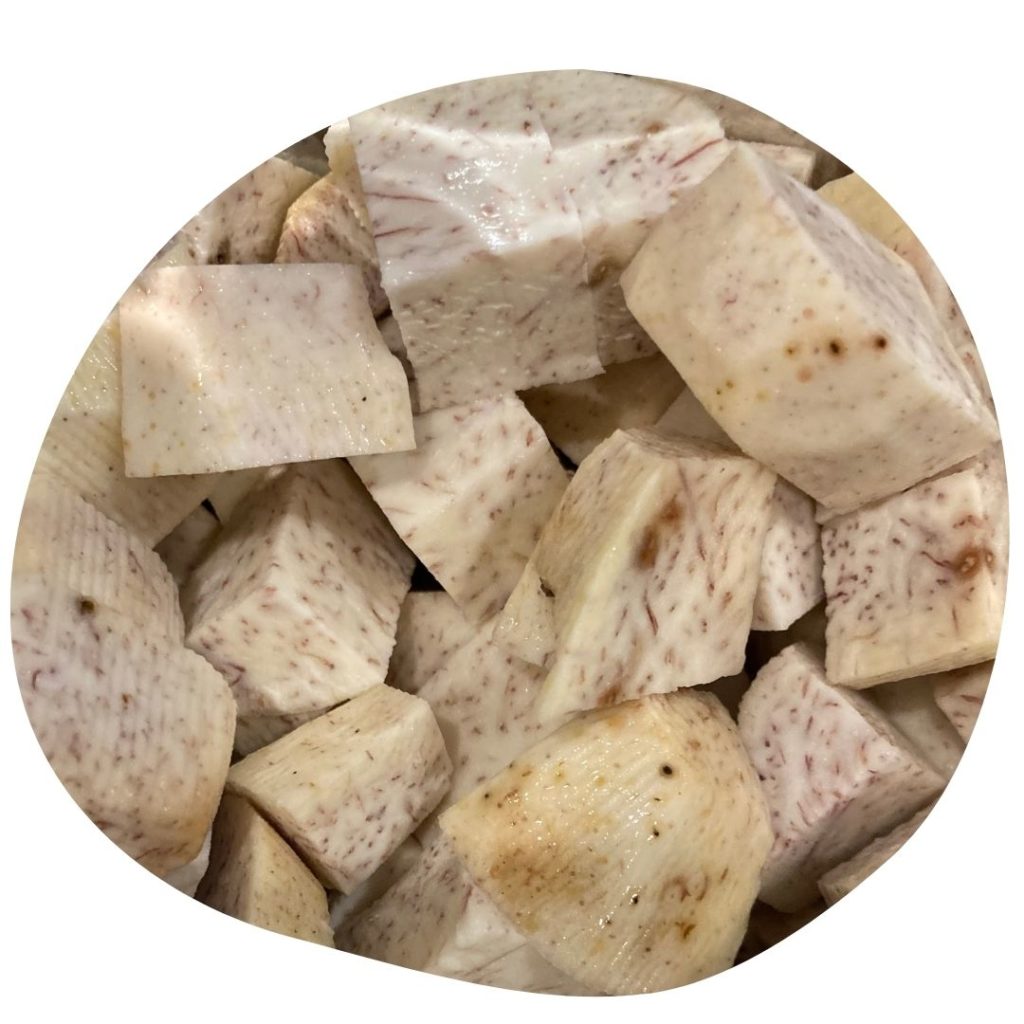
Add diced taro cubes to a large pot of boiling water. Cover and cook until taro is translucent and fork tender, about 15 – 20 minutes. First time cooking with taro? Check out steps 1-3 of this wikihow page for some important tips.
Step 2
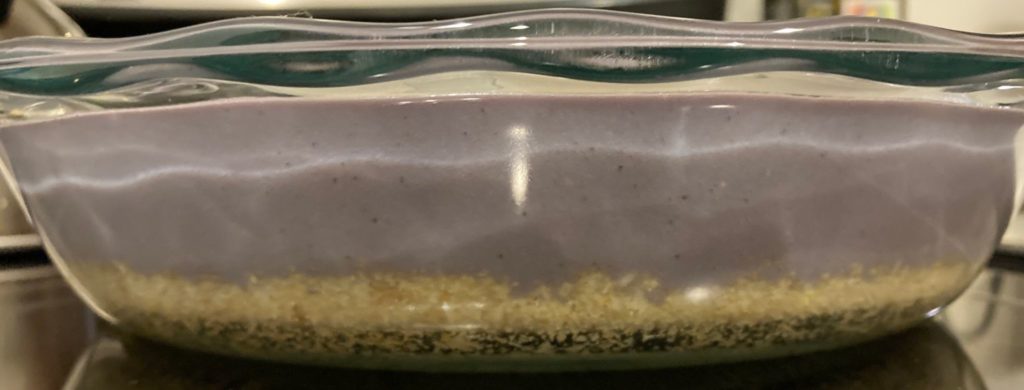
While the taro cooks, preheat the oven to 325 degrees Fahrenheit. Combine all pie crust ingredients in a medium sized mixing bowl. Mix until combined. Pour into a 9 inch pie dish and press firmly to evenly distribute the pie crust mixture into the bottom of the pie dish. Bake the crust until golden brown, 10 minutes. Remove from the oven and set aside. Increase oven temperature to 350 degrees Fahrenheit.
Step 3
Drain the cooked taro and discard the water. Add taro, sugar, and vanilla to a blender and mix until smooth and fluffy. If you don’t have a blender, you can use a potato masher or hand mixer. Transfer taro mixture to a large mixing bowl. Add coconut milk and eggs, mixing until all ingredients are well incorporated. Add salt and flour and mix until combined.
Pour taro filling over cooked pie crust. Bake for 45 minutes – 1 hour at 350 degrees Fahrenheit or until pie is cooked through and the center no longer jiggles. Remove pie and let cool to room temperature before decorating.
Step 4
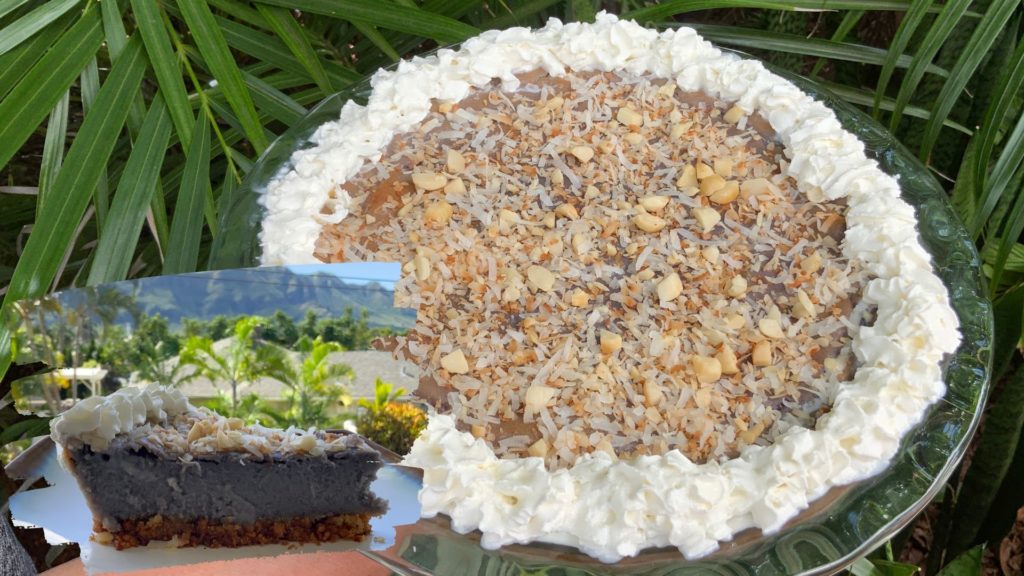
While the pie cools, toast ½ cup of sweetened coconut flakes and chopped macadamia nuts in a non-stick pan over medium heat, stirring frequently. Top pie completely cooled pie with toasted nuts and coconut. Pipe whipped cream along the edges of the pie right before serving. Slice and enjoy!
Share your completed dishes with us on social media! Be sure to tag @ntbg on Instagram.

Taro Cultivation
Did you know that kalo is one of the world’s oldest cultivated crops? Ancient voyagers traveled to Hawai’i with a sophisticated botanical toolkit which included bananas, coconut, turmeric, sugar cane, sweet potatoes, breadfruit, kalo and more.
Kalo is believed to have the greatest life force of all foods. According to the creation chant (Kumulipo), kalo grew from the first-born son of Wakea (sky father) and Papa (earth mother). Their son, Haloa-naka, was stillborn and out of his buried body grew the kalo plant, also called Haloa, which means “everlasting breath”.
The species is thought to be a native of India. However, it was in Hawai’i that the cultivation of kalo reached its most sophisticated level. Ancient kalo terraces (loi) can be seen in the Hanalei Valley, Kaua’i, and the remains of others are found in remote areas, now uninhabited, such as the Na Pali Coast of Kaua’i.
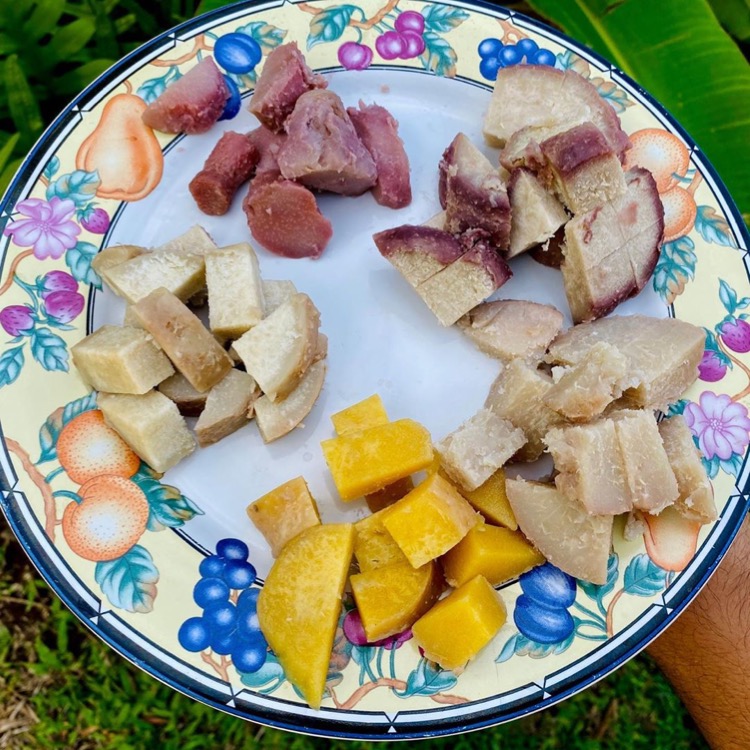
20th century monoculture made Kalo very susceptible to diseases. Approximately 87 of the more than 400 documented varieties still exist today, with slight differences in height, stalk color, leaf or flower color, size, and corm type. At our Limahuli Garden, staff are restoring an ancient system of more than a dozen kalo lo‘i which archaeologists say is over 800 years old. This colorful plate of kalo is the result of their work!