.svg)


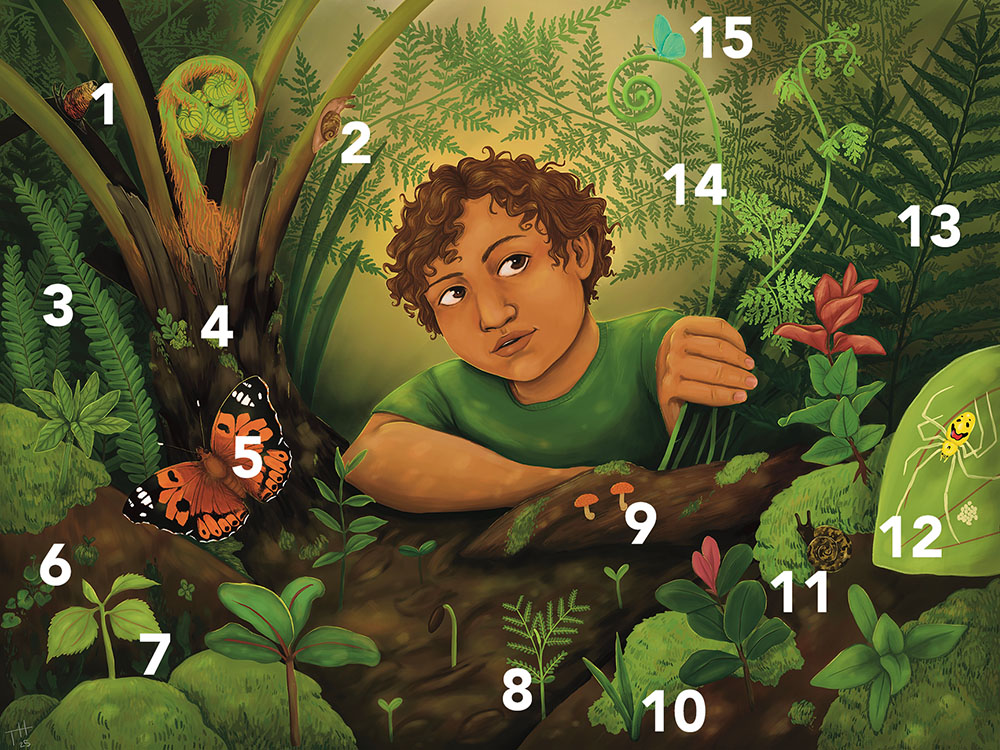
We are looking to planting oli, Hawaiian chants that ask for growth, to deepen our understanding and commitment to biocultural conservation. At its heart, biocultural conservation is about the inseparability of people and nature. This holistic approach prioritizes Indigenous knowledge, community involvement, and sustainable practices to realize a flourishing future. Each year in this process, we are guided by a phase in the growth cycle: hua (seed), kupu (sprout), lau (leaf), lālā (branch), and pua (flower). 2026 is the year of the kupu, celebrated in this artwork by Tressa Hoppe.
“This piece was inspired by this year’s theme- Kupu: offspring; upstart; to sprout, grow, germinate, or increase. My work as a botany graduate student focuses on seedling ecology and the relationships between seedlings and native understory ferns,” says Tressa. “When I think of growth, of course I think of seedlings and all of the multitude of small growing things to be found on the forest floor. I also think of keiki- children, and their curiosity; their ability to see and find things we miss.”
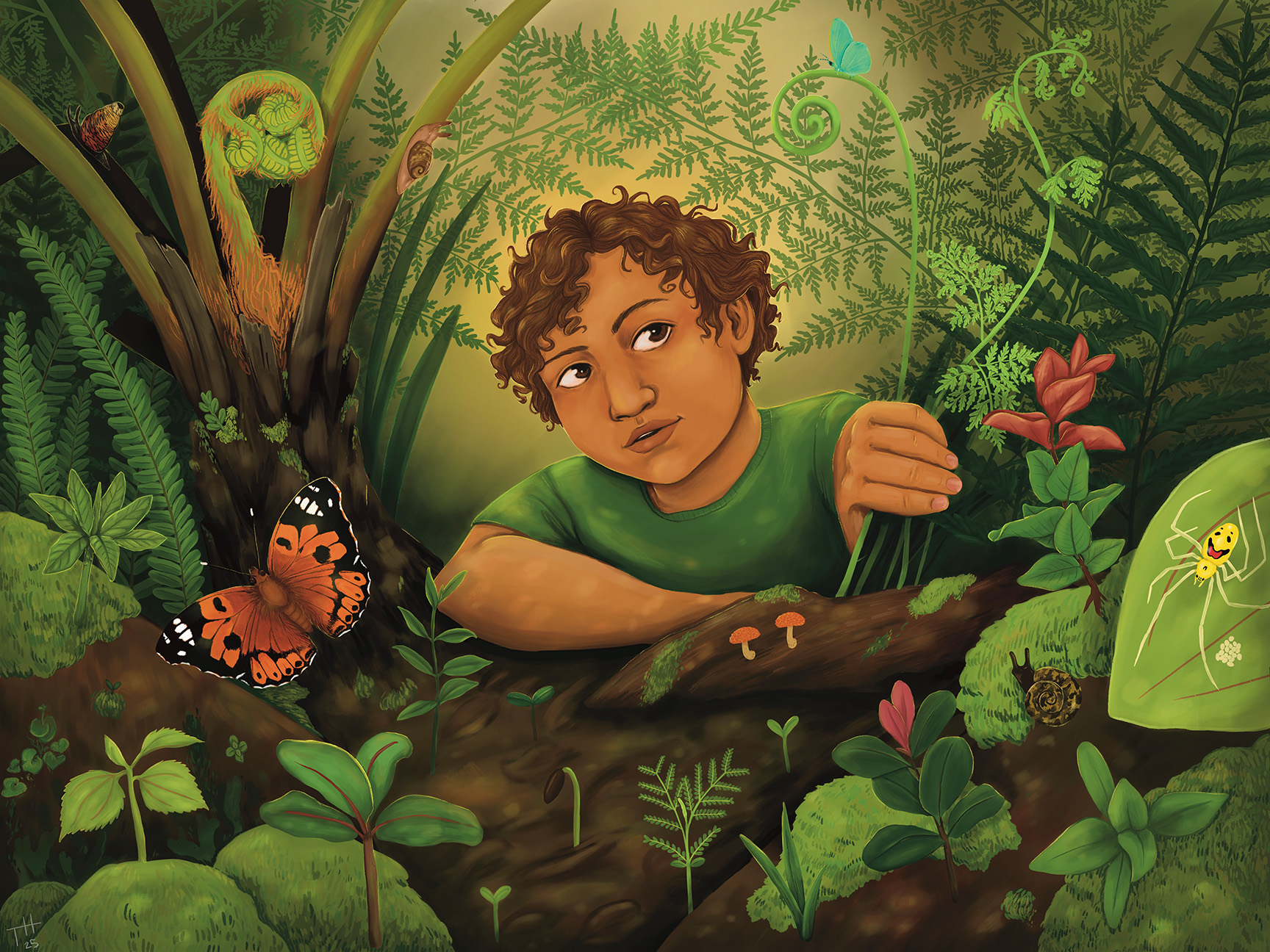
“Part of what I love about the sciences, particularly the natural sciences, is that they are at their best when you maintain that childlike curiosity into adulthood. It is so important that we stay connected and keep an eye on those smallest growing things because “O kēia ʻuʻuku e nui ana” – this smallness will be big later. Even the small have a critical role to play, and it is important that all get down to their level from time-to-time, to wonder at them and all that they can become. Sometimes you just need to lay down in the dirt and remember where we all start.”
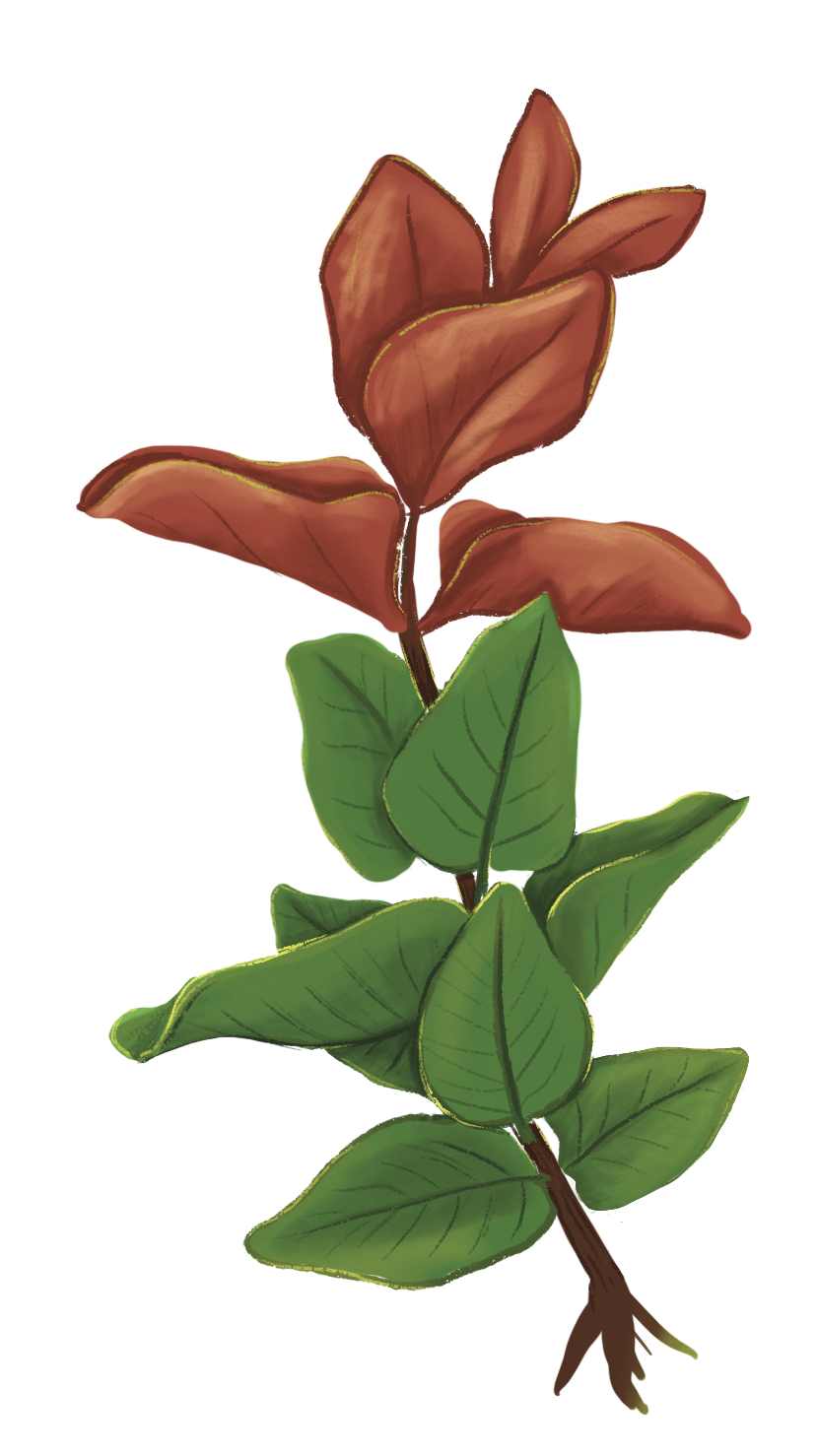
ʻŌhiʻan are deeply rooted in Hawaiʻi’s ecosystems and culture. The cultural significance of ʻōhiʻa is second to none, with many moʻolelo (stories), mele (songs), and oli (chants) celebrating ʻōhiʻan and all it represents. Kupu ʻōhiʻa stay tiny for many months. As they grow larger, their new leaves can be vivid hues of red and orange.
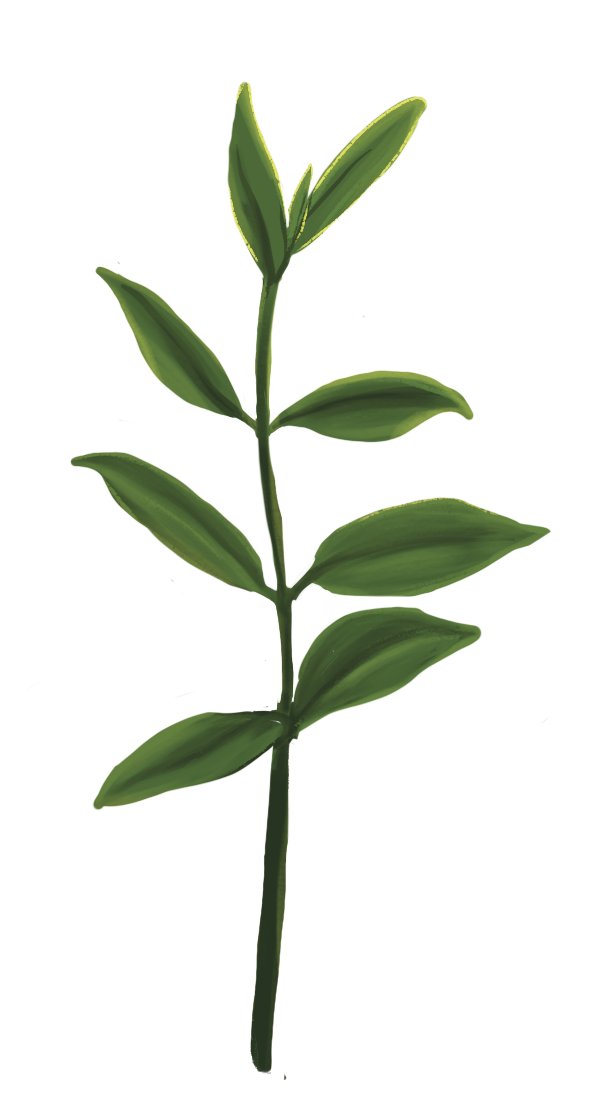
Maile is famous in Hawaiian lei, treasured for its forested fragrance and emerald leaves. Kupu maile are thin and graceful, already revealing their vining habits.
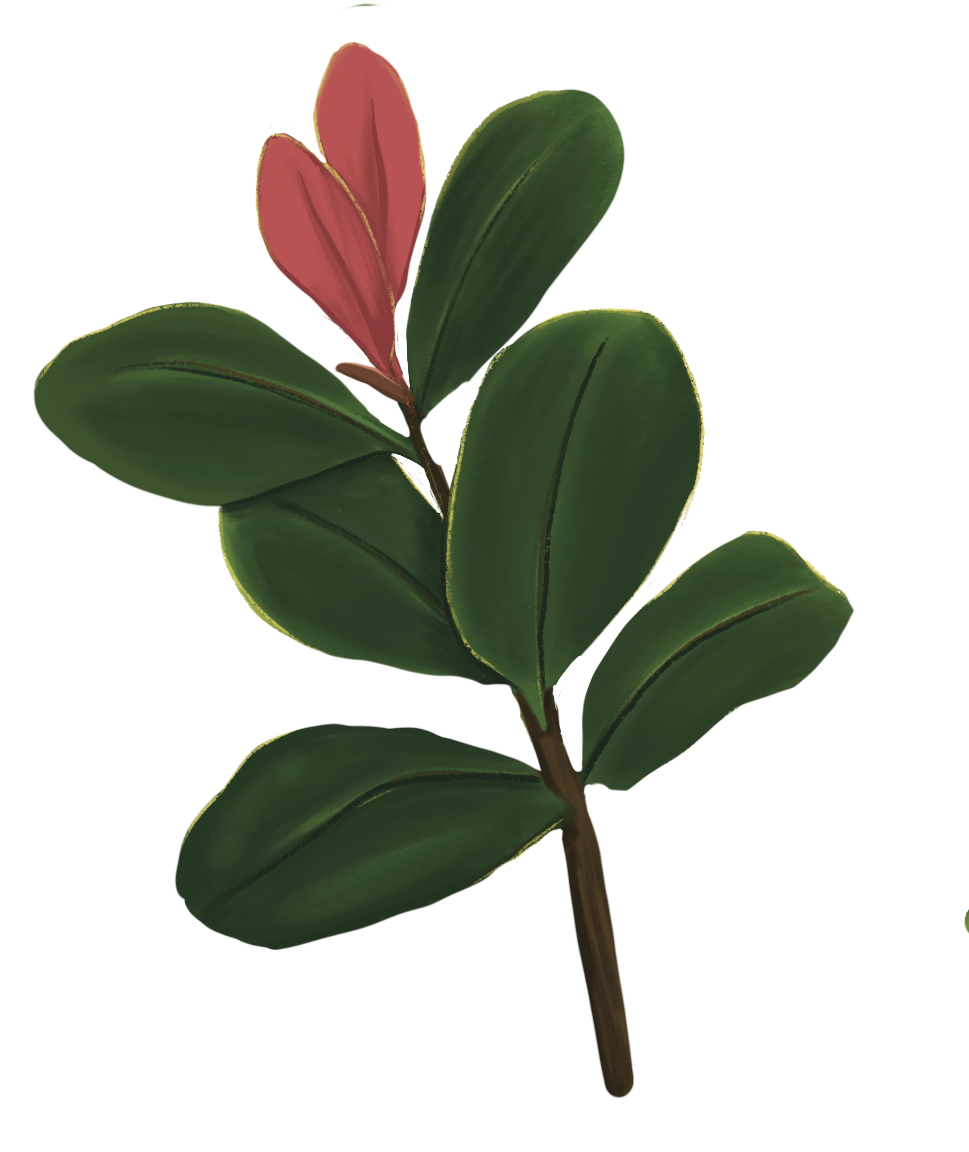
Lama is a beautiful Hawaiian endemic tree related to persimmons. Lama means enlightenment. New leaves, even on kupu lama, emerge in vibrant red hues.
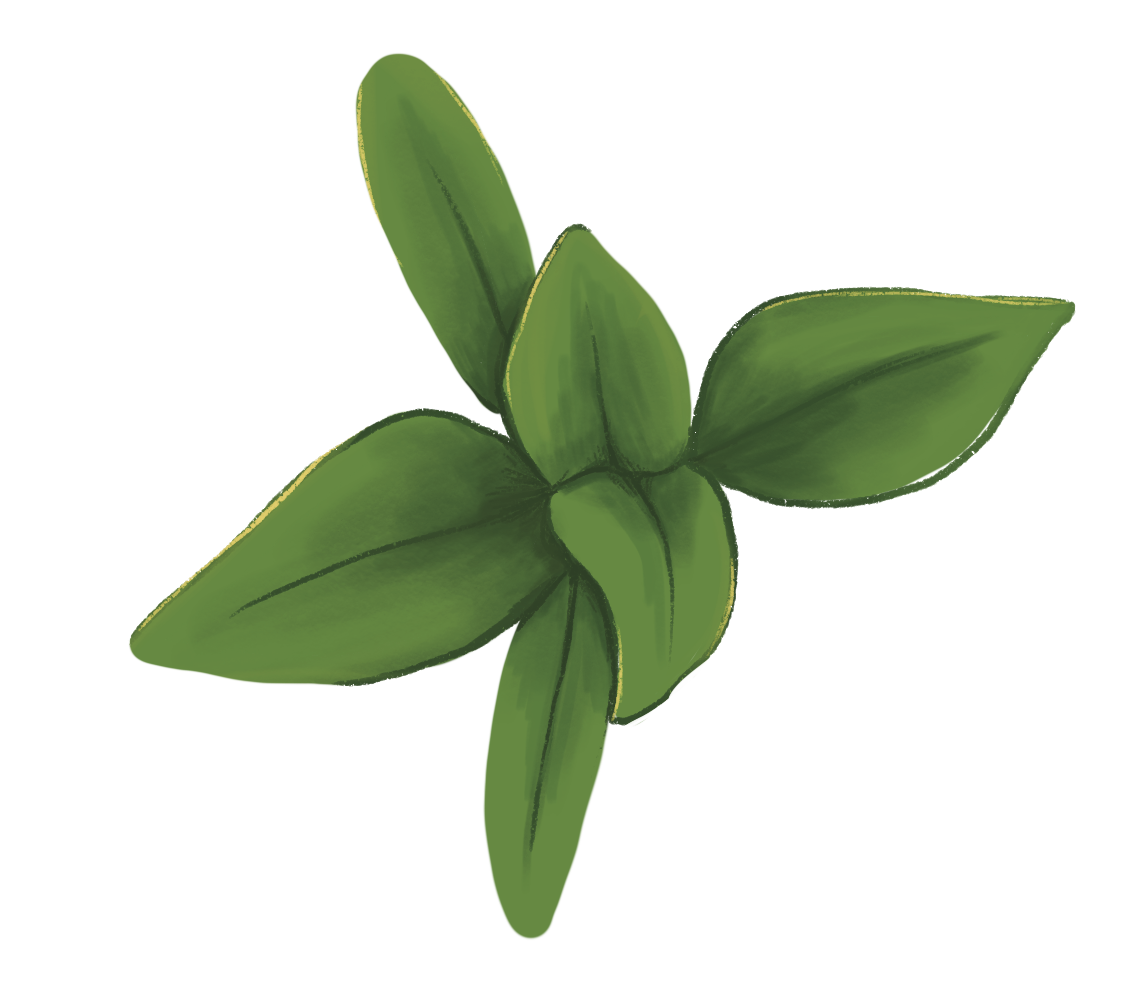
Manono come in many shapes and sizes. They can sprawl like vines, become shrubs, or even grow to the size of small trees.
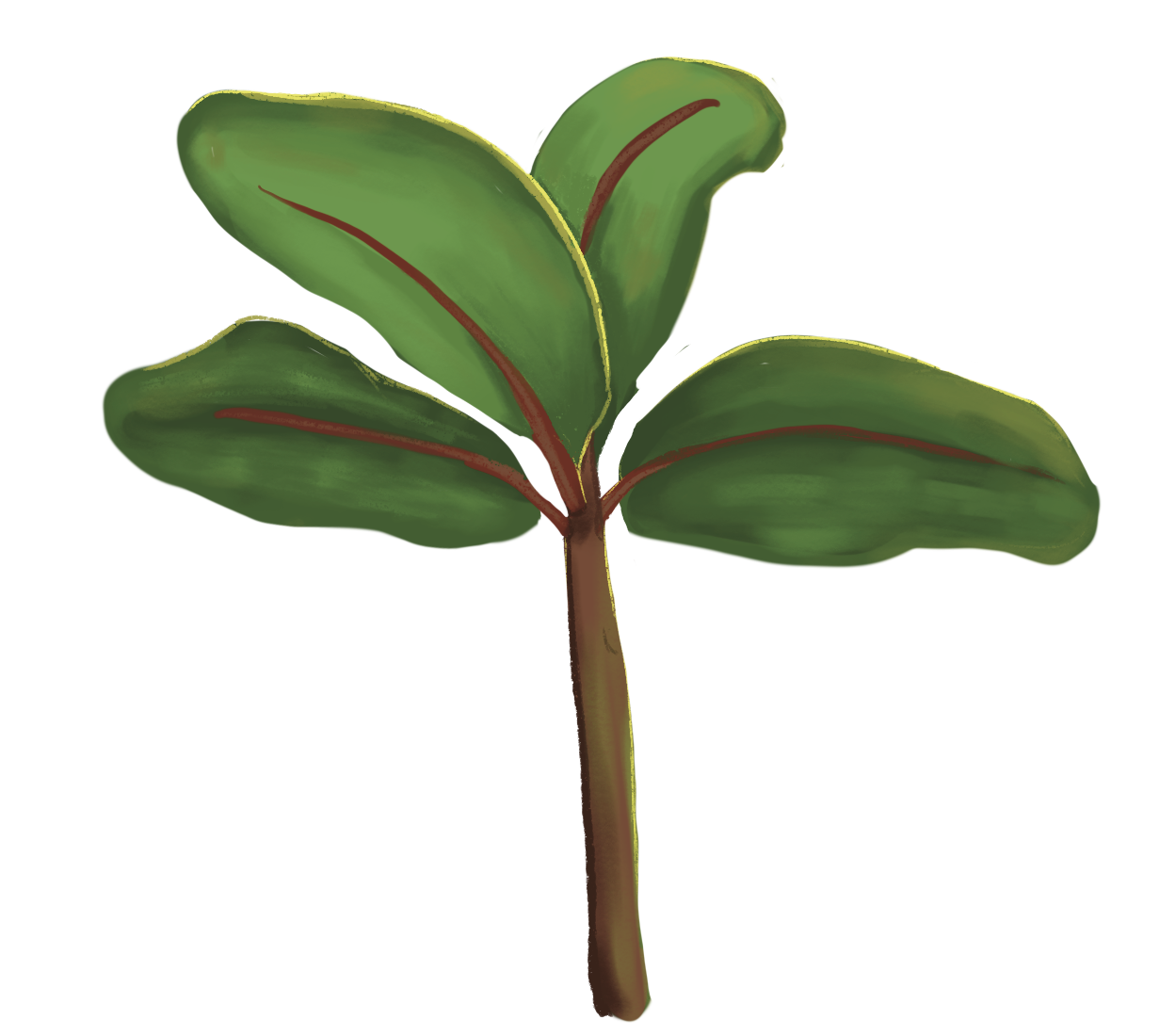
This is one sticky plant! Their fruits are coated in a sticky residue that can trap insects and even birds.
Bio:
Tressa Hoppe (they/them) is a PhD candidate in the Botany Department at the University of Hawaiʻi at Mānoa. Tressa was born and raised in Mākaha on the Leeward side of Oʻahu. In their spare time Tressa is a multidisciplinary artist with a particular interest in depicting Hawaiʻi’s flora and fauna.