.svg)


By Kapiʻolani Ching
The sun beats down hard over the sandy landscape of Kawaiʻele Bird Sanctuary in Mānā, Kauaʻi. The ground here gets so hot that the area was once known for its mirages—shimmering illusions that appear on the horizon, only to disappear as you draw near. In this kind of environment, you might expect to see nothing but haole koa, kiawe, and other invasive plants. But just past mile marker 30, a turn off the main road leads you to something else entirely—a beautifully restored native ecosystem.
Managed by the State of Hawaiʻi Department of Land and Natural Resources, Division of Forestry and Wildlife, Kawaiʻele is best known as a sanctuary for endangered Hawaiian waterbirds. It’s also home to a growing community of native coastal plants—many of which help provide important habitat for these birds. An ʻaʻaliʻi sways gently in the breeze near the parking area, welcoming you. ʻIlima blossoms flutter in the sand along the pathway. ʻĀkulikuli hug the pond’s edge, their tiny pinkish-purple flowers twinkling like stars. Nearby, a patch of pili grass sways in the wind, creating that unmistakable “whoosh” sound only pili can make. The next time you find yourself facing a challenging situation, think of these native plants. Here they are—thriving, blossoming, and even volunteering new seedlings—proof that life can flourish even in the most challenging conditions.
Walk ahead a few paces, and you’ll come across a cluster of maʻo, their silvery leaves shimmering in the sunlight. Also known as Hawaiian cotton, maʻo is a native shrub that feels both rugged and soft—able to handle intense sun while bearing velvety leaves and cheerful, fluorescent yellow flowers. These maʻo were planted as part of Kawaiʻele’s restoration efforts and offer a glimpse of how this hardy plant thrives in a challenging coastal environment.
Maʻo has become one of my favorite native plants, so when I heard it would be part of our Grow Aloha Plant Adoption Program, I was excited to help more people learn about and love this special plant as much as I do.
As with all of our Grow Aloha plants, it takes a lot of propagation magic to make this program possible. Maʻo isn’t especially difficult to grow from seed compared to some other native Hawaiian plants, but germination rates can still vary widely between seed batches. Factors such as the parent plant, location and timing of seed collection, seasonal conditions, genetics, and other variables all play a role.
Our Seed Lab recently made some progress figuring out ways to get maʻo seeds to germinate more consistently. Earlier this year, they partnered with our Conservation Nursery to test a few different techniques aimed at improving germination success. While the focus was on Grow Aloha, these findings may also help guide future efforts to grow maʻo for other projects, from restoration work to garden out plantings and more.
Keep reading to discover how these efforts are helping us better understand maʻo and increase the chances of its seeds growing into healthy, thriving plants.
Maʻo (Gossypium tomentosum) is a tough native shrub adapted to Hawaiʻi’s dry habitats, where intense sun, rocky or sandy soil, and scarce rainfall are the norm. It’s endemic to Hawaiʻi, meaning it’s found in Hawaiʻi and nowhere else in the world.
This warrior plant typically grows between two to six feet tall. Its silvery-green leaves are covered with fine hairs that reflect sunlight, helping the plant regulate temperature and reduce water loss.
Maʻo’s flowers (and occasionally its leaves) are said to have been used to create dye for kapa. Though its yellow flowers might suggest a yellow dye, they instead produce a beautiful green shade. Fittingly, the word maʻo can also mean green (e.g. ʻōmaʻomaʻo).
Maʻo seeds are covered in a soft, fuzzy coating—a hallmark of plants in the genus Gossypium, which includes all cotton species. Another name for maʻo is huluhulu, which means “fur” or “fuzz” in ʻŌlelo Hawaiʻi.
The fuzz offers protection from harsh environmental conditions like intense sun and drying winds, helping the seed to retain moisture needed for germination.
In our Conservation Nursery, we strive to mimic a plant’s natural habitat and growth processes as closely as possible. But sometimes it’s necessary to experiment with different techniques to give seeds their best chance at survival. With this in mind, our Seed Lab began by considering where maʻo grows naturally—dry, sunny environments where excess moisture is rarely a problem. In contrast, nursery conditions tend to retain more moisture and the fuzz that protects its seeds can hold excess moisture, increasing the risk of mold and lowering germination success.
Another challenge is that maʻo seeds have a tough, water-resistant seed coat that prevents moisture from entering. In nature, this barrier is often worn down by a variety of environmental factors, such as abrasion from wind, passing animals, or fluctuations in temperature. One common technique used in nursery settings to help break this dormancy is scarification—lightly scratching or thinning the seed coat, which allows water to penetrate and reach the embryo, triggering germination.
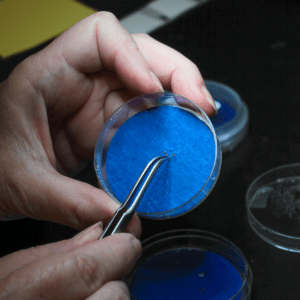
To understand which method works best, seeds were divided into three groups: some had only their fuzz trimmed, others were scarified, and a third group received both treatments. By testing these different approaches, the team aimed to find the most effective way to encourage healthy germination.
They found that the seeds receiving both treatments—fuzz trimming and scarification—had the highest germination rates. The team was especially encouraged to see that these seeds began sprouting within just a few days—much faster than untreated seeds. This progress not only improves the reliability of growing maʻo but also helps the Grow Aloha program grow large quantities of healthy plants more efficiently.
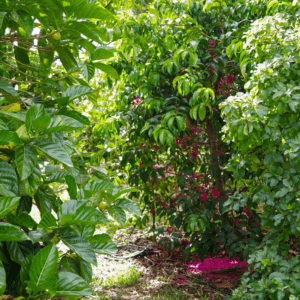
Building on these promising results, the Seed Lab and Conservation Nursery prepared a large batch of maʻo seeds treated with both methods. This batch grew into healthy plants that will soon find new homes through our Grow Aloha plant adoption program in July 2025 at the South Shore Visitor Center and Limahuli Garden.
Though the plant itself is hardy and thrives in cultivation, natural populations of maʻo are becoming increasingly rare due to habitat loss, predation by animals, and many other pressures. But as we see at Kawaiʻele—and now through Grow Aloha plant adoptions—bringing maʻo into our lives and lived landscapes is an important step toward supporting its future, one vibrant yellow blossom at a time.