.svg)


For over thirty years, our team has been dedicated to restoring the health of Limahuli Valley — a sanctuary for irreplaceable biodiversity and Hawaiian heritage. Located on Kauaʻi’s north shore within the traditional ahupuaʻa of Hāʻena, Limahuli is one of the most biodiverse valleys in the islands. It is a refuge for rare native plants and animals, many of which are found nowhere else on Earth.
Threading the entire watershed of the valley together, from mountain to sea, is Limahuli Stream. This stream is home to an abundance of life: fish, crustacea, mollusks, invertebrates, and many other organisms.
Building on decades of experience in the specialized care of endangered species and ecosystem restoration—all through a biocultural lens that focuses on the bonds between plants and people —we are beginning the restoration of a new area in the Lower Limahuli Preserve. In December, with the generous support of LORE Fragrances, our team launched an intensive, targeted restoration of a 250-foot section of a key tributary that feeds the main stream.
In the first few months of the three-year project, the team has already outplanted 100 plants representing 16 native species. This vital work aims to revitalize the riparian zone and provide a lasting refuge for the valley’s inhabitants.
Riparian ecosystems are as vulnerable as they are essential. Limahuli Stream sequesters surface and spring water, distributes nutrients across the landscape, feeds the loʻi (taro patches) in the garden, and is an entire ecosystem in and of itself. By restoring this riparian zone, we can preserve the biological and cultural integrity of a valley and offer a model for resilient restoration projects throughout Hawai‘i and beyond.
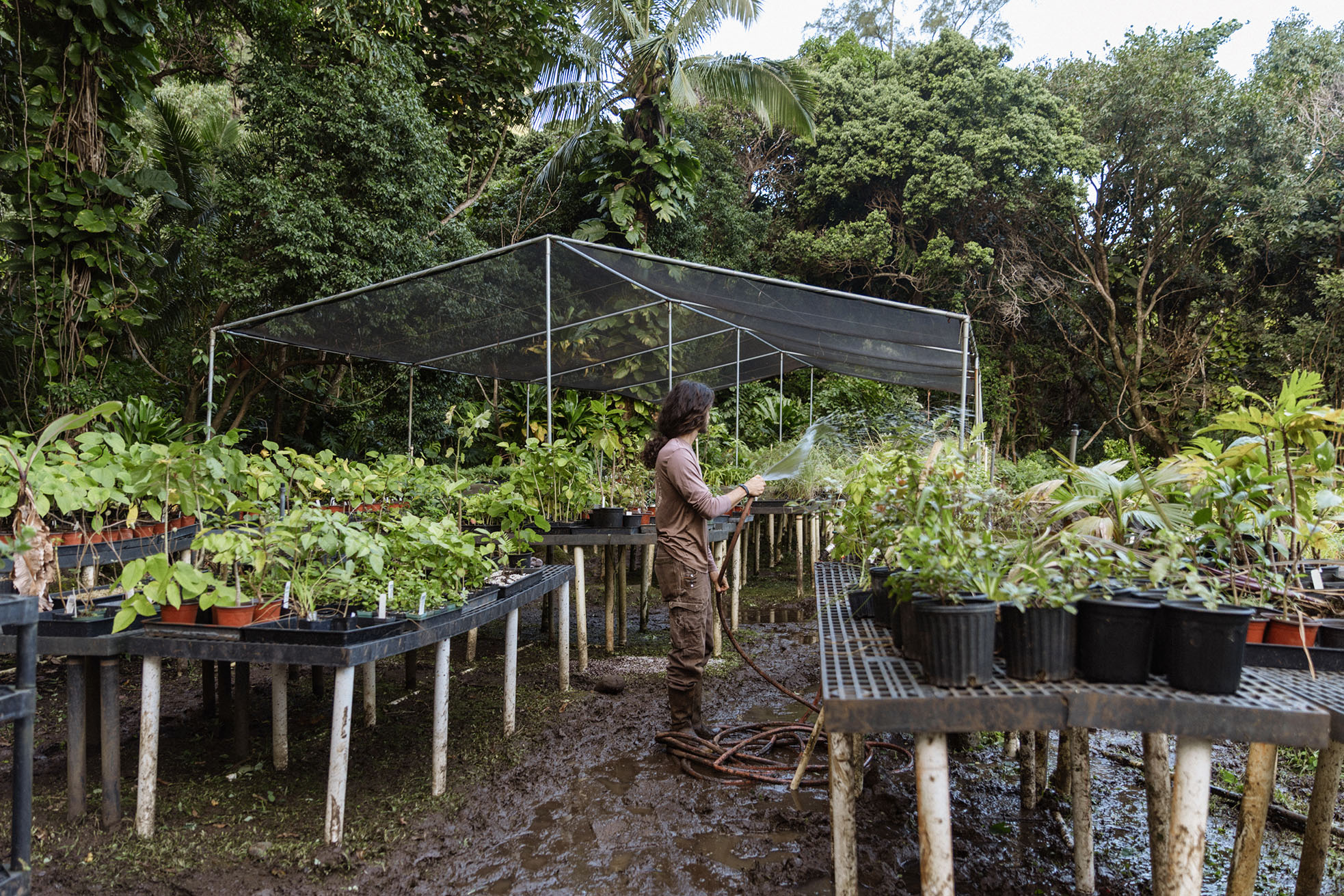
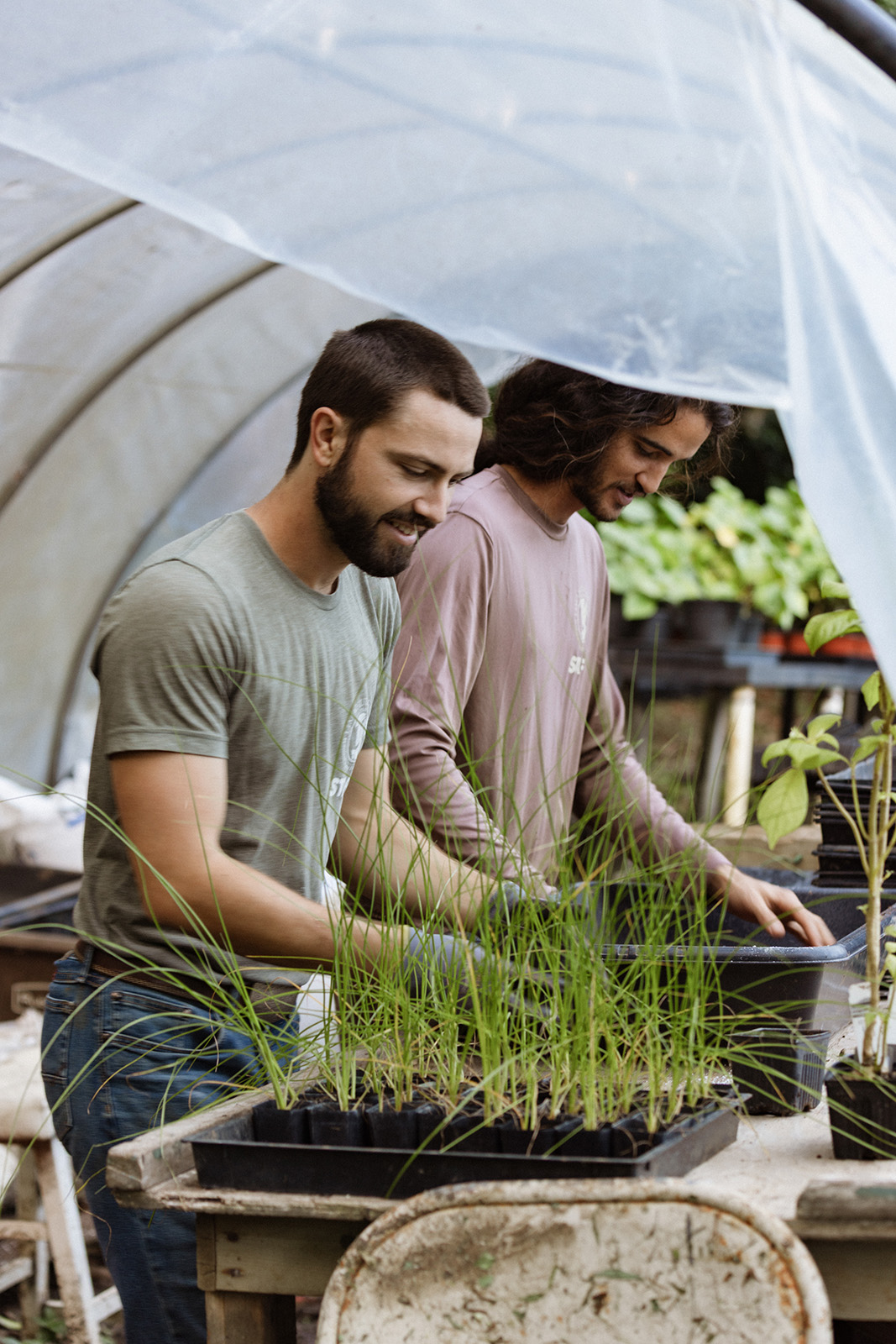
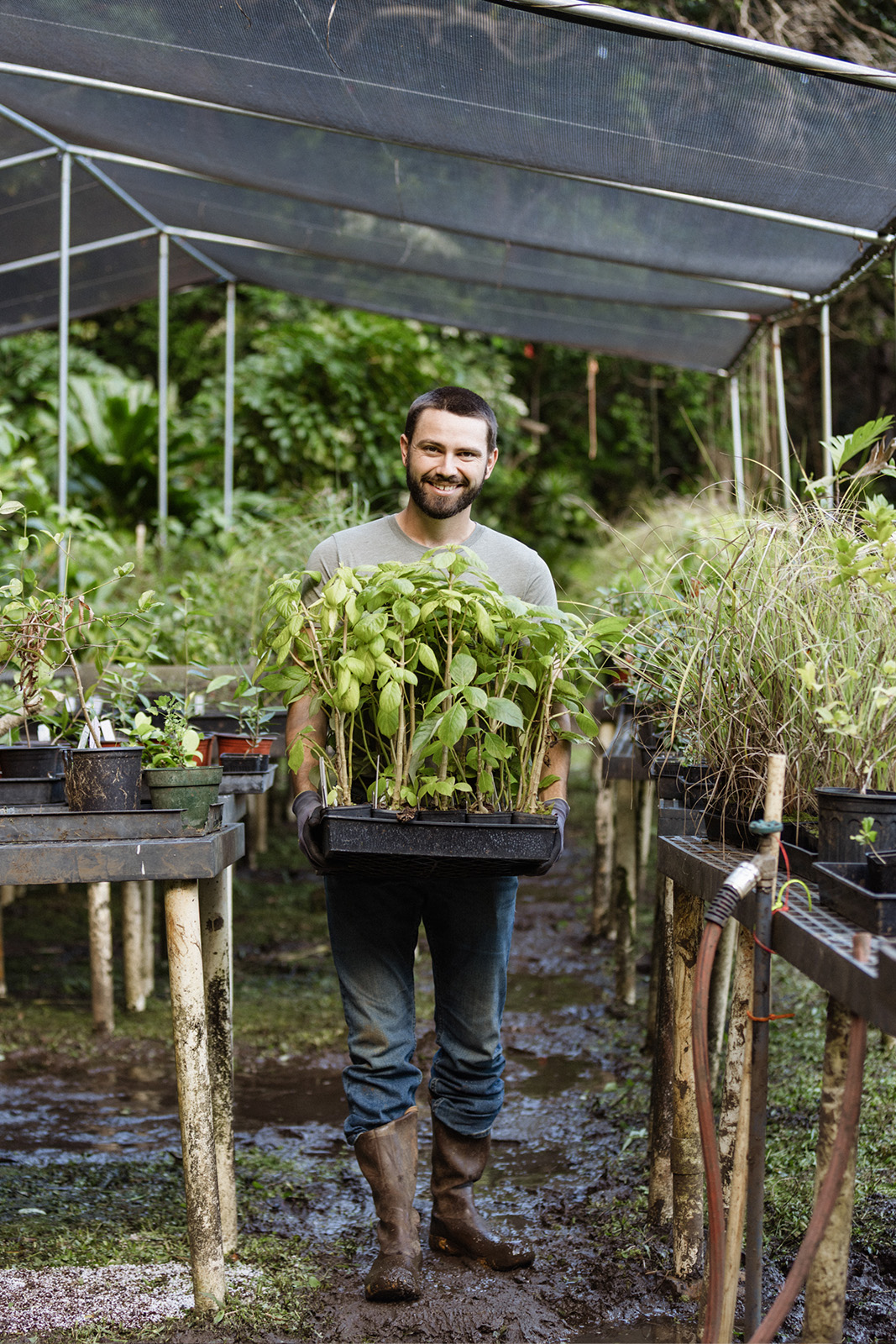
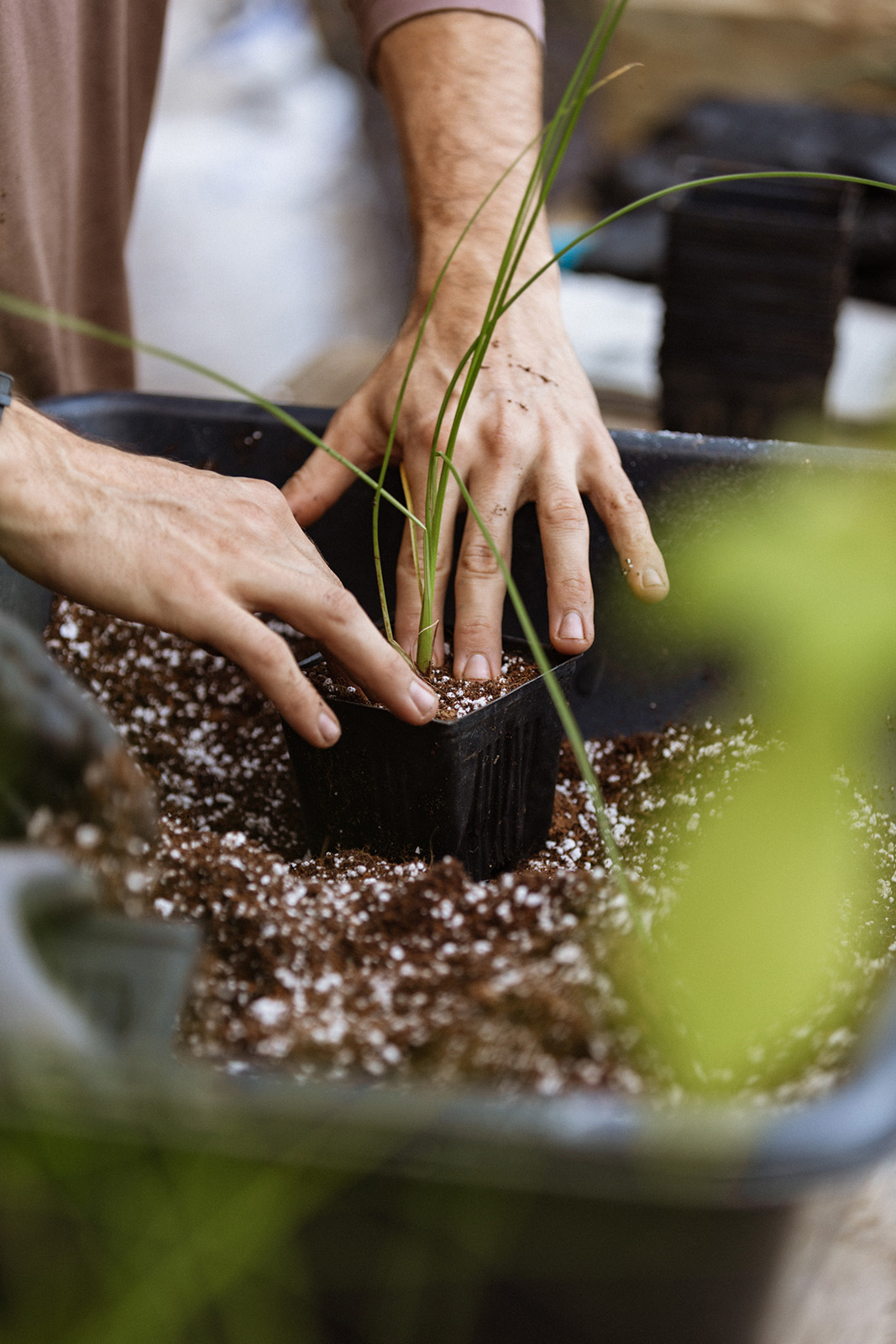

Our horticulture team grows the plants for Limahuli’s restoration sites in the garden’s nursery. Cultivating the plants onsite offers the perfect growing conditions and supports biosecurity, as transporting plants across the island can inadvertently vector invasive pests.
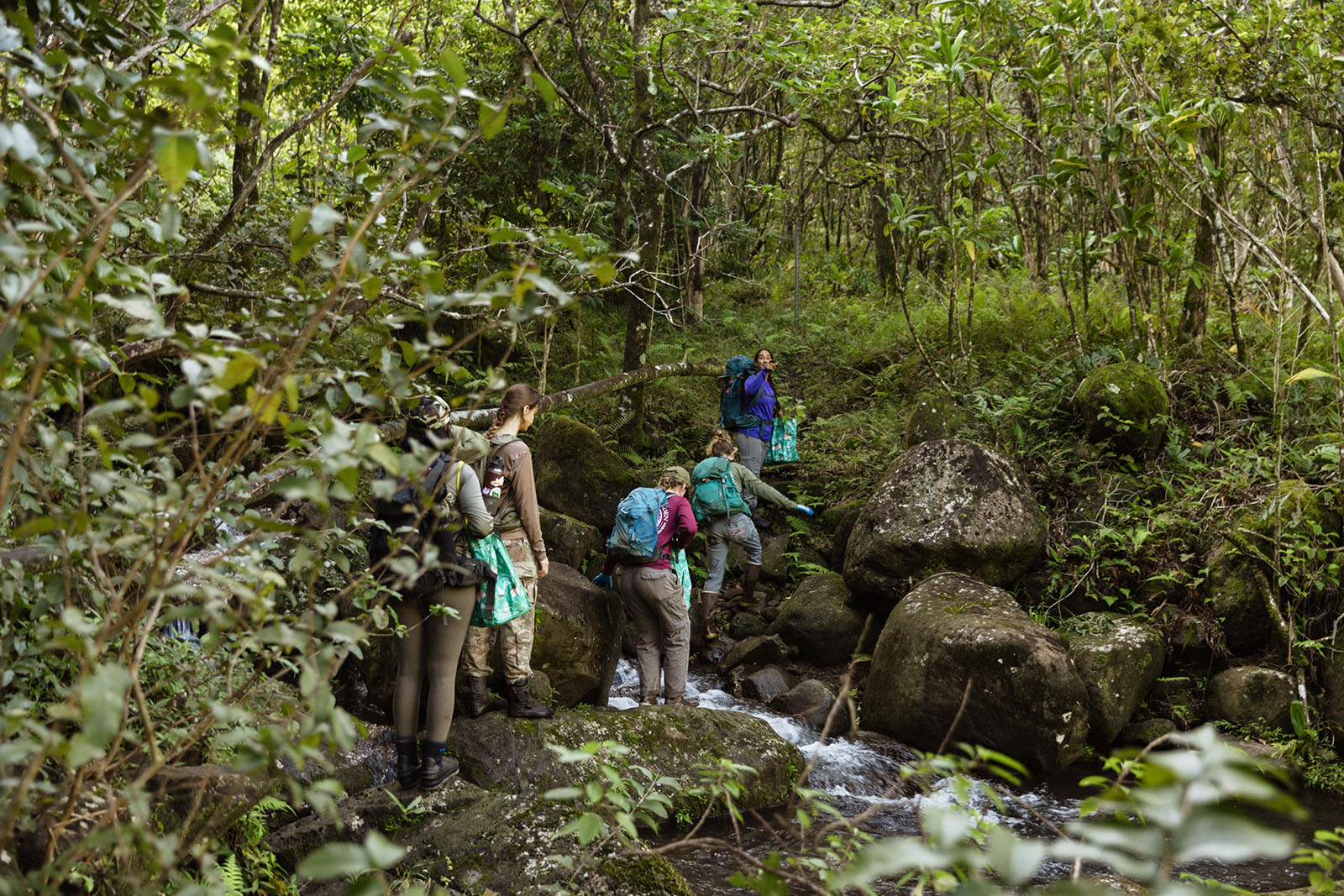
A member of the crew makes her way through a stand of hala (Pandanus tectorius), a native tree important for both ecological and cultural roles. Hala is used throughout the Pacific for weaving. In restoration, hala plays a positive role in disturbed areas or along steep slopes which are difficult to restore. Located near an archaeological site in the preserve, hala is a physical reminder of the deep connection between people, place, and plants.
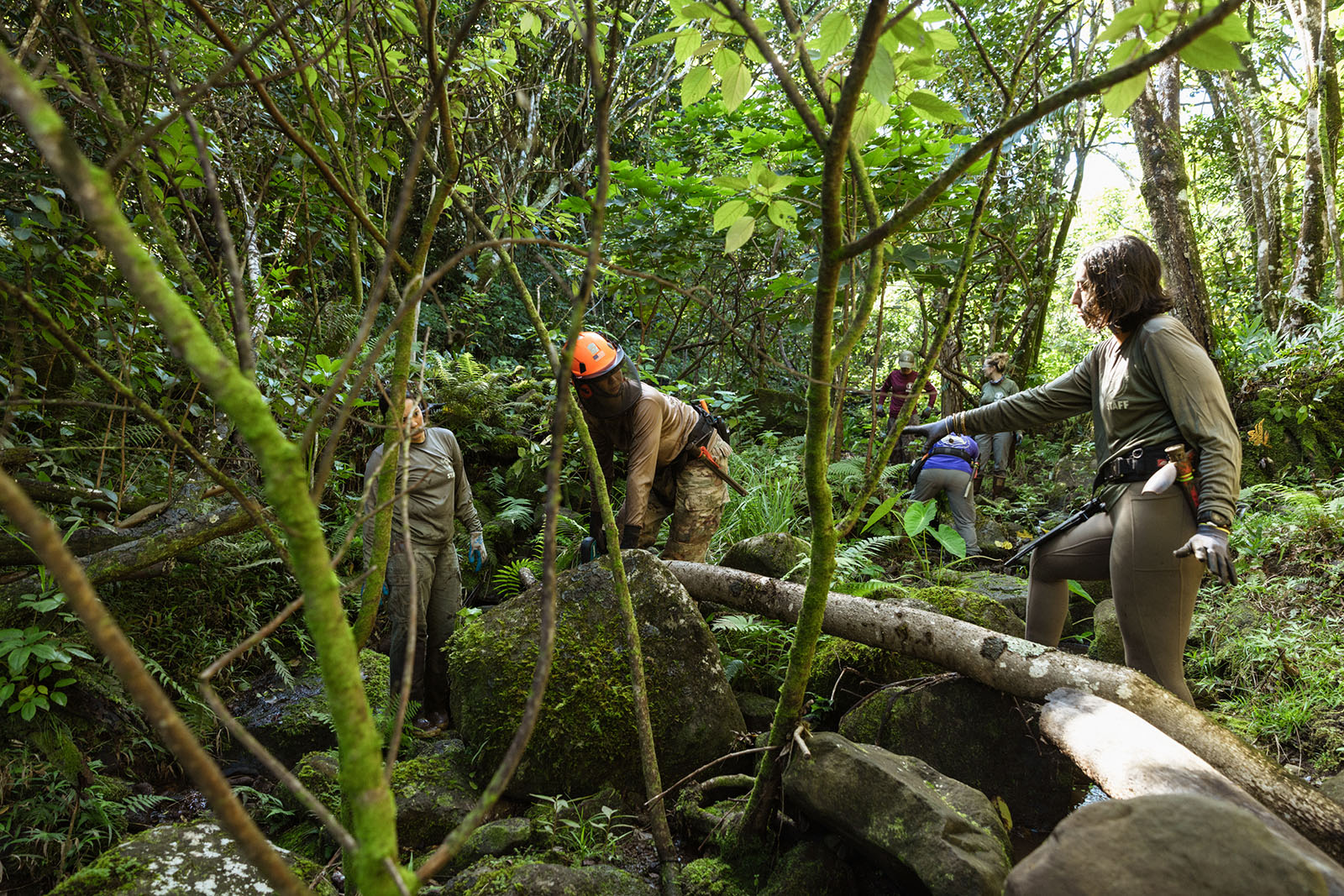
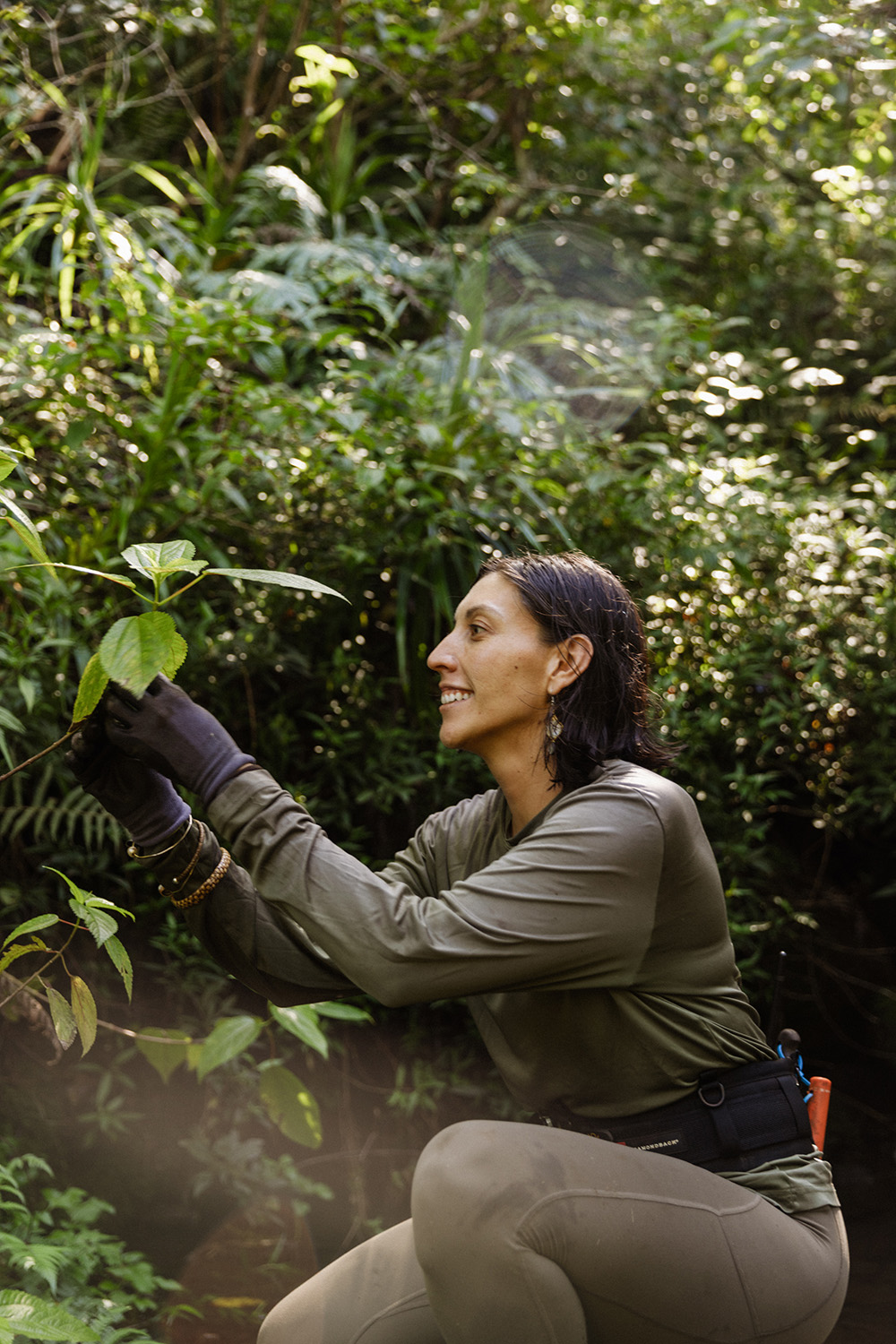
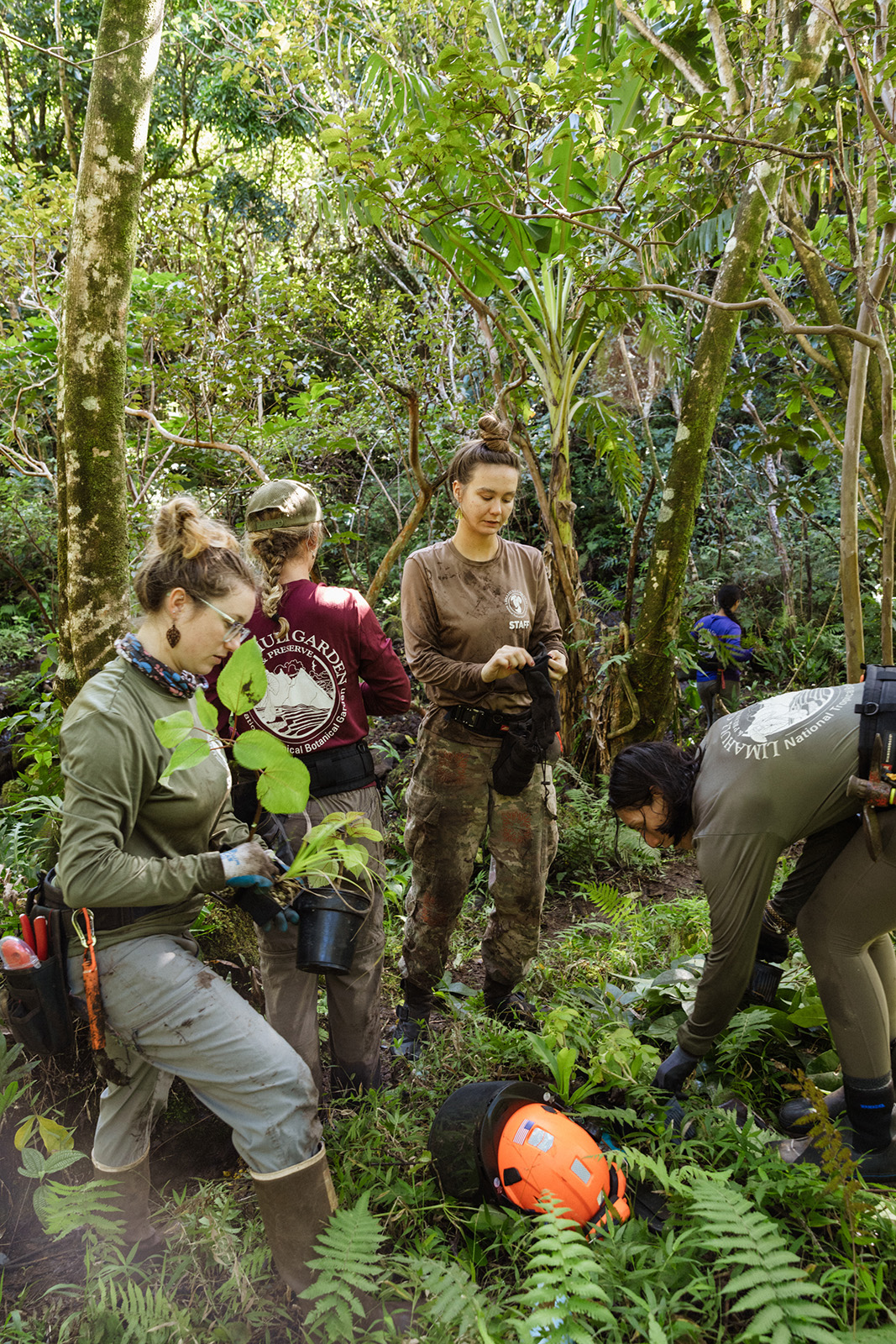
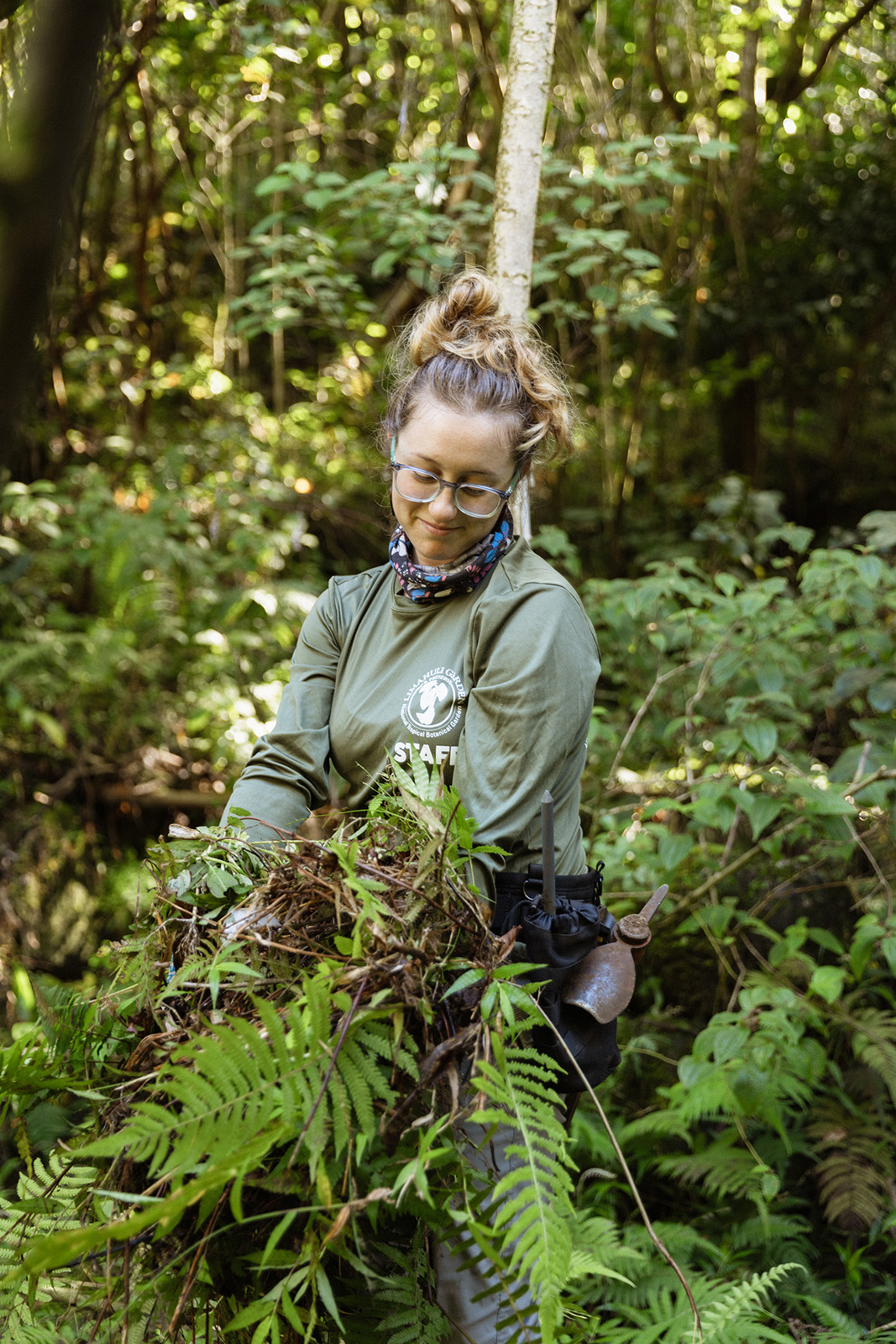
Restoration is intensive. On a frequent basis, it requires the removal of invasive plants, clearing the site of debris, and monitoring the health of native outplantings.
Recognized around the world as a house plant, the octopus tree (Heptapleurum actinophyllum) is a highly-invasive tree in Hawai‘i (photo 1). Clidemia (Miconia crenata), is an invasive shrub that forms a dense understory on the forest floor, choking out other plants (photo 2). Miconia’s long lasting fruits and seeds are dispersed by birds, wild boar, and other animals, hastening its spread. By removing invasive plants like these, Hawaiian plants like māmaki (Pipturus kauaiensis) and Polynesian-introduced kukui (Aleurites moluccanus ) can thrive and create shade for low to midstory out-plantings.
1
2
3
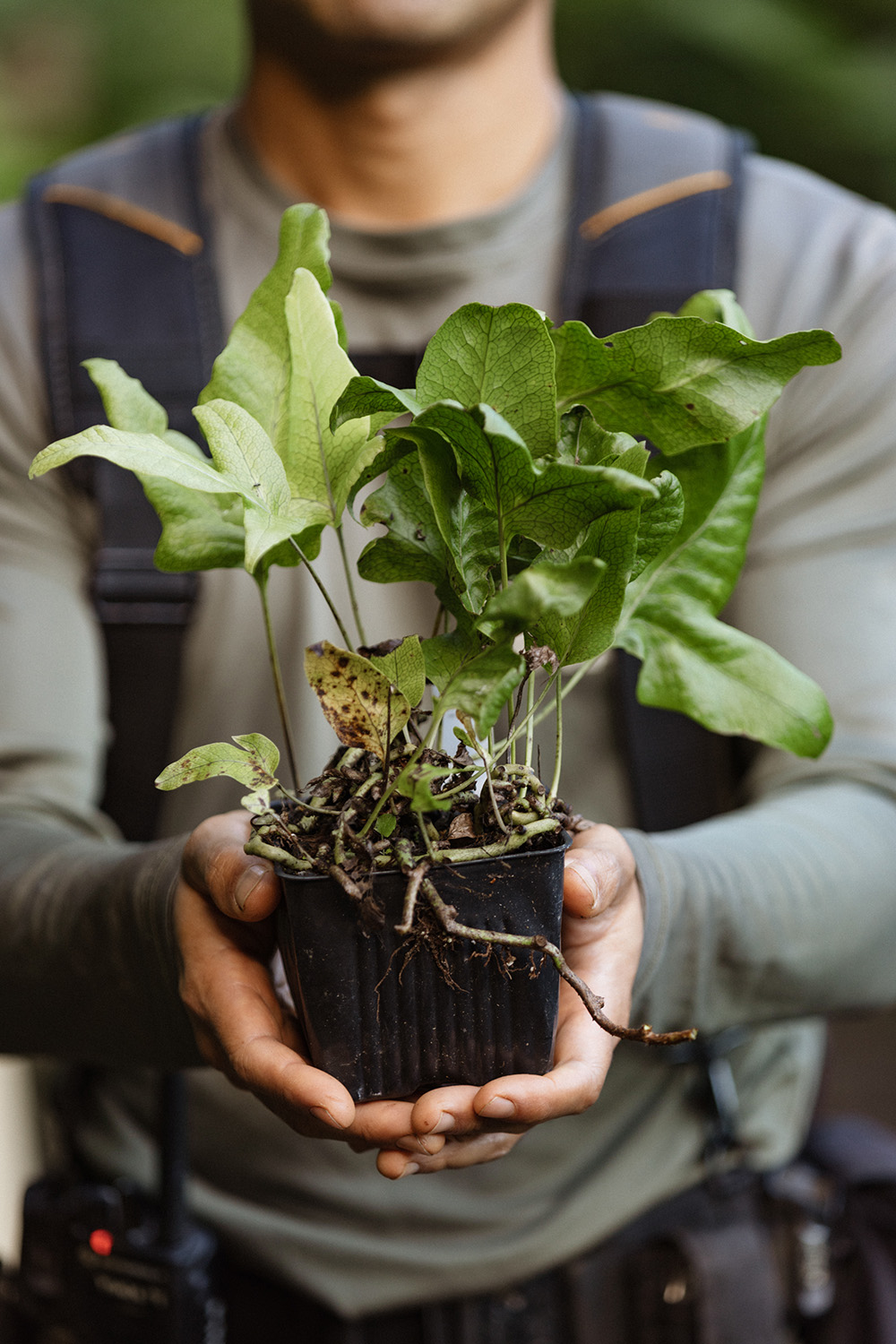
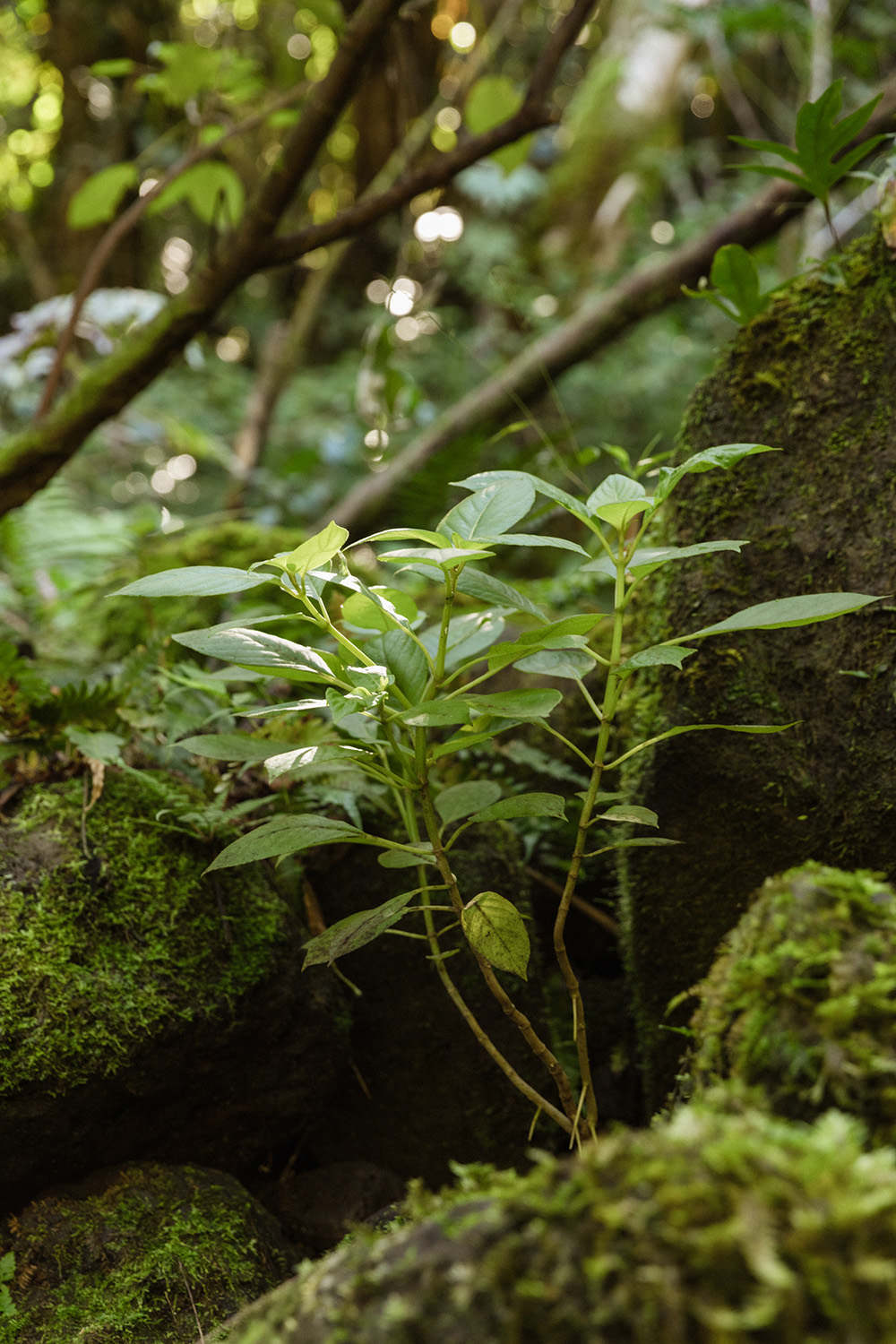
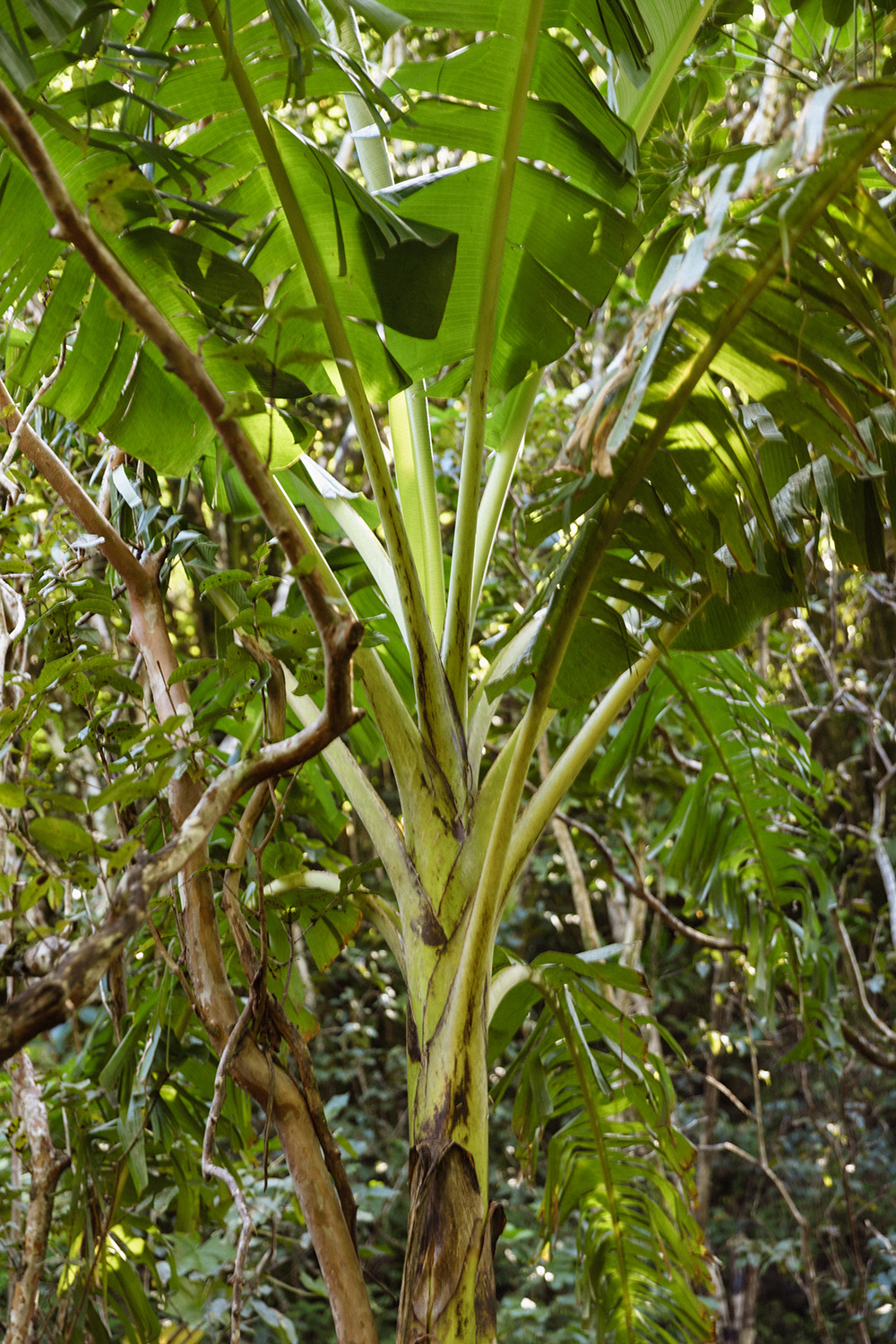
A staff member holds laua‘e o makana (photo 1). This native fern known scientifcally as Microsorum spectrum holds special meaning in Hāʻena in chants, stories, and cultural identity. This versatile fern can grow epiphytically on rocks and in soil and is so deeply connected to Hā‘ena that its name is also used to refer to the people of this place. Ha‘iwale (Cyrtandra wainihaensis), both endangered and endemic to Hawai‘i, is one of the focal species the team is outplanting in this area (photo 2). These plants come from seeds collected deeper in Limahuli Valley and will hopefully thrive in this restoration site which is similar to the habitat where the seeds were collected. Mai‘a (Musa sp.) are wild growing bananas that can be found throughout Limahuli Valley (photo 3). This Polynesian introduced crop has been growing in the valley for many generations. As a familiar food plant, mai‘a is a reminder of the important relationship between people and plants. Preserving these wild mai‘a is an effective way to perpetuate the heritage of the valley.
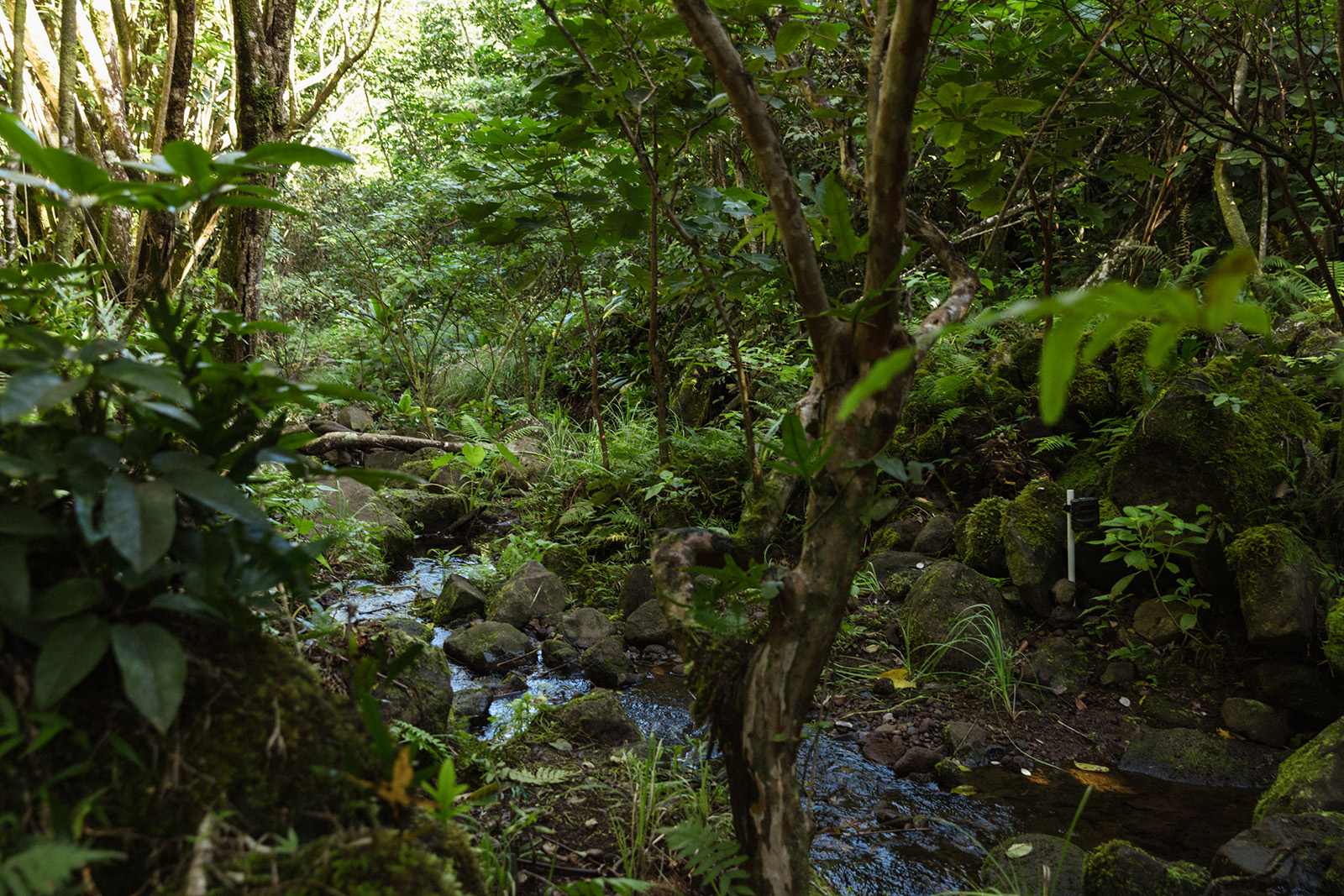
A general overview of the restoration area showing a tributary to Limahuli Stream that has been previously cleared and replanted with māmaki and ha‘iwale are starting to establish themselves. Remotely operated cameras allow the crew to take timed photos for monitoring progress and change over time.
Crew member Uma plants young neke ferns (Cyclosorus interruptus) which can form a dense ground cover allowing natives to thrive in wet, muddy areas instead of more aggressive weeds (photo 1). As they form a thicket, they stabilize and protect the streambanks from erosion. Crew member Fran carries potted mau‘u (Carex wahuensis), a native sedge NTBG frequently used for restorations because it is hardy, versatile, and grows well along streams as well as drier areas (photo 2).