.svg)
NTBG is featured in the latest issue of Directions Magazine
NTBG is featured in the latest issue of Directions magazine with an article and video that examine how the Garden uses the latest GIS and other technology to document, monitor, and protect rare and endangered plants and their genetic diversity. Read the article: https://www.directionsmag.com/article/10055 and watch the video: https://youtu.be/B3Aw4ryy3g8
International Year of Plant Health
by Nina Rønsted, NTBG Director of Science and Conservation
The United Nations has declared 2020 as the International Year of Plant Health. In recognition of this timely and timeless theme, and with the understanding that all life on this planet is dependent on plant health, Nina Ronsted, NTBG director of Science and Conservation, speaks about how NTBG contributes to protecting and advancing plant health.
This year, as the world is ravaged by a global pandemic, it may seem less urgent to worry about plant health, but in fact the health of plants, animals and humans is closely interrelated. The Hawaiian proverb, “I ola ‘oe, i ola mākou nei” (“my life depends on yours, your life depends on mine”) illustrates that interdependence.
In 2019, the Intergovernmental Science-Policy Platform on Biodiversity and Ecosystem Services (IPBES) published an alarming report assembled by an international team of 455 experts and contributing authors from 50 countries.
Shrinking Ecosystems
The report concluded that ecosystems, species, wild populations, and local varieties and breeds of domesticated plants and animals are shrinking, deteriorating or vanishing. Our essential, interconnected web of life is growing smaller and increasingly frayed. The report further assessed that up to one million species of plants and animals are threatened with extinction.

The loss of biodiversity and ecosystems directly undermines efforts to meet UN Sustainable Development Goals related to poverty, hunger, health, water, cities, climate, oceans, and land. Loss of biodiversity is therefore not only an environmental issue, but also of great developmental, economic, security, social, and moral significance.
Conservationists report that nearly half of all new zoonotic disease spillover from animals to humans since 1940 is related to changes in how we use land, practice agriculture, or hunt wildlife.
Reasons for Hope
The IPBES report stresses that it’s not too late to reverse environmental decline, but only if we start now at every level from local to global. Scientists and policy makers are beginning to discuss how the global pandemic-induced disruption in normal human activity presents a unique opportunity to bolster our efforts to address climate and environmental crises in a meaningful way. Many of us recognize that protecting wildlife and stopping biodiversity loss is critical to finding solutions.
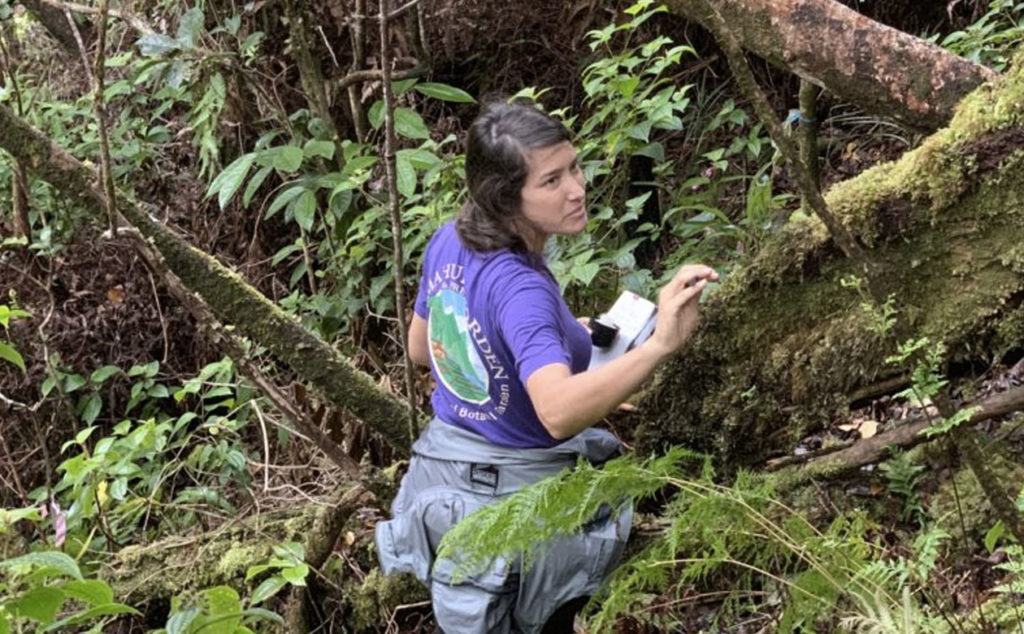
Healthy plants are at the center of these issues and are the foundation of life on our planet, providing critical habitat for animals and people. The International Year of Plant Health couldn’t be more timely. Likewise, the mission of NTBG, to enrich life through discovery, scientific research, conservation, and education, is as relevant as ever. From the biodiversity hotspot of Hawai‘i where we are based, throughout the Pacific, and to our garden in Florida and beyond, we are determined to contribute to global solutions by saving plants and saving people.
Taking Stock: NTBG Audits the Seed Bank
NTBG Audits the Seed Bank
By Kelli Jones, KUPU Team Member
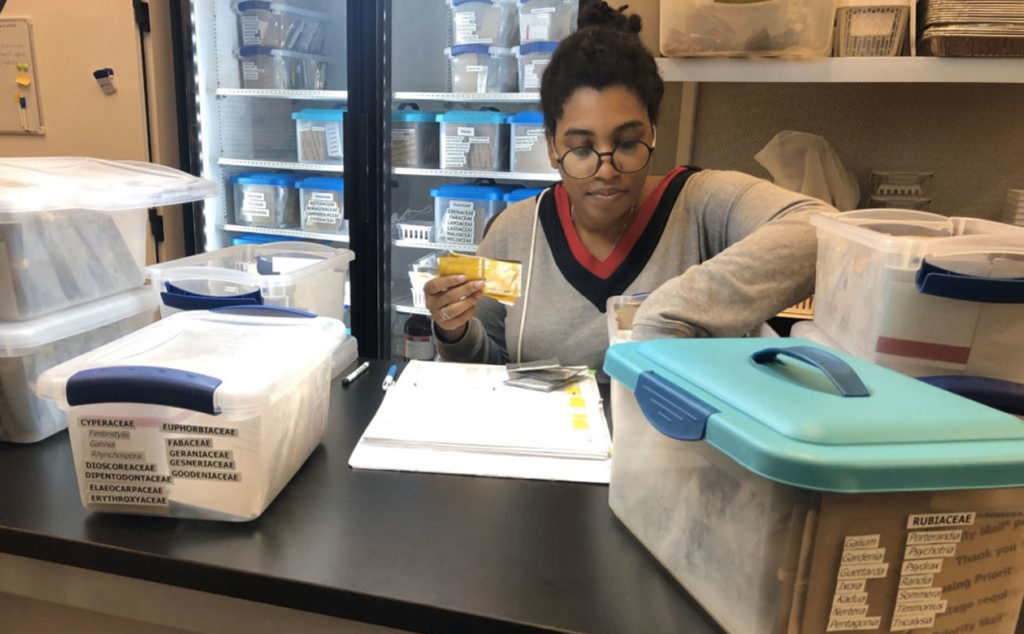
Have you ever tried to catalog, organize, and store 16 million seeds? It’s not as easy as it sounds. Working at NTBG’s Seed Bank and Laboratory as a team member with the KUPU program, I was tasked with taking the lead on conducting an inventory of NTBG’s conservation seed bank collection.
Seed Storage Capacity
At the end of 2019, it felt like the seed bank was nearing its storage capacity. Pulling from the collection had become cumbersome and needlessly complicated so, together with Seed Bank and Laboratory Manager Dustin Wolkis, we decided to restructure how cooled storage space was organized, conducting a complete inventory at the same time.
Seeds stored in the seed bank are kept at three temperatures (–80°C ,–18°C, and +5°C) and had been organized by decade, starting with the first collections from the 1990s, followed alphabetically by genus, species, then chronologically by accession[1] number.
Prior to this physical inventory and reorganization, when the collection was smaller, this simple scheme worked well for handling seed requests, but as the collection has grown by thousands of accessions annually, it became clear that a new system was needed to increase efficiency.
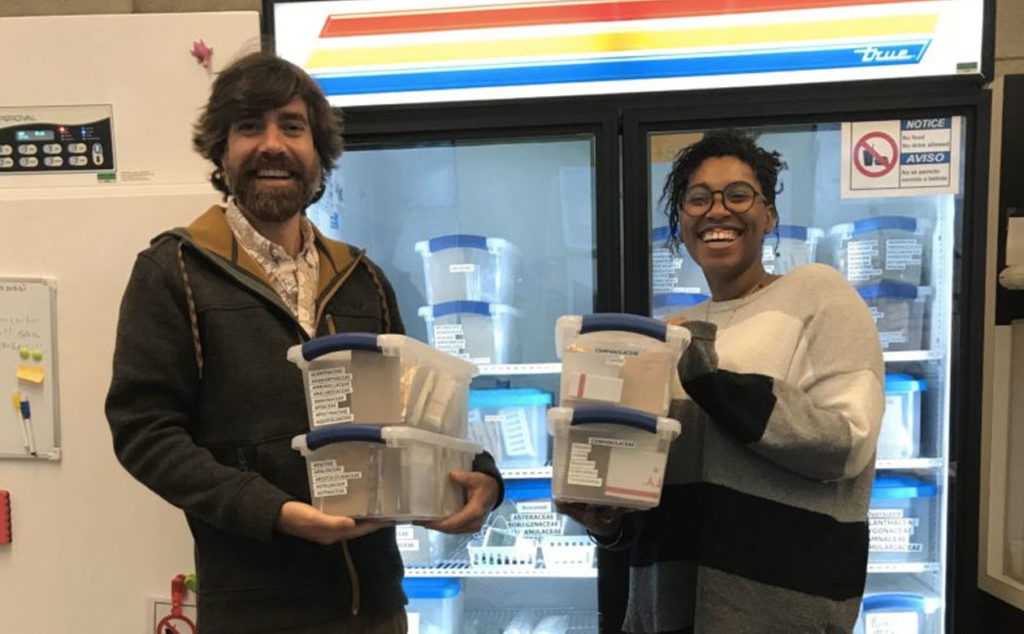
Overhauling our scheme and conducting an inventory began by creating a categorized list of every accession in the data base. The new list was reorganized so that accessions could be counted and used as a reference. Under the new system, the collection is arranged alphabetically by family, genus, species, and intra-species designations. This is followed numerically by accession number, similar to the how NTBG’s herbarium and DNA collections are organized.
By standardizing how we catalog our collections of stored plant material, we’ve created a greater sense of cohesion while making the assets in our Botanical Research Center more user-friendly.
With this year’s introduction of an additional subfreezing storage unit, we were also able to remedy overcrowded storage conditions while replacing seed containers with visible signs of wear.
Handmade Storage Solutions
In all, I spent nearly 300 hours hand-crafting materials for new storage containers and handling more than 4,000 individual accessions housed in NTBG’s seed bank. Throughout the process, I had to address numerous unanticipated complications including everything from correcting inconsistencies in old database entries to “phantom” accession numbers to the discovery of accessions once thought to be missing.
The millions of seeds NTBG stores in its seed bank include many rare and endangered taxa, including some not found in other seed banks. The seeds, representing 830 species, are regularly studied and requested for transfer to be propagated, so accurate record keeping is critical.
Part of the process of maintaining the seed bank is frequently assessing the seeds physical and physiological condition as well as regularly interacting with, and manually updating the corresponding digital records. As individual accessions are altered, their changes in condition and location are documented in the database, chronicling their life within the collection.
Closing the Information Gap
Once the physical portion of the inventory was complete, any remaining information gaps in the database had to be reconciled. Accessions which could not be found had to be removed and, along with these, the largest job in the data entry portion was updating the storage temperature entries and accompanying notes for each accession from all years prior to 2016 when those details were first added.
Updating the database added about 56 hours to the project, but the results were significant. While some plant taxa records remained unaccounted for, the seed bank still saw an overall increase of nearly 30 percent in taxa represented with an addition of 207 new accessions and a 12 percent increase in overall stored accessions.
Post-inventory, the most noticeable difference is in the interaction experience for anyone using the seed bank now that accession accountability has been improved. The task of pulling accessions, which previously took up to an hour, can now be done in minutes.
The new organization system is simpler, more logical, and more engaging, making it faster and easier to yield information and find the seeds that are needed, increasing the collection’s value to botany newcomers and seasoned researchers alike.
[1] A specific acquisition or collection of plant material (cuttings, seeds, etc.), either wild-collected or cultivated, which bears a unique identifying number that is cataloged and remains with that material for reference in a database
Botanical Books by Indigenous Authors
August 9, 2020 is the United Nations International Day of the World’s Indigenous Peoples and National Book Lovers Day! In celebration, we are sharing botanical books by indigenous authors.
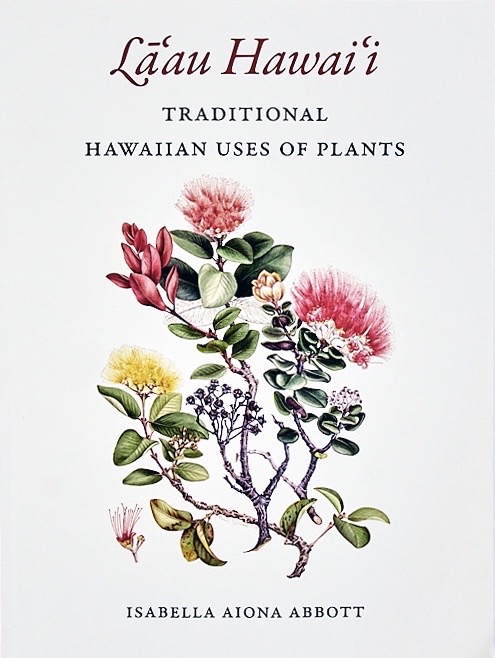
La’au Hawaii: Traditional Hawaiian Uses of Plants
By Isabella Aiona Abbott
This classic, award-winning book provides the first comprehensive description of Hawaiian traditions of plant use. Topics include not only food, but clothing, cordage, shelter, canoes, tools, housewares, medicines, religious objects, weaponry, personal adornment, and recreation.
Goodreads Summary
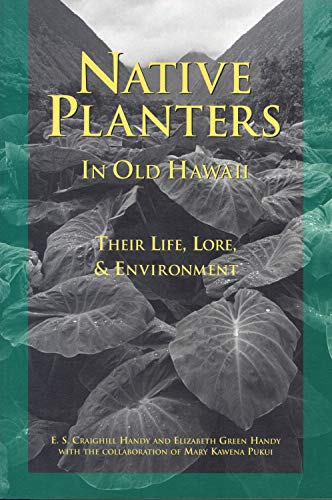
Native Planters in Old Hawaii: Their Life, Lore & Environment
By E.S. Craighill & Elizabeth Handy and Mary Kawena Pukui
Originally published in 1972, Native Planters, remains one of the most important ethnographic works on traditional Hawaiian culture. It has been reprinted with an index to subjects and chants, making this edition invaluable for scholars and laymen alike. This pioneering study of cultivation practices, beliefs, and rituals is the fruit of a brilliant collaborative effort between the eminent Pacific anthropologist, E.S. Craighill Handy, and his wife Elizabeth, and the noted authority on Hawaiian language and culture, Mary Kawena Pukui.
Goodreads Summary
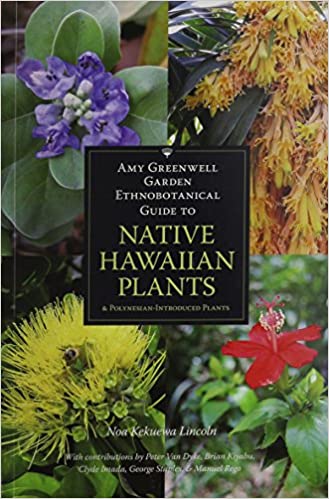
Amy Greenwell Garden Ethnobotanical Guide to Native Hawaiian Plants & Polynesian-Introduced Plants
by Noa Kekuewa Lincoln with contributions from Peter Van Dyke, Brian Kiyabu, Clyde Imada, George Staples, Bernice Akamine (Photographer)
In addition to describing the plants and their habitats, this guide relates the significance that native and Polynesian introduced plants had to traditional Hawaiian culture, and tell how these plants are still used today.
Goodreads Summary
Beyond Hawaii

Braiding Sweetgrass: Indigenous Wisdom, Scientific Knowledge, and the Teaching of Plants
By Robin Wall Kimmerer
As a botanist, Robin Wall Kimmerer has been trained to ask questions of nature with the tools of science. As a member of the Citizen Potawatomi Nation, she embraces the notion that plants and animals are our oldest teachers. In Braiding Sweetgrass, Kimmerer brings these lenses of knowledge together to show that the awakening of a wider ecological consciousness requires the acknowledgment and celebration of our reciprocal relationship with the rest of the living world. For only when we can hear the languages of other beings are we capable of understanding the generosity of the earth, and learning to give our own gifts in return.
Goodreads Summary
NTBG 2019 Annual Report now available online
NTBG’s 2019 Annual Report is now available. The concise report presents an overview of NTBG’s programs, recent achievements, and key financial data for 2019.
Find full listings of NTBG’s Board of Trustees, Council of Fellows, Donors, and learn how you can make a difference in supporting our mission.
NTBG Featured on ‘Plants Are Cool Too’
The National Tropical Botanical Garden has been featured on the Youtube Series ‘Plants are Cool Too’.
Take a trip to Kaua’i, the Garden Island of Hawai’i, for a behind the scenes look at how the National Tropical Botanical Garden is leading the charge to save rare plants and protect tropical biodiversity. This episode of “Plants are Cool, Too!” features some key players in the NTBG’s plant conservation
NTBG is back – forKauai Magazine
Article published in “forKauai” Magazine.
“The National Tropical Botanical Garden has reopened its Kaua‘i’s gardens to the public, after being closed since March because of the COVID-19 pandemic. The reopening is bringing a few changes designed to draw more local residents to the gardens while keeping them safe. These changes include new attractions and a significant reduction in membership fees.”
Read the full article here: https://www.forkauaionline.com/ntbg-is-back/
Science, Conservation and Research Review
June 30, 2020
NTBG is a global resource for tropical plant knowledge. The expertise of our dedicated staff spans identifying, documenting, understanding, and conserving the rich diversity of plants and their habitats in the tropics, with particular emphasis on the plants of Hawai’i and the greater Pacific region. To stay informed of NTBG scientific research and conservation news read the research review online, join our mailing list, or become a member.
1. Evolution and classification of figs (Ficus) and their close relatives (Castilleae) united by involucral bracts
Clement WL, Bruun-Lund S, Cohen A, Kjellberg F, Weiblen GD, Rønsted N* (2020). Botanical Journal of the Linnean Society, boaa022.
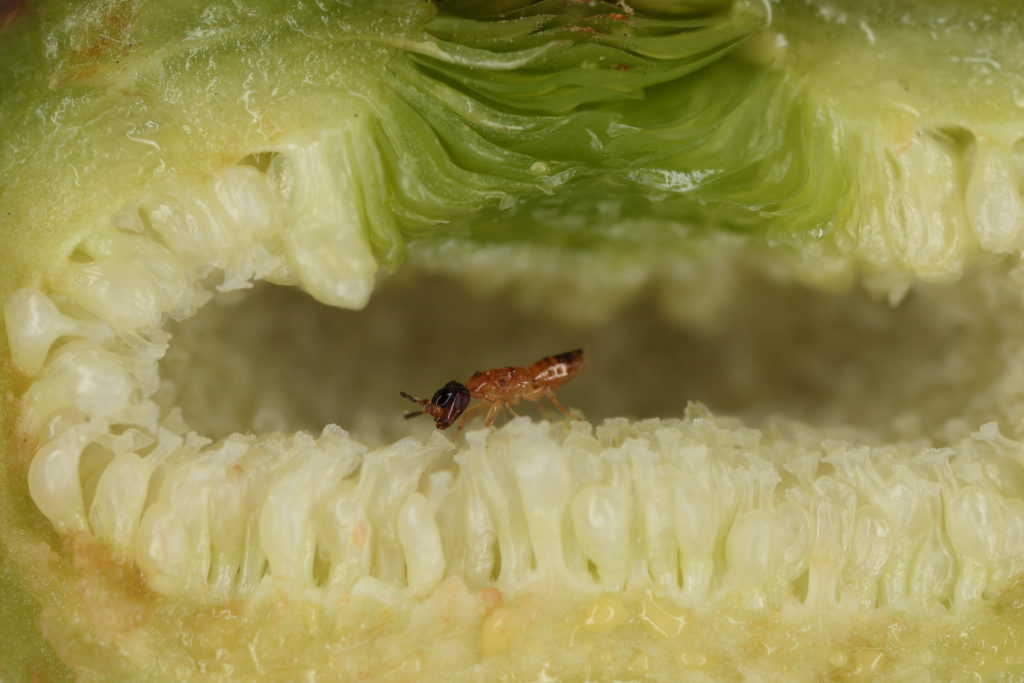
Figs and fig wasps are a classic example of an obligate pollination mutualism. With > 800 species, figs (Ficus, Moraceae) are among some of the larger genera of flowering plants while their closest relatives in the Castilleae have much fewer species. However, despite decades of work, we still don’t understand the evolution of the pollination mutualism well.
NTBGs Nina Rønsted and collaborators provide an overview of their classification based on evolutionary relationships and advocate taking a closer look at little known pollination systems in Castilleae to find answers.
2. Applying the zoo model to conservation of threatened exceptional plant species
Jordan Wood, Jonathan D. Ballou, Taylor Callicrate, Jeremie B. Fant, M. Patrick Griffith, Andrea T. Kramer, Robert C. Lacy, Abby Meyer, Sara Sullivan, Kathy Traylor‐Holzer, Seana K. Walsh, Kayri Havens (2020) Conservation Biology.

A paper co-authored by NTBG Conservation Biologist, Seana Walsh, was just published in the journal Conservation Biology. The paper titled ‘Applying the zoo model to conservation of threatened exceptional plant species’ demonstrates to botanic gardens how using zoo‐style studbooks and pedigree management will be transformative for the conservation of exceptional plant species like Brighamia insignia. Read the full paper here.
3. Pacifigeron indivisus (Asteraceae: Astereae), a new species endemic to Rapa, Austral Islands, and a new delimitation of the Celmisia group
Saldivia, P., Wood, K.R., Orlovich, D.A., Lord, J.M. (2020). Phytotaxa.
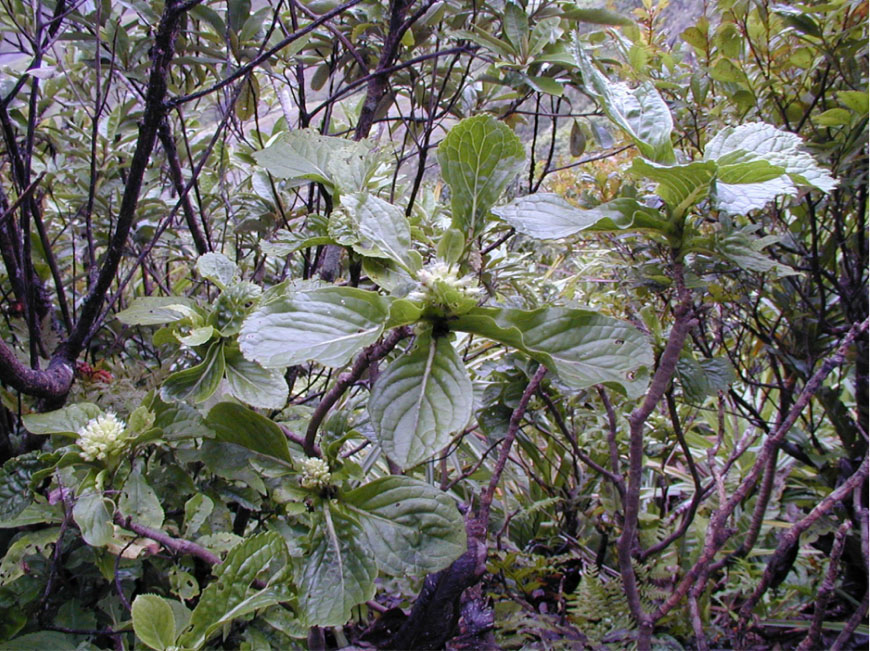
In autumn of 2002, a botanical expedition to Rapa (Austral Islands, French Polynesia) was carried out by the National Tropical Botanical Garden (NTBG), along with the Délégation à la Recherche (Polynésie Française) and the New York Botanical Garden (NYBG).
During the expedition, several new species were discovered including a new member of the extraordinary Rapan endemic genus Pacifigeron (Asteraceae). Recently, staff at the University of Otago (New Zealand) and the NTBG published the description of Pacifigeron indivisus in the prestigious journal Phytotaxa and included a summary on its distribution and abundance, along with the results of a molecular study clarifying its relationship to other members of the Asteraceae.
This publication follows several other new species descriptions discovered during NTBG’s 2002 Rapan Expedition, including a new species of Melicope (Appelhans et al. 2014), a new species of Bidens (Funk & Wood 2014), in addition to a molecular phylogenetic study on the rediscovered endemic Rapan genus Apostates (Baldwin & Wood 2016).
4. Updates from the collaboration between NTBG and the International Center for Tropical Botany at the Kampong
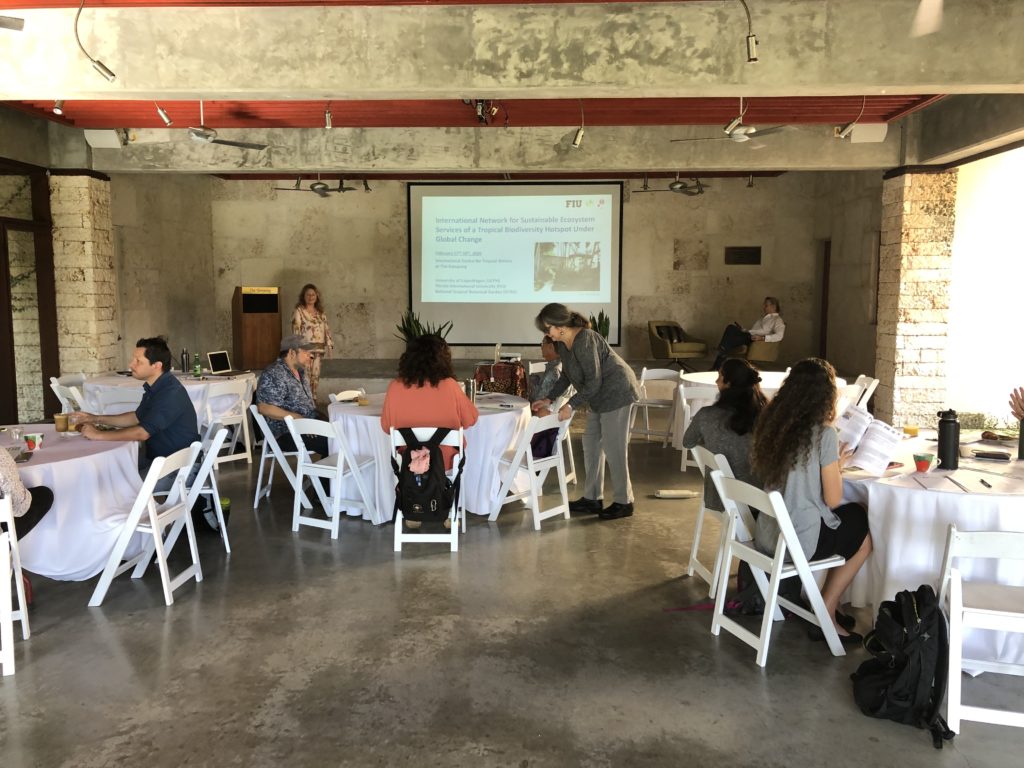
In collaboration with Florida International University, NTBG has established the International Center for Tropical Botany at the Kampong (ICTB) as a center of excellence for research and education in tropical botany.
The building of the new research headquarters for the ICTB at the Kampong is scheduled to begin in August 2020 with anticipated completion in Fall 2021.
Four new faculty members have been hired by FIU to work with the ICTB:
- Dr. Adam Roddy specializing in flower morphology and function
- Dr. Oscar Valverde-Barrantes working with root morphology and function
- Dr. Anna Simonsen with expertise in plant microbe-interactions
- Dr. Clinton Jenkins focusing on biodiversity conservation analysis and planning.
In addition, FIU will be funding a postdoctoral fellow to be co-mentored by Dr. Baraloto and Dr. Rønsted. Following up on a successful joint workshop between in NTBG and ICTB in Miami in this past February, four joint research themes were prioritized focused on:
- Scalability of high-diversity food security systems in Hawai’i and the Caribbean
- Comparative ecosystem services of coastal forests in the Pacific and Caribbean
- Why some plants are rare and others common
- Plant chemical defenses in island systems.
Multiple collaborative research questions, publications, and funding applications are in progress with seed money from the William R. Kenan Charitable Trust.
NTBG’s Allerton, McBryde, and Limahuli Gardens Reopening to the Public
June 11, 2020 (Kalaheo, Kauai)
National Tropical Botanical Garden (NTBG) will reopen its Kauai gardens in the coming weeks. NTBG’s Limahuli Garden on the north shore will welcome the community for self-guided tours beginning Tuesday, June 16, while both NTBG’s Allerton Garden and McBryde Garden on the south shore will resume operations Wednesday, July 1 for self-guided tours (McBryde Garden) and a limited number of guided tours (Allerton Garden). All tours require a reservation.
The Gardens will reopen under a carefully formulated plan designed to prioritize the safety, health, and comfort of all garden visitors, staff, and volunteers. This plan strictly follows recommendations and guidelines of the Centers for Disease Control and Prevention, and state and local authorities including the required use of face coverings and social distancing measures. Visitor numbers will be reduced and timed entries will be carefully regulated to avoid crowding.
During this time, garden admission fees have been modified in order to accommodate every member of the community. As a way to thank everyone on Kauai for their support, self-guided admission for Hawaii residents will be complimentary June 16 – June 30 for Limahuli Garden, followed by July 1 – July 11 for McBryde Garden.
Membership specials of 50% off for Hawaii residents are also offered for a limited time through July 31. Starting at $35, membership provides for one year of complimentary self-guided tours at all gardens, as well as a variety of additional member benefits, all while helping support NTBG and its mission of saving plants and saving people.
“Gardens are indispensable as a place of healing, offering a much-needed space for respite and connection with nature. As NTBG reopens and welcomes our community back, we are here to offer a safe, comfortable, and enjoyable experience in a tranquil outdoor setting. We sincerely look forward to sharing the gardens with new and repeat visitors,” said Janet Mayfield, NTBG’s CEO and Director.
To make a reservation, visit www.ntbg.org or call (808) 742-2623 for McBryde Garden and Allerton Garden, or (808) 826-1053 for Limahuli Garden.
# # #
National Tropical Botanical Garden (www.ntbg.org) is a not-for-profit, non-governmental institution with nearly 2,000 acres of gardens and preserves in Hawaii and Florida. The institution’s mission is to enrich life through discovery, scientific research, conservation, and education by perpetuating the survival of plants, ecosystems, and cultural knowledge of tropical regions. NTBG is supported primarily through donations and grants.
Media contact: Email media@ntbg.org at NTBG Headquarters on Kauai.
NTBG President Chipper Wichman To Appear On Insights On PBS Hawaii
On Thursday, May 28 at 8 p.m. (Hawaii Standard Time), NTBG President Chipper Wichman will appear on Insights on PBS Hawaii for a conversation about the future of tourism in Hawaii in the age of the coronavirus. Chipper will join a panel of local leaders and decision makers as they explore how best to manage and reform Hawaii’s largest industry at this critical juncture.
Watch the discussion live and send or call in your questions. More information at:
https://www.pbshawaii.org/insights-on-pbs-hawai%ca%bbi-whats-it-going-to-take-managing-tourism-in-hawai%ca%bbi/