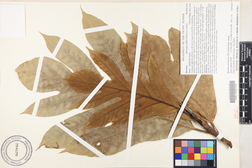
Herbarium Sheet Detail
NTBG Plant Name:
Artocarpus altilis 'Meriaur'
Collector Name:
Diane Ragone
Collection Date:
February 11, 1998
Observers:
Naito Soaladoab, David H. Lorence, Tim Flynn
Island Group:
CAROLINE ISLANDS
Locality:
Oikuul Village. Growing at right side of house on left side of unpaved road. @30 m inland from mangroved-fringed coastline. About 15 m before the road ends at channel through mangroves.
Plant Description:
No fruits. Seedless cultivar with smooth skin. Leaves fairly small, in tight clusters. Shallowly dissected with 1-3 pairs of lobes. Smooth, dull green, flexible blade with green-yellow veins. Many long white hairs on upper veins. Underside rough. Large, mature tree - 2 feet in diameter, first branches 7 m above ground. Voucher collected from root sucker approximately 7 m tall. Leaves more deeply lobed than mother tree. Tree 13 m.
From Cultivated Plant:
Yes
Specimen Treatment:
Specimen preserved in 70% alcohol before drying
Ethnobotanical Notes:
Informant: Naito Soalodaob.
Seedless breadfruit ciltivars (Midolab, Meriaur, Ebechab, Errud) are known as Meduu. Fruits are prepared by peeling, slicing and boiling. Can be mixed with coconut milk. Slices can also be fried. Whole fruits are barbecued (roasted) in a fire. Today, few Palauans, espeially children, eat breadfruit or other traditional staple foods such as taro or tapioca. Imported starches such as rice, bread, and cereal are preferred. Wood of Meduu or Ebiei is used for house construction and formerly canoes.
Date of Last Update:
August 6, 2023
<< Return to Search Results | New Search
.svg)