.svg)


By NTBG Staff
What if you could see inside a seed without opening it? Thanks to a new X-ray machine, NTBG Seed Bank staff can do just that. The technology offers a glimpse into the hidden world inside seeds, helping us better understand seed viability and make more informed decisions for seed storage and conservation.
Take a look behind the scenes at how the machine works and what it reveals.
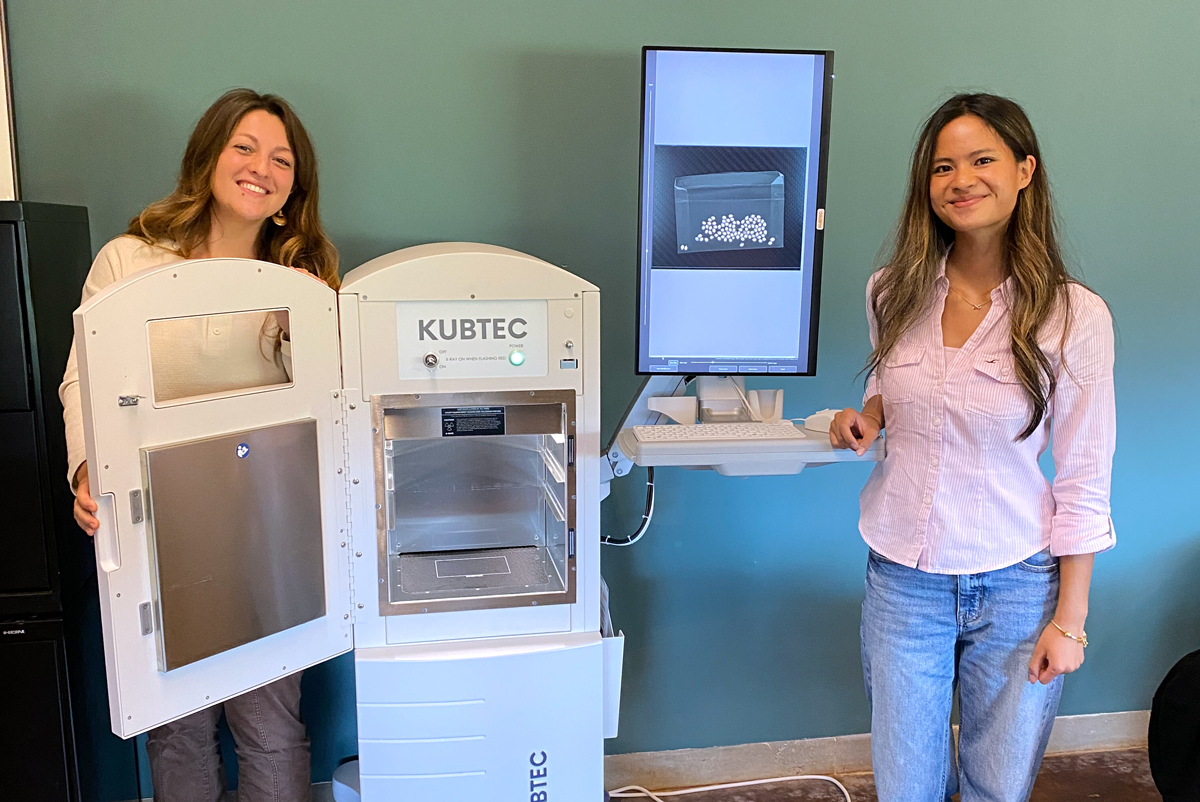
Jena Osmani, Seed Bank Manager, and Amme Kekuna, Seed Bank Technician
The new X-ray machine is a relatively compact, enclosed imaging unit. Made by KUBTEC Scientific, it’s known for its simple setup and consistent, high-quality imaging results.
“The machine gives us a non-destructive, non-invasive way to evaluate seed fill and seed quality,” said Jena Osmani, Seed Bank Manager. “Without cutting open or germinating the seeds, we can see whether they’re full and even detect fungal or insect damage inside. It’s a really valuable diagnostic tool.”
The X-ray machine is now a standard part of the seed lab’s workflow. As seeds come into the lab, they are scanned to assess their quality before moving on to the next steps in processing or storage.
Before scanning, staff carefully arrange seeds to ensure clear, accurate imaging results and prevent them from overlapping in the X-ray image. Seeds can be arranged on small sheets of filter paper or placed directly on larger trays that slide into the imaging chamber.
For species with seeds enclosed in fruits or capsules, the entire fruit or capsule can even be X-rayed to see how many seeds are inside. For grasses and sedges, entire panicles can be scanned to determine how many seeds they contain, helping staff confirm that fruits and panicles have been thoroughly cleaned. The machine accommodates seeds of many different sizes and shapes, making it a versatile tool for examining a wide variety of species.
Fun fact: In addition to seeds, the Kubtec X-ray system can also be used as a diagnostic tool to inspect roots for nematodes, branches for boring insects, and other plant tissues for hidden internal damage.
Within seconds, the machine scans the seeds and displays detailed X-ray images on the screen. Using DIGISEED imaging software, staff can further adjust settings such as contrast and brightness to better examine the internal structures of each seed.
“It’s been interesting to use the machine to confirm things we had only suspected,” said Amme Kekuna, Seed Bank Technician. “For example, with certain seeds in the aster family that come through the lab, we often suspected that many were empty. Now, the X-ray machine allows us to verify that and see exactly how many contain embryos versus how many are empty.”
“We’re also starting to see differences in seed viability between collections from different locations,” added Jena. “That can give us clues about what’s happening in those populations. For example, if one collection has a much higher number of empty seeds than another, it could point to differences in pollinator activity, environmental conditions, or other factors affecting seed production.”
These insights are helping paint a clearer picture of the challenges—and resilience—of Hawaiʻi’s native plant populations, one collection at a time. As the Seed Bank continues to build its collections and knowledge, each scan adds another piece to that story.
The X-ray machine was made possible with support from the Association of Zoos and Aquariums.
Examine the seeds of Carex alligata above and try to identify which may be full versus empty. Then click the right arrow to reveal the X-ray image.