.svg)
Apply for the National Tropical Botanical Garden’s Environmental Journalism Program at The Kampong in Miami
Offered in Miami, Florida November 8-14, 2026
The Hawai‘i-based National Tropical Botanical Garden (NTBG) is accepting applications for its Environmental Journalism Program offered this year in Miami, Florida on November 8–14. Designed for professional journalists (staff or freelance) working in broadcast, print, online, and other media, the immersive program provides a background in tropical botany, ecology, and biocultural conservation with a progressive approach that honors Indigenous legacies and cultural values.
The program is structured to enhance reporting on environmental issues with a focus on tropical natural systems and the importance of plant science, conservation, and biodiversity.
In November, selected participants will meet at The Kampong, NTBG’s Florida garden located in Coconut Grove (south Miami). Since its inception in 1999, the program has been held 20 times in Hawai‘i. The introduction of Miami represents an expansion of the program.
The Kampong is the former home of botanist and explorer David Fairchild who built his garden in the first half of the 20th century, introducing hundreds of palms, fruit bearing trees, and other tropical plants that make the site an urban oasis.
The Kampong provides richly varied indoor and outdoor spaces in which to study and experience critical concepts of tropical botany and horticulture, biocultural conservation, habitat restoration, tropical agriculture, and the plants of South Florida and the Caribbean bioregion.
The Environmental Journalism Program at The Kampong will introduce NTBG’s extensive living collections, cultural and historical resources, as well as off-site visits to the International Center for Tropical Botany at The Kampong, Fairchild Tropical Botanic Garden, and Montgomery Botanical Center. Additional day trips will feature ecologically and historically important sites on Biscayne Bay, a south Miami organic regenerative farm, and a day in the Everglades experiencing the culture, history, and environmental work of the Miccosukee Indian tribe.
NTBG Environmental Journalism Program speakers and presenters will include NTBG staff and non-staff scientists, educators from Florida International University, and other experts in botany, horticulture, taxonomy, coastal ecology, climate science, and related fields.
Participating journalists can expect to gain a greater understanding of the above topics with the goal of contributing to quality, impactful journalism. The program is not expressly intended to provide source material for prospective news stories, although NTBG staff and other speakers may be available for interviews outside program hours.
All program participants will be housed in free (no cost) on-site shared dormitory housing (with shared kitchen and bath). Transportation for program activities and excursions will be provided by NTBG.
Participants are responsible for the cost of their own transportation to/from Miami and ground transfer from Miami International Airport to/from The Kampong in Coconut Grove as well as meals, incidentals, and any additional expenses.
Apply from: Thursday, July 30, 2026 (7 a.m. U.S. Eastern Daylight Savings Time)
Deadline to apply: Tuesday, August 18, 2026 (5:00 p.m. U.S. Eastern Daylight Savings Time)
Notice of acceptance by: Tuesday, September 1, 2026
Dates of program: Sunday, November 8 – Saturday, November 14, 2026
*All participants will check into Kampong housing on Sun. November 8 and check out by 12 noon on Sat. November 14
Required to Apply: Complete Environmental Journalism Program online application and provide TWO samples of recent work in print, audio, video, or online reporting (URL links only please).
Apply at: https://ntbg.wufoo.com/forms/ntbg-environmental-journalism-program/
Website: https://ntbg.org/education/professional
Email: education@ntbg.org
Established in 1964 by a Congressional Charter, NTBG is a leader in rare and endangered tropical plant discovery, collection, and biocultural conservation in Florida, Hawai‘i, the Pacific, and beyond.
Storm Recovery and Resilience at Kahanu Garden & Preserve
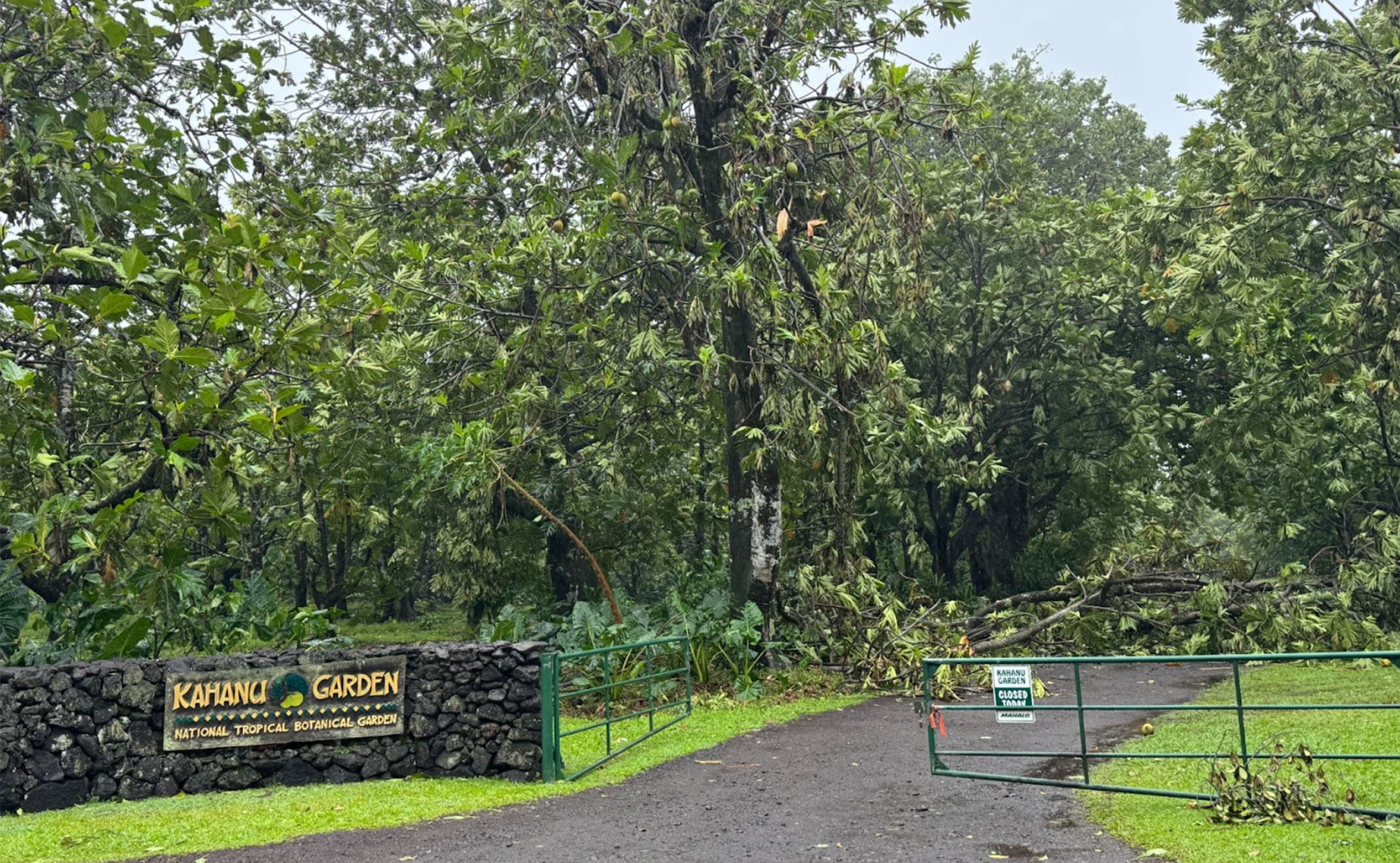
Following an extreme Kona Low storm event, Kahanu Garden and Preserve is beginning recovery efforts. While our gardens on Kauaʻi remained largely unaffected, East Maui experienced over 30 inches of rainfall and wind gusts exceeding 70 mph, creating a localized “wind tunnel” effect that significantly impacted Kahanu Garden and Preserve.
Damage Assessment
Our living collections were most affected by the storm. There were numerous fallen trees, some initially blocking access to garden areas. A handful of breadfruit varieties were toppled. For rare varieties impacted, we are quickly working to take root cuttings, prune, and stand the tree back up to ensure the collection is not lost.
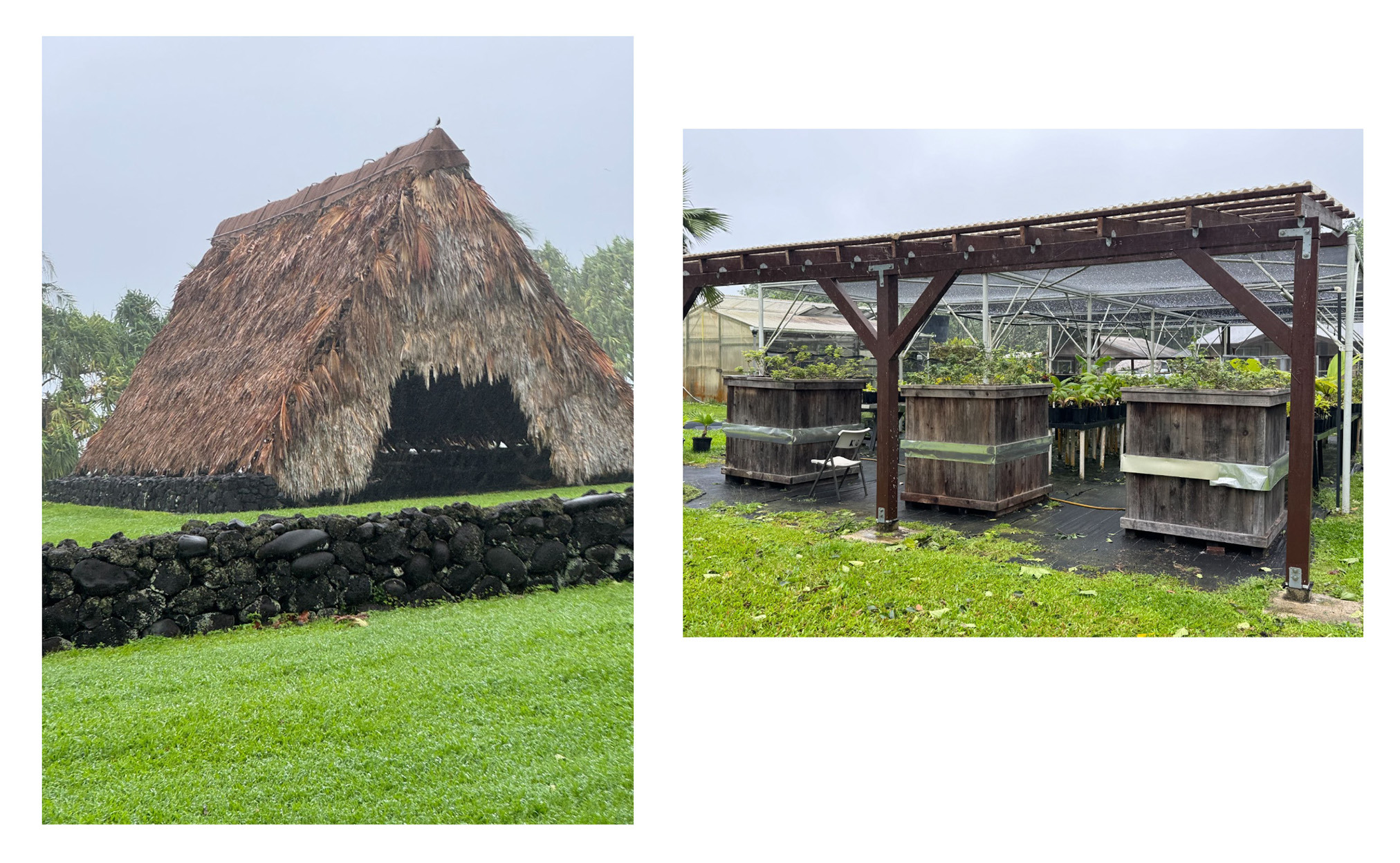
Despite these challenges, there is much to be grateful for. Piʻilanihale Heiau stands firm and the Hale Waʻa (Canoe House) emerged from the storm nearly unscathed. Furthermore, we are heartened to report that our Ka Palupalu o Kanaloa—among the rarest plants in the world—survived the event safely. This is due in large part to the proactive efforts of our team and a generous gift that allowed us to bolster the nursery.
“The entire Kahanu Garden and Preserve team should be acknowledged for doing an extraordinary job to regain access to the garden and Piʻilanihale Heiau even as severe weather continues. This place is so important to our community, and we are all so proud to do this work despite the challenging conditions.
As we move forward, we appreciate additional support to improve roads, prune trees, secure rare plant collections, and continue to serve the tight-knit Hāna community who is always there for us. We are excited to reopen Kahanu Garden as soon it’s safe to do so.” — Dr. Mike Opgenorth, Director of Kahanu Garden & Preserve
Looking Ahead
Kahanu Garden and Preserve will be temporarily closed for approximately two weeks to allow for intensive cleanup and restoration. The Kahanu team’s dedication—helping with recovery while still facing power outages and limited access to food and gas at their own homes—is a testament to the spirit of the garden and Hāna community.
We will share further updates as the restoration progresses. Thank you for your continued support of our mission and our staff during this time.
Breadfruit Researcher Diane Ragone to Receive David Fairchild Medal for Plant Exploration
Photo credit: Jim Wiseman
The National Tropical Botanical Garden (NTBG) has announced that Dr. Diane Ragone, founder and director emerita of NTBG’s Breadfruit Institute, will receive the 2024 David Fairchild Medal for Plant Exploration. Awarded by NTBG since 1999, the Fairchild Medal recognizes exceptional botanists, horticulturists, and explorers for their contributions.
Internationally recognized for her groundbreaking work in the collection, study, conservation, and advocacy of breadfruit, Ragone has dedicated her career to increasing the understanding, conservation, and use of breadfruit, a tropical fruit bearing tree in the Moraceae (fig family) which includes Artocarpus altilis and two related species.
Over four decades, Ragone conducted fieldwork and research on islands and atolls including Kiribati, Fiji, Kosrae, Pohnpei, Chuuk, Yap, Palau, Tokelau, the Marquesas Islands, Solomon Islands, Samoa, Cook Islands, Hawaiian Islands, and beyond —51 Pacific Islands in total. Ragone’s work has focused on documenting, collecting, and helping preserve the biocultural knowledge and provenance related to more than 600 individual breadfruit trees based on hundreds of interviews with local communities, farmers, horticulturists, cultural practitioners, scientists, and others.
After graduating with a B.S. in Horticulture (Virginia Tech, 1977) and an M.S. in Horticulture (1984) from the University of Hawai‘i, Ragone earned a Ph.D. in Horticulture (1991) from UH based on her dissertation “Collection, Establishment, and Evaluation of a Breadfruit Germplasm Collection.”
Following Ragone’s first Pacific field collecting trip to Samoa in 1985 and extensive fieldwork in 1987, she joined NTBG in 1989 as program director for the Hawai‘i Plant Conservation Center before going on to serve as manager of Kahanu Garden, chair of the plant science department, director of science, horticulture, and conservation. She also served as NTBG’s acting director along with other postings.
In 2003, Ragone established the Breadfruit Institute as an NTBG program which she led as its director until 2022 when she became director emerita.
Based on plant material hand-collected by Ragone and colleagues throughout the Pacific, the Breadfruit Institute has developed and curated a living conservation collection of 150 varieties — more than 300 individual trees — representing the wealth of genetic and horticultural diversity of breadfruit. NTBG now maintains the world’s largest repository of breadfruit cultivars. For more than two decades, the institute’s work has contributed significantly to the understanding, conservation, and use of breadfruit in Hawai‘i, across the Pacific, in the Caribbean, Central America, Africa, and other parts of the world.
Under Ragone’s direction, the Breadfruit Institute has grown into a global initiative that has collected, curated, and now manages the conservation collection at Kahanu Garden on Maui and a Regenerative Organic Breadfruit Agroforest demonstration in McBryde Garden on Kaua‘i. Among its many endeavors, the Breadfruit Institute has become a center for collecting, preserving, and growing breadfruit germplasm, conducting extensive research and publishing studies, reports, and guides related to micropropagation, ethnobotany, community forests, agroforestry, climate resilience, food security, as well as the nutritional attributes and seasonality of breadfruit.
A major focus of Ragone’s research has been the identification and study of specific varieties (cultivars) of breadfruit which have proven to be exceptional in terms of nutritional composition, timing of fruit production, preferred qualities (flavor, texture, size, etc.), and resilience to environmental conditions such as drought and sea level rise. Ragone and her partners have identified varieties that include Ma‘afala, Ulu fiti, Otea, and two others that are well suited for micropropagation and global distribution.
Since its founding, the Breadfruit Institute has initiated dozens of national and international partnerships for research and the distribution of trees including collaborations with the Trees That Feed Foundation, Jungle Project, Patagonia Provisions, Ceres Trust, and universities in Hawai‘i, British Columbia, Copenhagen, Chicago, and elsewhere. Through these and other partnerships, the Breadfruit Institute has helped distribute nearly 200,000 trees to over 50 countries and territories around the world.
Ragone has been recognized by the Society for Economic Botany, the Garden Club of America, the World’s Who’s Who of Women, and the College of Tropical Agriculture and Human Resources at the University of Hawai‘i. As the 23rd recipient of the Fairchild Medal, she was selected by a five-person panel of peers including retired director of horticulture, Royal Botanic Garden Edinburgh, Dr. David Rae who said, “Dr. Ragone epitomizes the spirit and ethos of the Fairchild Medal because of her outstanding fieldwork and commitment in securing breadfruit germplasm.”
Upon learning that she had been selected to receive the Fairchild Medal, Ragone said, “I’m excited and delighted. It’s a really special award — I am overwhelmed to receive it.”
Past recipients of the Fairchild Medal have included plant scientists, scholars, and other experts in botany and horticulture from the Royal Botanic Gardens, Kew, Arnold Arboretum of Harvard University, New York Botanical Garden, Missouri Botanical Garden, and other leading institutions.
The Fairchild Medal will be presented to Dr. Ragone at The Kampong, NTBG’s garden in Miami, Florida on November 14 where she will speak before an invited audience. She will deliver a second public lecture at The Kampong on November 15. Contact 1-305-442-7169 for details.
Exploring Breadfruit: A 40 Year Journey
Photo credit: Jim Wiseman
The National Tropical Botanical Garden (NTBG) awarded Dr. Diane Ragone, founder and director emerita of NTBG’s Breadfruit Institute, the 2024 David Fairchild Medal for Plant Exploration. Dr. Ragone gave this presentation at the award ceremony, sharing her four-decade journey exploring, conserving, and promoting breadfruit.
A Breadfruit Journey: Conserving and Studying a Storied Pacific Crop with Global Significance
Photo credit: Jim Wiseman
Hear from Dr. Diange Ragone, founder and director emerita of NTBG’s Breadfruit Institute, share her journey conserving and studying breadfruit.
CRB Detection
At the National Tropical Botanical Garden, we are committed to the biosecurity of Hawaiʻi to protect our home’s irreplaceable biodiversity and support the wellbeing of our communities. We vigilantly safeguard against and monitor for invasive species at our gardens on Kauaʻi and Maui, working in partnership with many organizations to implement best practices and support early detection.
We host a system of traps set by the Kauaʻi Invasive Species Committee (KISC) to detect the presence of coconut rhinoceros beetles (CRB). First reported on Oʻahu in 2013, this invasive insect has unfortunately started to spread on other islands. CRB poses a serious threat to the ecological health, cultural practices, and economic wellbeing of our island communities. An adult CRB was recently caught in one of the KISC traps set in our Garden on the south shore of Kauaʻi.
The discovery of CRB here demonstrates that the insect is moving into new areas on Kaua’i. We are implementing proactive measures to control and mitigate CRB at our gardens and support the efforts of KISC and other partners to stem this threat.
We urge the public to be vigilant and report any sightings of CRB or unusual activity in palm trees. Early detection is crucial; look for scalloped edges and other unusual damage on palm fronds, including boring holes. Find helpful information at www.crbhawaii.org and report sightings to Kauai Invasive species Committee at KISC@hawaii.edu or (808) 821-1490.
This situation underscores the importance of our collaborative efforts in monitoring and protecting our shared environment. Thank you everyone for your support and cooperation in these critical conservation efforts.
NTBG Environmental Journalism Program accepting applications for 2024
Offered on Kauai, May 12-18, 2024
The Hawaii-based National Tropical Botanical Garden (NTBG) is accepting applications for its Environmental Journalism Program offered May 12–18, 2024. Designed for professional journalists (staff or freelance) working in broadcast, print, online, and other media, the immersive program provides a background in tropical botany, ecology, and biocultural conservation with a progressive approach that honors Indigenous legacies and integrates cultural values. The program is structured to enhance well-informed, accurate reporting on environmental issues with a focus on tropical and island systems and the importance of plant science, conservation, and biodiversity.
The Environmental Journalism (EJ) Program is offered at NTBG headquarters, in three of its five botanical garden sites, and other locations on the island of Kauai. Established in 1964 by a Congressional Charter, NTBG encompasses ancient Hawaiian cultural and archaeological sites, extensive botanical living collections, a LEED-certified botanical research center, a botanical library and rare book collection, a seed bank and laboratory, a historical garden estate, a horticulture and conservation center, and other natural and man-made resources and facilities.
NTBG provides richly varied indoor and outdoor living classroom settings in which to study and experience new and traditional ideas while exploring critical concepts of biology, ethnobotany, biocultural conservation, habitat restoration, seed banking, agroforestry, and herbaria specializing in tropical and sub-tropical flora.
EJ Program presenters include NTBG staff and non-staff scientists, educators, and experts in botany, horticulture, taxonomy, field biology, ornithology, ethnobotany, and other related fields.
Participating journalists can expect to gain a greater understanding of important elements and current developments that will assist them in reporting on science and the environment. The goal of NTBG’s EJ Program is to introduce critical information and concepts in order to foster a greater understanding of these issues. The EJ Program is not expressly intended to provide source material for prospective news stories, although NTBG staff and other speakers may be available for interviews outside program hours.
NTBG provides all participants free on-site shared housing, airport transfer, and ground transportation. EJ Program participants are responsible for the cost of their own airfare to Lihue Airport on Kauai, meals, incidentals, and any additional expenses such as U.S. visas, etc.
Apply starting: Thursday, February 1, 2024 (6 a.m. U.S. Eastern Standard Time)
Deadline to apply: Wednesday, February 21, 2024 (5:00 p.m. U.S. Eastern Standard Time)
Notice of acceptance by: Tuesday, March 5, 2024
Dates of program: Sunday, May 12 – Saturday, May 18, 2024
*All participants will check into NTBG housing on Sun. May 12 and check out on Sat. May 18th
Required to Apply: Complete Environmental Journalism Program online application and provide two samples of recent work in print, audio, video, or online reporting (URL links only please). Submission of a CV/resume is optional.
APPLY AT: https://ntbg.wufoo.com/forms/environmental-journalism-program/
Website: https://ntbg.org/education/professional
Email: education@ntbg.org
An Eye on Plants – Koʻokoʻolau (Bidens wailele)
By Jon Letman, Bulletin Editor
The Hawaiian flora is comprised of a remarkable variety of rare flowering plants, many of which grow nowhere else. But the islands are also home to one of the most prolific plant families, Asteraceae, which includes chrysanthemums, daisies, and sunflowers.
Among the approximately 25,000 Asteraceae species worldwide is the genus Bidens which has between 150 and 235 species, with 42 in Polynesia alone. Called koʻokoʻolau in Hawaiian, Bidens is considered a prime example of adaptive radiation in Hawaiʻi. The genus has been found on seven of the eight high Hawaiian Islands and probably once grew on Niʻihau. The islands claim 19 endemic species, seven of which occur on Kauaʻi, three of them single-island endemics. Bidens are highly variable in form, growing in habitats ranging from coastal dunes, lava flows, and cliff faces to scrubland, bogs, and forests over 2,000 meters high.
In 2020, when University of Hawaiʻi-Hilo botany professor Matthew Knope returned to his family home on Kauaʻi during the pandemic, he and NTBG research biologist Ken Wood agreed the time was right to collaborate on describing a highly unusual Bidens limited to remote parts of Kauaʻi’s rain-soaked interior. The Bidens in question had been found growing in small populations near the rim’s edge of the Blue Hole crater and in scattered talus along the base of cliffs below Mt. Waiʻaleʻale. An additional colony was located at the back of the Wainiha Valley, Kauaʻi’s deepest drainage. Both areas are known for thousand-foot-high cliffs and ribbon-like waterfalls.
Left: Bidens wailele colored pencil and watercolor illustration by Wendy Hollender. Right: Blue Hole crater. Photo by Steve Perlman.
Botanists have documented this rare Bidens for years, but its lineage was uncertain and additional fertile material was needed for its description. This new Bidens species caught the botanists’ attention with its low, spreading habit and very unusual inflorescence which had long stalks terminating with a nodding flower head, similar to the bird-pollinated Bidens cosmoides. This undescribed Bidens was considered most closely related to B. valida, a Kauaʻi endemic found in several remote mountain regions of southeastern Kauaʻi
Over multiple field trips, Matthew and Ken made herbarium vouchers and collected viable seeds which have since been grown at NTBG’s conservation nursery. Utilizing collections from various botanists over the years, Matthew and Ken proceeded with a taxonomic assessment, describing its distinctive morphology, habitat, and conservation status. The formal written description was submitted for peer review along with photos, maps, and an illustration by NTBG partner and botanical artist Wendy Hollender.
Over a period of nine months — relatively fast in the world of taxonomic publication — the new Bidens was described and accepted as a new species. Matthew and Ken gave it the name Bidens wailele (lit. “leaping waters”) in recognition of its habitat. In June, the paper was published in the International Journal of Plant Sciences in a special issue honoring the legacy of noted Asteraceae specialist Vicki A. Funk.
With an estimated 700-800 remaining individuals, B. wailele meets the criteria to be listed as Critically Endangered on the IUCN Red List of Threatened Species. According to Matthew, Bidens represents “one of the most rapid and explosive plant diversification events in the Pacific.” What contributes to this diversity and wide dispersal? Ken explains that the tiny barbs and bristly nature of the seeds easily stick to birds, making them more likely to be carried long distances. He adds that Bidens probably evolved alongside Hawaiʻi’s yellow-faced bees and various diptera (flies) which served as pollinators and the plants may have been a favorite food of the flightless geese and duck-like fowl that once lived in Hawaiʻi. Surely, the first humans to reach Hawaiʻi admired Bidens for its delicate green foliage and bright yellow flowers. Bidens muʻo (branch tips) have long been drunk as a medicinal tea, consumed to fight colds and promote general health. Indeed, other Bidens species are used medicinally around the world. Lei Wann, director of Limahuli Garden and Preserve, began drinking koʻokoʻolau tea as a child. She describes the taste as mildly sweet and earthy and says there are still families who visit the Limahuli Valley to gather Bidens, a plant that is both rare and yet familiar to many.
People need plants. Plants need you.
Plants nourish our ecosystems and communities in countless ways. When we care for plants, they continue caring for us. Help us grow a brighter tomorrow for tropical plants.
Growing the Next Generation of Botanists at the ICTB at The Kampong
Tropical Botany student Jenny Morris taking field notes in Costa Rica. Photo by Danielle Ward.
By Jon Letman, Bulletin Editor
Among the many shortages the world faces today, one often overlooked is a lack of botanists. At a time of unprecedented crises, including a dramatic loss of biodiversity, highly trained botanists are in short supply. “Today, we need plant scientists more than ever,” says Dr. Chris Baraloto, director of the International Center for Tropical Botany (ICTB) at The Kampong in Miami, Florida.
For more than a decade, scientists have expressed concern about declining support for plant science education. As academic and funding priorities have shifted, universities have merged fields, deemphasizing botany programs. Reduced training and recruitment, along with retirement, has exacerbated the shortage. Dr. Brian Sidoti, director of The Kampong says, “A fresh influx of trained plant scientists is essential to carry forward research, innovation, and expertise. Their contributions will be pivotal in devising solutions to the global challenges we face.”
Plants not only provide oxygen, food, fiber, fuel, and medicine, they also offer habitat and safe refuge for wildlife and inspiration and recreation for humans. Plants fulfill essential ecosystem services like carbon and nutrient cycling, mitigate the impacts of climate change and storms, and perform other critical functions. But as threats to plants synergize, more plant scientists are urgently needed.
Happy botany students outside the ICTB at The Kampong. Photo by Gaby Orihuela.
That’s where the ICTB at The Kampong comes in. Chris says the new facility is uniquely equipped to train the next generation of botanists. The ICTB at The Kampong is a collaboration between the National Tropical Botanical Garden (NTBG) and Florida International University. The new facility builds upon a decades-long history of tropical plant collection and research at the home and garden of botanist David Fairchild, who purchased and named The Kampong in 1916.
As Fairchild introduced thousands of ornamental and food plants from around the world, his home and garden became a magnet for fellow scientists and plant enthusiasts. Among them was Harvard botany professor Richard A. Howard who frequently visited The Kampong beginning in the 1940s. Professor Howard first invited graduate students interested in tropical plant science to Miami and later, with Harvard botanist P. Barry Tomlinson, started an immersive course in taxonomy, anatomy, and morphology.
Catherine “Kay” Sweeney, who took ownership of The Kampong after Fairchild and later gifted it to NTBG, supported the Tropical Botany course as an ideal use of the property’s living collections consistent with Fairchild’s legacy.
The course continued under Walter Judd, a professor and curator of the herbarium at the University of Florida. A former student of Richard Howard, Judd expanded the course to four weeks. Over three decades the course trained more than 250 students who have become leaders in tropical plant sciences. When Chris Baraloto arrived in 2015, he was determined to build on that legacy.
The next chapter in tropical botany
Standing outside the ICTB’s orange and white Miami limestone (oolite) façade, Chris surveys the newly planted landscaping, an assemblage of more than 170 species mostly native to Florida and the West Indies and typical of hardwood hammock dry habitat. Although native, many of the plants are rarely seen, giving the landscaping horticultural, botanical, and aesthetic value that complements the exotic living collections at The Kampong.
Built on a two-acre parcel, the ICTB is connected to The Kampong by physical space and a vision for the future. At the center of that vision are students like those who participated in the Tropical Botany course in May and June of this year. The 16 students, coming from ten countries[1], represented a range of experiences and backgrounds.
Housed in The Kampong’s dormitory, a short stroll from the ICTB, the botanists began their days with morning lectures followed by collecting plant material at The Kampong and nearby gardens, including Fairchild Tropical Botanic Garden and the Montgomery Botanical Center. Afternoons were spent in the ICTB labs studying morphology and anatomy and learning how to identify more than 1,400 species from 850 genera and 200 families. Field trips took them to the Florida Keys, Everglades National Park, and other sites.
Left: Boris Llamas, a student from Guatemala, holding Fuchsia paniculata. Photo by Danielle Ward. Right: Chris Baraloto, Director of the ICTB at The Kampong inspects plant ID samples. Photo by Jon Letman
With ample space for instruction, research, lab work, and a herbarium with capacity for 120,000 specimens, Chris says the LEED-certified two-story ICTB is equipped to host a broad range of lectures, workshops, symposia, in-person and virtual classes, and meetings. The facility can accommodate graduate students and research assistants in office and multi-function spaces that allow for both collaboration and autonomy. Over time, Chris hopes the ICTB at The Kampong will become known as the preeminent research and teaching hub for scientists focused on neotropical flora.
Botany professor Dr. Lucas Majure (who took over Walter Judd’s position at UF) has joined Chris to share teaching responsibilities for the Tropical Botany course. Brian Sidoti also gave a presentation on his subject of expertise, the Bromeliaceae. Brian says the collaboration between ICTB and The Kampong creates a space where graduate and undergraduate students can excel, while maximizing use of The Kampong’s housing facilities and living collections as an outdoor laboratory.
One of the participants in this year’s Tropical Botany course was Jenny Morris, a science officer for the Bahamas National Trust. Jenny stressed the value of living and learning with fellow botanists and having time to discuss botany and science as well as culture, customs, academics, and environmental law from an international perspective. The experience, she says, is critical to becoming an effective teacher or mentor. “I feel like you cannot be an educator if you don’t explore first.”
Landscaping outside of the ICTB at The Kampong includes species native to a Florida hardwood hammock dry habitat. Photo by Jon Letman.
Studying alongside Jenny was NTBG plant records manager Kevin Houck who says the course improved his understanding of phylogenetics and taxonomy, fields which will bolster his data management and GIS mapping for the Garden. Taking the course, he believes, also enables him to more effectively coordinate with NTBG’s herbarium while strengthening curation and the assessment of collection priorities.
Into the field
Following four weeks of instruction at the ICTB at The Kampong, having built rapport and developed practical skills, the students embarked on a two-week trip to the lowland tropical moist forests of Costa Rica. Working with FUNDECOR, a local NGO, the students learned how to conduct a biodiversity inventory, assess the value of intact forest, and identify land suitable for a biodiversity corridor connecting conservation lands.
New skills gained included setting camera traps, inventorying insects and mammals, and making use of recently acquired plant identification techniques in the wild. Over eleven long days of field work, the students made several hundred herbarium vouchers comprising more than 300 species of 142 genera collected in an area not previously inventoried. This portion of the course, Chris explains, was both physically and mentally demanding, with long hours under difficult conditions, and high expectations.
“There was little ‘eco-tourism’-like about it,” he says. “We were there to collect meaningful data. The world is changing too rapidly for us to squander our time.”
Learning how measuring and identifying trees can help quantify carbon storage and sequestration potential, students met with landowners to discuss perspectives on protecting private land. Their work also demonstrated the high conservation value of a wildlife inventory in fragmented, but diversity-rich target areas. The training gave students a chance to consider Costa Rica’s ecosystem service payment model and, Chris says, “will definitely have an impact.”
Examining a strawberry poison dart frog (Oophaga pumilio). Left photo by Jenny Morris, right photo by Danielle Ward.
Danielle Ward, a PhD student at the University of California Berkeley, calls the course “intense” but “very positive” and “solutions focused.” She says it required great physical and mental stamina, but added that the ICTB at The Kampong faculty, staff, and facilities provided everything necessary to succeed. She says the highly integrated, unified program and welcoming, supportive staff will contribute to future collaborations between the network of botanists.
Another PhD student, Vanina Gabriela Salgado from Argentina, specializes in studying the large plant family Asteraceae. Coming from a temperate climate, she says the course opened her eyes to the dynamic ways in which diversity changes as it moves south. Vanina emphasized the value of the course for teaching students how to collect plant material in challenging conditions, how to orient oneself in the wild, and how to walk safely in unfamiliar surroundings. These are skills one cannot learn from a book, Vanina says. “There’s nothing like having someone mentor you on that.”
“I know this course is going to have a big impact on my career in the long term,” she adds. “Both personally and professionally it already has.”
Looking ahead, Chris emphasizes the value of this new, more international model for the Tropical Botany course. For the students, some of whom are already working for NGOs, government agencies, or as professors in their home country, the opportunity to undergo intensive training and develop relationships is priceless. Chris sees the Tropical Botany course, and the work being done at ICTB at The Kampong, as the continuation of a storied legacy of plant science education and research.
“There are very few courses like this,” Chris says. “We are unique in providing scholarship funds to those who might not receive such training. At this consequential time for the planet, he believes, opening doors and creating new opportunities couldn’t be more important. “These are the people we need to be training first,” says Chris. “They are the ones working at the forefront of the biodiversity crisis and they will have the most immediate impact.”
For more information about the Tropical Botany course, contact Dr. Chris Baraloto at cbaralot@fiu.edu.
[1] Argentina, Guatemala, Peru, Bahamas, Dominican Republic, Haiti, Nigeria, Tanzania, Spain, and United States
People need plants. Plants need you.
Plants nourish our ecosystems and communities in countless ways. When we care for plants, they continue caring for us. Help us grow a brighter tomorrow for tropical plants.
Biocultural Conservation at NTBG
Weaving hala leaves for a pāpale (hat). Photo by Shandelle Nakanelua
Defining our approach to restoring relationships between plants, people, and places.
At its heart, biocultural conservation recognizes the inseparable bonds between humanity and nature. Many Indigenous cultures share concepts of kinship across species, elements, and places. In Hawaiʻi, the idea of ʻohana (family) transcends humans. For example, kalo (taro) is the older brother of kānaka (Hawaiians). Native Hawaiian scientist Keolu Fox says, “when I say that the land is my ancestor, that is a scientific statement.”
Anishinaabe writer Patty Krawec shares the phrase “nii’kinaaganaa,” encapsulating the belief that “the world is alive with beings that are other than human, and we are all related with responsibilities to each other.”
Biocultural conservation accounts for these relationships, honoring the familial bonds that Indigenous communities maintain with biodiversity, integrating the life-sustaining, ecological knowledge cultivated over generations as they care for the land.
Left: Limahuli Garden Visitor Program Manager Lahela Chandler Correa. Right: Hale Hoʻonaʻauao (House-of-teaching) in McBryde Garden. Photos by Erica Taniguchi.
Secretary Deb Haaland, the first Native American U.S. secretary of interior, said, “Indigenous knowledge must be at the center of our conservation efforts, as we restore a cultural balance to the lands and waters that sustain us.” This call to action is echoed by the United Nations, the International Union for Conservation of Nature, and other partners.
Biocultural conservation integrates communities in collective stewardship and decision-making. It aims to protect not only plants and physical landscapes, but also cultural heritage, languages, practices, and social systems that are connected to the health of our shared environment. In biocultural conservation, our relationship with plants and places deeply matters. Perceiving the reciprocity of this relationship can lead to lasting, transformative change.
At NTBG our mission to perpetuate plants, tropical ecosystems, and cultural heritage is rooted in biocultural conservation. Below are six examples of what this concept means to our staff. Each has their own way of expressing biocultural conservation. As you read, we hope you’ll consider what plants mean to you and, conversely, what you mean to them.
—David Bryant, Director of Communications
Left: Science and Conservation Director Nina Rønsted. Photo by Jon Letman. Right: Hala (Pandanus) at Kahanu Garden. Photo by Seana Walsh.
On the global stage, biocultural conservation can be seen in international agreements such as the Kunming-Montreal Global Biodiversity Framework, signed by 188 countries in 2023. The framework’s vision is “living in harmony with nature where, by 2050, biodiversity is valued, conserved, restored and wisely used, maintaining ecosystem services, sustaining a healthy planet and delivering benefits essential for all people.”
This vision puts the relationships between people and nature at the center of solutions to ensure the best possible data, knowledge, and practices contribute to effective biocultural conservation.
To cite one example, in Colombia, dry forests are categorized as critically endangered ecosystems due to extensive clearing for cattle ranching and agriculture. To address this, a series of forest plots have been established in collaboration with local communities, that not only measure scientific biodiversity indicators, but also use community input to identify issues related to deforestation, biodiversity use, and valuation of ecosystem services. The hope is to find conservation solutions that satisfy both ecosystem protection and local societal needs.
In Canada and Aotearoa (New Zealand), negotiated settlements of Indigenous rights in fisheries management are creating sustainable marine biocultural conservation models based on Indigenous knowledge and long-term commitments to sustain resources and ecosystems. These offer an alternative to the polarizing all-or-nothing models of commercial fisheries vs. marine reserves.
There are countless other examples around the world that illustrate how, through a combination of local, national, and international legislation and initiatives, biocultural conservation honors the intrinsic relationships between nature and humanity.
Similarly, at NTBG, we are harnessing our experience and expertise to build conservation programs that align with cultural values and community priorities while enriching life through the perpetuation of tropical plants, ecosystems, and cultural heritage.
—Dr. Nina Rønsted, Director of Science and Conservation
Lei Wann, Director of Limahuli Garden and Preserve. Photo by Erica Taniguchi.
I see biocultural conservation as a way of expressing the intrinsic and scientific relationship between people, places, culture, and science. It’s a way of acknowledging that we practice science in its Western form, but there’s so much more to our work than that. At its core, these are deep connections and relationships with plants that have existed for generations.
Often what we find is that the ʻike (knowledge) we have of plants from our ancestors aligns with scientific research and findings. Biocultural conservation is the way we’ve come to express that science has such deep meaning here in Hawaiʻi because of the ʻike from our kupuna (elders) and the deep relationships we share with plants.
—Lei Wann, Director of Limahuli Garden and Preserve
Left: Brian Sidoti, Director of The Kampong. Photo by Alejandra Libertad. Right: Entryway at The Kampong.
NTBG’s only garden outside of Hawaiʻi, The Kampong, is in Miami, Florida. Our name, Kampong, can be translated as “village.” In this spirit, we use this space to honor the Indigenous communities that once lived here while celebrating the significance of our living collections to the rich tapestry of immigrant communities that make up Miami today.
At The Kampong, biocultural conservation is influenced by those who resided here before us. This includes Dr. Eleanor Galt Simmons, one of Dade County’s first licensed female physicians whose office and stable are on the grounds of The Kampong. From the 1890s, Dr. Simmons treated patients, making house calls by horse, buggy, and boat. Today we are planning a guided visitor experience that will interpret medicinal plants used by Dr. Simmons as well as by Native Miccosukee and Seminole peoples.
We also tell the story of plants collected by famed botanist Dr. David Fairchild who introduced thousands of edible and ornamental plants to the United States. David Fairchild named this site The Kampong in 1916.
Another key figure at The Kampong was Catherine “Kay” Hauberg Sweeney, an intrepid and impassioned plant collector who, with her husband, purchased this property in 1963. Mrs. Sweeney devoted her life to ensuring The Kampong remained a refuge for tropical plants and plant enthusiasts. The commitment of these early inhabitants laid the foundation for The Kampong today.
Looking ahead, we continue to add native plants to our collections. In collaboration with faculty of the International Center for Tropical Botany at The Kampong, our pursuit of plant research, public outreach, and education, is rooted in biocultural conservation. We remain focused on three themes: preserving tropical plant diversity; conservation and management of threatened tropical species and habitats; and fostering an understanding of tropical plant-based goods and services such as food, fuel, fiber, and medicine.
—Dr. Brian Sidoti, Director of The Kampong
Uma Nagendra, Limahuli Preserve Conservation Operations Manager. Photo by Erica Taniguchi
Central to biocultural conservation is human culture and our relationship to the natural world. This connection inherently expands our conservation practices, values, and priorities. Biocultural conservation provides us with more sources of knowledge and expands the range of people who are enthusiastic and invested in our work.
Biocultural conservation guides nearly all we do at Limahuli Garden and Preserve. But often overlooked are defining personal experiences. This is what it feels like to me: the shade of young kukui (Aleurites moluccana) saplings serving as nurse trees in newly cleared restoration areas. It feels like the stickiness of hau (Hibiscus tiliaceus) branches being stripped for cordage. I hear it in voices raised in oli (chants) at the beginning of each workday, and in the bird cries of uaʻu (Pterodroma sandwichensis) and aʻo (Puffinus newelli) barking in the Upper Limahuli Preserve.
Biocultural conservation tastes like refreshing ʻōhiʻa ʻai (Syzygium malaccense) fruits plucked from the tree and Tahitian prawns fished from the stream. It is the weight of kōpiko (Psychotria mariniana) branches and ʻalaheʻe (Psydrax odorata) collected for carving. Biocultural conservation maintains the ungulate fence, but also knows the names of the neighborhood hunters to call when you find a sign of pigs in the valley.
Biocultural conservation is not only theory; it is practice. It is action. It is listening, learning, striving, making mistakes, and trying again. Biocultural conservation is a lei formed from the interwoven strands of people, plants, and places which we are communally, perpetually weaving.
—Dr. Uma Nagendra, Conservation Operations Manager, Limahuli Preserve
Left: Mike Opgenorth, Kahanu Garden and Preserve Director. Photo by Shandelle Nakanelua. Right: Kahanu Garden.
At Kahanu Garden and Preserve, biocultural conservation teaches us the critical role humans play in the survival of native ecosystems. On the coast of East Maui, tradewinds deliver sheets of Hāna’s famous ua kea (white rain). Inside Kahanu Preserve’s hala (Pandanus tectorius) forest, the trees provide shelter beneath its canopy. There we can marvel at the tree’s fruit which resembles pineapples arching from the end of branches. The space evokes memories of the people who once used material from these trees to create thatched mats, hats, sails, and lei. Even the tree’s hīnano (male flower) was considered an aphrodisiac. Hala’s stilt-like roots also prevent erosion along the rocky cliffs where they grow.
Coastal hala forests, like those found in the Kahanu Preserve, have been dwindling across Hawaiʻi as a result of invasive species and habitat lost to agriculture and development. An introduced scale insect attacks hala, as is evident by the powdery shells sucking life from its leaves. Highly invasive African tulip trees emerge and spread over the hala canopy where they disperse thousands of seeds.
The future of hala forests like those found at Kahanu Preserve is uncertain, but cultural practitioners seeking fresh plant material have the opportunity to remove invasive plants, perpetuating their own practices while helping save young hala trees and contributing to the long-term health of the forest.
This is the interdependence of biocultural conservation at Kahanu Garden and Preserve. Without hala trees, cultural practices would almost certainly cease to exist. And without human stewards of the forest, the trees would also likely be lost. Through clearing invasive plants and supporting the growth of hala seedlings, we can perpetuate culture, preserve an ecosystem, and provide resources for future generations while protecting the island that protects us.
—Mike Opgenorth, Director of Kahanu Garden and Preserve
Mike DeMotta, Curator of Living Collections. Photo by Erica Taniguchi.
For me, an effective and meaningful biocultural conservation program at NTBG requires a full understanding of Hawaiian values, a Hawaiian world view, and my place in it. Kuleana (responsibility) and aloha ʻāina (love of the land) are values that guide my decision-making process.
The first Hawaiians understood that their actions needed to be sustainable so their relationship with the natural world could enhance biodiversity and ecosystem function. Prior to contact with the west, Hawaiians saw the importance of native ecosystem function as kinolau (physical manifestation) of the kini akua (pantheon of gods). All elements of nature — water, earth, the ocean — were kinolau of major deities.
Living with these sacred elements demanded thoughtful actions and deification required Hawaiians to respect and care for nature in a way that benefited people and ecosystems. This enabled Hawaiians to successfully settle in these islands and support a large population without the negative impacts so common today.
We can be guided by these principles, integrating them into the management of our gardens and preserves in a way that mitigates the harm caused by our modern lifestyle. By embracing biocultural conservation, we can acknowledge what we need to change and identify traditional practices that, if revived, can help maintain ecosystem function. A full understanding of how we fit into nature is essential in rebuilding natural systems that are abundant and resilient.
—Mike DeMotta, Curator of Living Collections
People need plants. Plants need you.
Plants nourish our ecosystems and communities in countless ways. When we care for plants, they continue caring for us. Help us grow a brighter tomorrow for tropical plants.