.svg)


By Noel Dickinson, Breadfruit Institute Program Manager and
Dr. Tiffany Knight, Director of Science and Conservation
When 26 farmers, researchers, and conservation professionals from nine Pacific Island countries1 gathered for a breadfruit workshop on Fiji’s lush Taveuni island in April, they shared a common purpose: strengthening the conservation of breadfruit diversity through collaboration, practical documentation, and knowledge exchange.
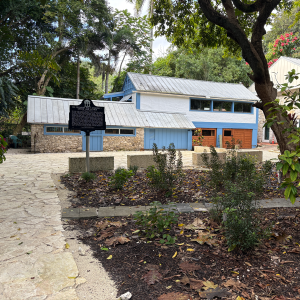
Nestled among the bountiful agroforests stretching from the slopes of Mount Uluigalau to the coast, the Tutu Rural Training Centre demonstrates the spirit of Fiji’s “Garden Island.” Its breadfruit collection, nursery, farmer training programs, and food processing facilities provided an ideal setting to experience breadfruit biocultural conservation in practice.
Tutu Rural Training Centre on Taveuni island, Fiji. Photo by Noel Dickinson
While on Taveuni, the group enjoyed the warm hospitality of the center’s staff in classrooms, agroforests, and nurseries. Group meals reflected a distinctly Pacific approach to knowledge exchange. Staff generously shared their experience establishing a breadfruit living collection, propagating traditional varieties, and training farmers. They showcased innovative breadfruit products, demonstrating how conservation and community can strengthen one another.
Facilitated by NTBG’s Breadfruit Institute in partnership with the Pacific Islands Farmer Organisations Network (PIFON), the workshop centered on the developing methods to document traditional knowledge, drawing on the collective decades of experience represented across the group in conserving, cultivating, and stewarding breadfruit diversity. Although organized by the Breadfruit Institute and PIFON, the workshop was designed as a collaborative exchange in which every participant contributed knowledge, experience, and perspectives from their own communities.
Left: Noel Dickinson demonstrates documentation methods for characterizing breadfruit at Fiji’s Tutu Rural Training Centre. Right: Tiffany Knight interviews a workshop attendee from Papua New Guinea about his favorite breadfruit variety. Photos by Merewalesi Rokosawa.
For more than three decades, NTBG has curated one of the world’s most comprehensive breadfruit collections. As interest in breadfruit’s potential to contribute to food security, climate resilience, and cultural perpetuation has grown, institutions and farming communities across the Pacific are establishing living collections of their own. The Breadfruit Institute strengthens regional capacity and support efforts to document what is conserved, identifies gaps, and coordinates priorities for safeguarding diversity.
Collaborating closely with PIFON, Breadfruit Institute program manager Noel Dickinson and Science and Conservation director Dr. Tiffany Knight co-designed the Taveuni workshop program, drawing on NTBG’s experience. The practical methods shared during the workshop built upon the institute’s long-standing work, including the development of internationally recognized breadfruit descriptors by founder Dr. Diane Ragone and photographer Jim Wiseman. Rooted in that legacy, the group refined approaches that could be applied by researchers and community practitioners while respecting local knowledge systems and governance.
Over three days, participants moved between the classroom and the field, working together to document breadfruit varieties through standardized photography, mapping, and data collection. The group also practiced conducting ethical and respectful interviews with knowledge holders and explored ways to record the biological and cultural diversity associated with each variety. Rather than introducing entirely new concepts, the workshop created opportunities for participants to compare approaches, align methods, and discuss how record-keeping can better support breadfruit conservation.
Workshop attendees from across the Pacific practice standardized photography of mature breadfruit leaves. Photo by Noel Dickinson.
At the heart of the workshop was the concept of biocultural conservation — the recognition that the diversity of breadfruit cannot be separated from the people who have cultivated, named, shared, and cared for the trees over countless generations. Biocultural conservation is about more than collecting and saving trees but acknowledging and including Indigenous people’s inextricable connections to the tree itself through cultivation, cooking practices, oral histories, and traditional variety names.
Despite differences in language, geography, and culture, participants discovered that they shared challenges and values that guide their stewardship of breadfruit. As conversations unfolded, they found common ground in traditions surrounding harvests, cooking, and community celebrations. Many also reflected that these traditions, and the passing of knowledge from elders to younger generations, are becoming increasingly rare, much like some breadfruit varieties themselves.
Tutu Rural Training Centre staff and workshop participants gather for welcoming festivities, introductions, songs, and a traditional kava ceremony. Photo by Merewalesi Rokosawa.
Tours of Tutu Rural Training Centre’s breadfruit nursery, living collection and food development facilities illustrated how conservation, education, and processing can strengthen livelihoods. Participants explored propagation techniques, nursery management, and breadfruit processing — from flour and chips to a variety of baked goods — highlighting how conserving and utilizing traditional varieties can create new economic opportunities.
The workshop was not about teaching communities how to conserve breadfruit — it was about recognizing the important work already taking place and creating a space where participants could learn from one another. Through the workshop’s WhatsApp group, participants will continue to ask and answer questions, share observations, and support and celebrate their successes.
Expanding on the Breadfruit Institute’s system of record keeping, discussions focused on how shared characterization methods could strengthen the understanding of breadfruit while respecting cultural practices and governance across Oceania.
Participants emphasized that any regional framework must be guided by the principles of Free, Prior and Informed Consent, ensuring that traditional knowledge remains under the ownership and direction of the Indigenous peoples.
Discussions also highlighted challenges facing breadfruit conservation efforts such as limited capacity and funding, transportation issues, and the need for greater government recognition. Still, the mood of the workshop was positive and focused on the resilience shared by people throughout the Pacific.
“This workshop showed what is possible when farmers, researchers, and institutions come together as partners,” said Kyle Stice, PIFON’s executive director. “Every participant brought valuable experience and knowledge from their own country. By connecting knowledge holders through shared methods and ongoing collaboration, we’re building something that is much stronger than any one organization could achieve alone.”
The authors with PIFON’s Merewalesi Rokosawa (center). Photo by Noel Dickinson.
Identifying future collaborations, the group was eager to continue exchanging ideas and strengthening this budding regional network. The conversations continued at the Global Breadfruit Summit on Hawai‘i Island in September.
One of the workshop’s most meaningful outcomes emerged during the closing reflections. “I’ve been doing this work already, but I never felt like it was my place to use these scientific methods,” said Waisea Turaga, breadfruit project officer at the Tutu Rural Training Centre, “Now, I know I can.”
His reflection resonated with others who recognized that they too had been carrying out this work for years, but rarely had the opportunity to compare methods, share experiences, and engage with their peers.
For the Breadfruit Institute, the workshop represents an evolving vision for collaborative conservation where botanical gardens, research institutions, farmer organizations, and Indigenous communities will steward this vital crop. The workshop also reflected the legacy of Dr. Diane Ragone, whose decades of global breadfruit exploration, collection, conservation, research, and advocacy helped establish the Breadfruit Institute as an international center for biocultural conservation.
Breadfruit is more than a staple crop — it is part of the shared heritage of Pacific peoples, carried across the ocean by voyagers and woven into the origins, identities, and food systems of the communities of Oceania. For one week in Taveuni, it was a catalyst to renew and strengthen those connections and the shared commitment to conserve the extraordinary biocultural diversity of breadfruit for generations to come.
From left: PIFON’s Kyle Stice, Hon. Takaibure Rabaua and Kinaai Kairo from Kiribati’s Minister for Environment, Lands and Agricultural Development, with NTBG’s Noel Dickinson in McBryde Garden. Photo by Jon Letman.
[1] Papua New Guinea, Solomon Islands, Fiji, New Caledonia, Tonga, Cook Islands, Marshall Islands, Kiribati, Hawai‘i (USA)